














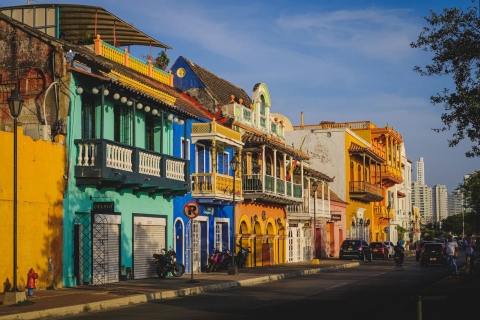
 The 10 most alternative cities in South America
Discover South America's top 10 alternative cities! From Valparaíso's vibrant streets to La Paz's high-altitude charm and Medellín's innovative spirit.
Average temperatures, rainfall, sunshine and the best time to visit Rapa Nui.
 –
10-day forecastForecast
–
10-day forecastForecast
Rapa Nui, Easter Island, Chile, has a stable climate with little temperature variation across the year. Average daytime temperatures hover around 23°C (73°F), peaking in February at 26°C (79°F) and dipping in September to 21°C (70°F).
The city receives around 899 mm (35 in) of rainfall per year. April is the wettest month and February the driest. Sunshine peaks in January, when the city sees around 9.7 hours of sunshine per day.
Pick a month to see the average temperature, rainfall and sunshine in Rapa Nui - and find the best time to visit.
With minimal seasonal shifts, Rapa Nui experiences a constant climate year-round. On average, daytime temperatures range from a comfortable 26°C (79°F) in February to a pleasant 21°C (70°F) in September.
Nighttime temperatures range from 23°C (73°F) in February to 18°C (64°F) in September.
Check out our detailed temperature page for more information.

Generally, Rapa Nui receives mid-range precipitation levels, with 899 mm (35 in) annually. The amount of precipitation varies moderately throughout the year. The wettest month, April, sees around 96 mm (3.8 in) of rainfall, perfect for those who enjoy a bit of rain now and then. The driest month, February, still receives a respectable 56 mm (2.2 in) of rainfall. For more details, please visit our Rapa Nui Precipitation page.


In Rapa Nui, summer days are longer and more sunny, with daily sunshine hours peaking at 9.7 hours in January. As the darker season arrives, the brightness of the sun becomes less. July sees a soft sun for only 5.1 hours per average day.
Visit our detailed sunshine hours page for more information.

The relative humidity is high throughout the year in Rapa Nui.
The city experiences its highest humidity in April, reaching 82%. In January, the humidity drops to its lowest level at 77%. What does this mean? Read our detailed page on humidity levels for further details.

Monthly ratings reflect general weather comfort, based on daytime temperature and rainfall. Swimming and winter conditions are highlighted separately where relevant.
Daytime highs range from 21°C (70°F) in September to 26°C (79°F) in February. Nighttime lows range from 18°C (64°F) to 23°C (73°F). Temperatures stay relatively stable year-round.
Annual rainfall is around 899 mm (35 in). April is the wettest month with 96 mm (3.8 in), while February is the driest with 56 mm (2.2 in).
Rapa Nui receives around 2,525 hours of sunshine per year. January is the sunniest month with 291 hours, while July is the cloudiest with just 152 hours. Overall, Rapa Nui enjoys abundant sunshine.
Rapa Nui is highlighted - select any city to see its climate.
Where to go in October - average daytime high across popular destinations.
 San Pedro de Atacama23°C (73°F) Hanga Roa
 21°C (70°F) Santiago21°C (70°F) La Serena
 21°C (70°F) Viña del Mar17°C (63°F) Valparaíso16°C (61°F) Pucón
 15°C (59°F)
 Need travel inspiration? Check out our bucket list articles and be inspired.
The 10 most alternative cities in South America
Discover South America's top 10 alternative cities! From Valparaíso's vibrant streets to La Paz's high-altitude charm and Medellín's innovative spirit.
 Torres del Paine
Torres del Paine is an huge national park on the border with Argentina. It is possible to walk here along craters, high-rising mountain ridges, over glaciers and through vast majestic tundra.
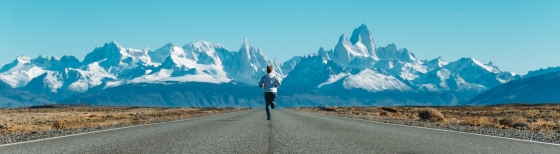 Explore Patagonia
A tour through Patagonia brings you to the end of the world. That’s why Patagonia is a bucket list destination for many. We recommend to visit Patagonia from November to early March.
 Enjoy the silence and peace in a spectacular landscape
This lodge guarantees privacy and exclusivity for those seeking to get away from mass tourism and enjoy the silence and peace in a spectacular landscape.