


















 Visit Tasmania
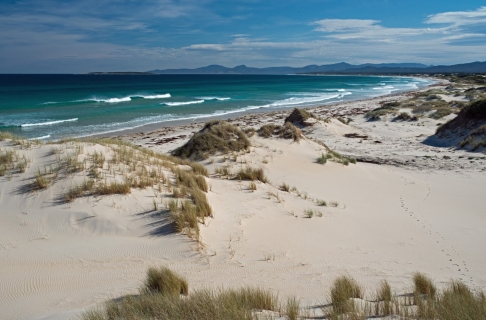
Tasmania, an amazing rugged and green island you want to visit once in you life. The island state south of Australia is one of the most picturesque islands in the world.
Average temperatures, rainfall, sunshine and the best time to visit Launceston.
 –
10-day forecastForecast
–
10-day forecastForecast
Launceston is Tasmania’s second-largest city, located in the northern part of the island. It serves as an ideal base for exploring Ben Lomond National Park, where visitors can enjoy mountain climbing and, weather permitting, skiing.
Launceston has a maritime climate, typical of this part of Australia. Due to its location in a lower-elevation area surrounded by mid- and low-altitude mountains, it is somewhat less affected by the Antarctic winds that frequently blow through the region. In summer (December to March), temperatures average just under 25°C (77°F). Winters, however, can be quite cold, with temperatures regularly dropping below freezing. The city is also known for its extremely foggy mornings during the winter months.
Pick a month to see the average temperature, rainfall and sunshine in Launceston - and find the best time to visit.
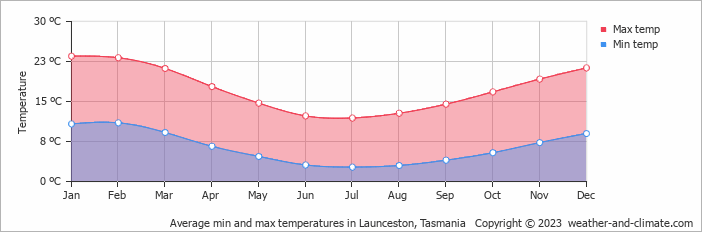
Depending on the time of the year, temperatures range from comfortable to chilly in Launceston. Average daytime temperatures reach a comfortable 24°C (75°F) in January. In July, the coolest month of the year, temperatures drop to a chilly 12°C (54°F).
At night, temperatures range from around 11°C (52°F) in January to 3°C (37°F) in July.
Check out our detailed temperature page for more information.
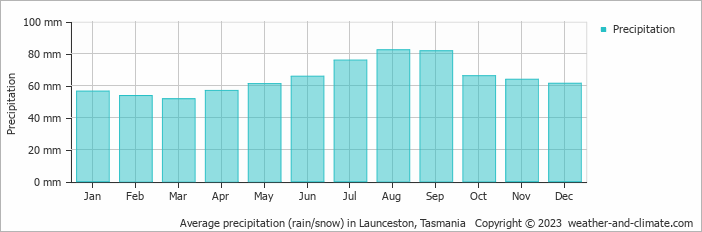
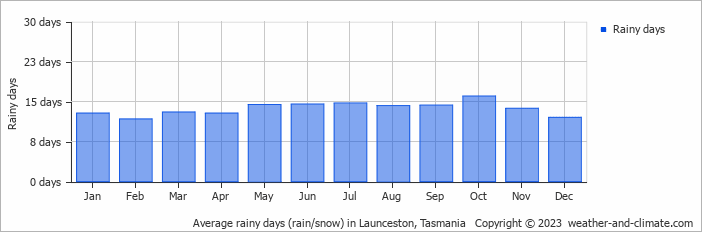
Generally, Launceston has a moderate amount of precipitation, averaging 776 mm (31 in) of rain/snowfall annually. Despite minor fluctuations, Launceston enjoys fairly consistent precipitation throughout the year. In August, you can expect around 82 mm (3.2 in) of precipitation, while in March, Launceston receives about 52 mm (2 in). For more details, please visit our Launceston Precipitation page.
Launceston can be enjoyed more throughout the sunniest month of January under a blue sky, with approximately 9.6 hours of sunshine daily. In contrast, the city experiences much darker days in June, with only 4.5 hours of sunlight per day.
Visit our detailed sunshine hours page for more information.

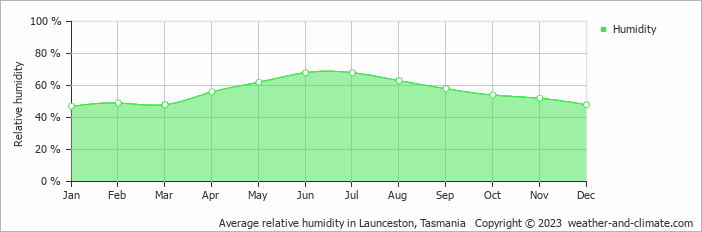
The relative humidity is moderate throughout the year in Launceston.
The city experiences its highest humidity in June, reaching 68%. In January, the humidity drops to its lowest level at 47%. What does this mean? Read our detailed page on humidity levels for further details.
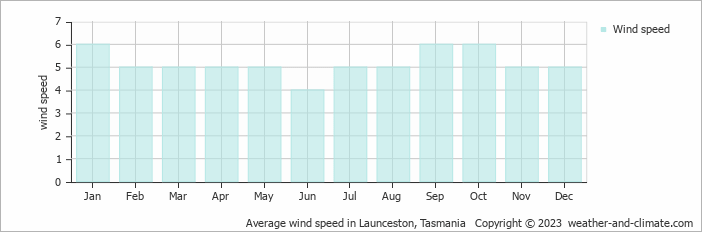
The mean wind speed over the year ranges from 4 m/s (8 knots) in June to 6 m/s (12 knots) in January, September and October. What does this mean?
Monthly ratings reflect general weather comfort, based on daytime temperature and rainfall. Swimming and winter conditions are highlighted separately where relevant.
January, February, March and December typically offer the most optimal weather in Launceston. In contrast, June, July and August tend to have less optimal conditions. Launceston has warm summers and cold winters.
Daytime highs range from 12°C (54°F) in July to 24°C (75°F) in January. Nighttime lows range from 3°C (37°F) to 11°C (52°F). Temperatures vary considerably through the year.
Annual rainfall is around 776 mm (31 in). August is the wettest month with 82 mm (3.2 in), while March is the driest with 52 mm (2 in).
Launceston receives around 2,601 hours of sunshine per year. January is the sunniest month with 287 hours, while June is the cloudiest with just 136 hours. Overall, Launceston enjoys abundant sunshine.
Launceston is highlighted - select any city to see its climate.
Where to go in October - average daytime high across popular destinations.
Need travel inspiration? Check out our bucket list articles and be inspired.
Visit Tasmania
Tasmania, an amazing rugged and green island you want to visit once in you life. The island state south of Australia is one of the most picturesque islands in the world.
 One of the highlights of Tasmania
One of the highlights of Tasmania is the world famous Cradle Mountain-Lake St Clair National Park. You walk through rough mountains surrounded by beautiful, peaceful lakes.

 An alternative way to discover Sydney
We have made an overview of the sights in Sydney that you must see if you want to visit Sydney in an alternative way.
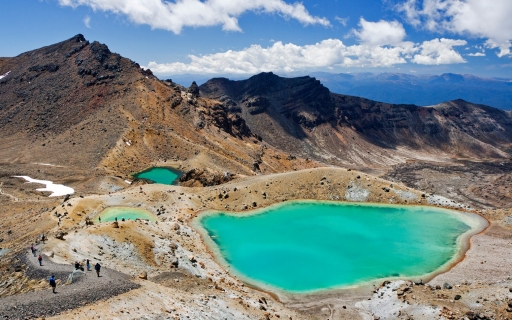
 The Tongariro Crossing in New Zealand
It is called the most beautiful walk in New Zealand, the Tongariro Crossing. The official hiking season starts late October until end of April.