Average humidity in Itaboraí
On this page you find more information about the monthly relative humidity over the year in Itaboraí (Rio de Janeiro State), Brazil.
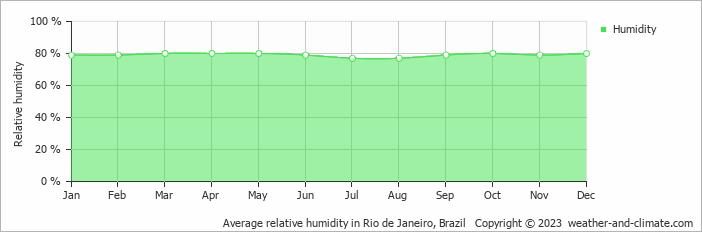
Itaboraí's humidity levels vary throughout the year. The highest levels occur in March, reaching 80% (very high), while the lowest is recorded in July at 77%.
Throughout the year, the average humidity in Itaboraí is 79%.
Humidity plays an important role in how temperatures are felt. During the warmest month, February, the maximum average temperature is around 33°C (91°F). Combined with high humidity during this period, the temperature can feel even warmer than the thermometer shows.
During the coldest month, July, the maximum average temperature is around 27°C (81°F). This period has high humidity. Check out our detailed temperature page for more information.
Itaboraí Weather by Month
Pick a month to see the average temperature, rainfall and sunshine in Itaboraí - and find the best time to visit.



Itaboraí 3-Day Forecast
Temperature Rainfall Sunshine Humidity
See the full Itaboraí climate overview or explore weather in Brazil.
Popular this month
Where to go in September - average daytime high across popular destinations.
















Bucket list
Need travel inspiration? Check out our bucket list articles and be inspired.
 The 10 most alternative cities in South America
Discover South America's top 10 alternative cities! From Valparaíso's vibrant streets to La Paz's high-altitude charm and Medellín's innovative spirit.
 The 5 most tranquil retreats in the Amazon Rainforest, Brazil
Discover top sustainable lodges in the Amazon. Enjoy unique wildlife, eco-friendly stays, and immersive experiences at Anavilhanas, Cristalino, and more.
Brazil in November: Where Is the Best Weather?
Discover where Brazil has the best weather in November, comparing Fortaleza, Salvador, Rio, São Paulo, Florianópolis, Brasília and Foz do Iguaçu.
An alternative way to discover Rio de Janeiro
Don't feel like seeing the traditional tourist sights in Rio de Janeiro? We have made an overview of the sights in Rio de Janeiro that you must see if you want to visit Rio in an alternative way.