














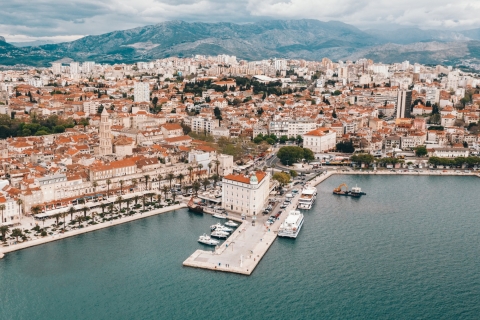
 Magical Split
The best travel time to Split in Croatia is from May til October and the best months are May, June and September.
This page shows both the average monthly rainfall and the number of rainy days in Zvoneća, Croatia. Long-term data from 1990 to 2020 was used to calculate these averages. Now, let's break down all the details for a clearer picture.
Zvoneća has a relatively rain/snowy climate with high precipitation levels, averaging 1954 mm (77 in) of rain/snowfall annually. Despite the high annual total, it does experience a distinct rainy season during certain months. Examine our detailed charts below to understand these seasonal patterns.
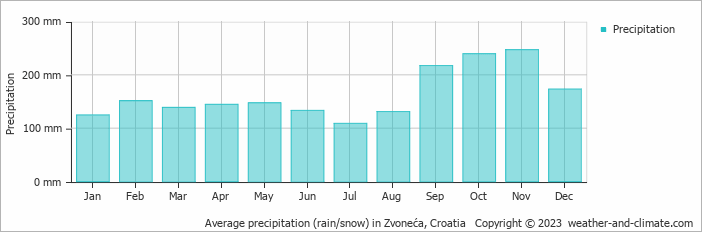
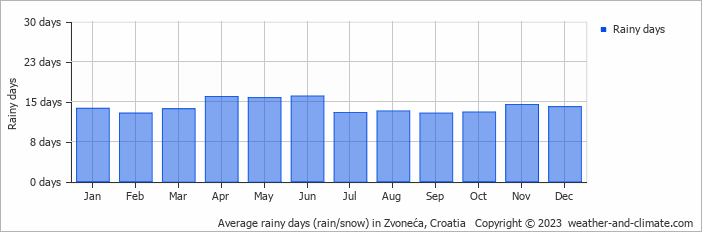
Zvoneća can be quite wet during November, receiving approximately 247 mm (9.7 in) of precipitation over 14 rainy days.
In contrast July, experiences much drier conditions, with 109 mm (4.3 in) of rainfall, spread across 13 rainy days.
November, the wettest month, has a maximum daytime temperature of 12°C (54°F). The city receives 112 hours of sunshine in this period. During the driest month July you can expect a temperature of 26°C (79°F). For more detailed insights into the city's temperatures, visit our Zvoneća Temperature page.
The map below shows the annual precipitation across Croatia. You can also select the different months in case you are interested in a specific month.
Zvoneća's average annual precipitation is 1954 mm (77 in). Let's compare this to some popular worldwide tourist destinations:
Chicago, USA, sees an annual precipitation of 1062 mm (42 in), with rain and snow contributing to its humid climate.
Beijing, China, receives 560 mm (22 in) of annual precipitation, concentrated in the summer months.
In Tokyo, Japan, the average annual precipitation is 1528 mm (60 in), with significant summer rains due to typhoon season.
Bangkok, Thailand, experiences a tropical monsoon climate with 1668 mm (66 in) of annual rainfall, with the heaviest precipitation occurring during September and October.
Precipitation amounts are measured using specific gauges installed at weather stations, collecting both rain and snow and any other type of precipitation. Rainfall is measured directly in millimeters, while that from snow and ice is obtained by melting it. Automated systems often incorporate heaters to make this easier.
Information from these stations is transmitted via Wi-Fi, satellite, GPS, or telephone connections to central monitoring networks. This information is immediately updated and integrated into weather models and forecasts.
Precipitation has a very strong role in determining the local climate and ecosystem:
For more detailed information about Zvoneća's weather, including sunshine hours, humidity levels, and temperature data, visit our Zvoneća Climate page.
Pick a month to see the average temperature, rainfall and sunshine in Zvoneća - and find the best time to visit.
Temperature Rainfall Sunshine Humidity Water Temp
See the full Zvoneća climate overview or explore weather in Croatia.
Where to go in October - average daytime high across popular destinations.
Trogir 20°C (68°F) Zadar
 21°C (70°F) Makarska
 20°C (68°F) Poreč19°C (66°F) Rovinj19°C (66°F) Pula19°C (66°F) Split20°C (68°F) Dubrovnik20°C (68°F)
 Need travel inspiration? Check out our bucket list articles and be inspired.
Magical Split
The best travel time to Split in Croatia is from May til October and the best months are May, June and September.
 Sail the crystal-clear waters of Croatia and enjoy its stunning coastline
Croatia is an idyllic sailing destination, boasting 1,777 miles (2,860 km) of beautiful beaches and pristine waters. With over 1,000 Islands dotting the Adriatic Sea, there's a perfect spot for everyone.
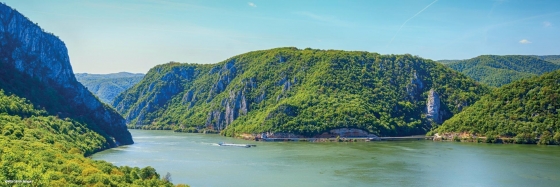
 Cycle the Danube trail
The Danube cycle route is one of the most popular cycling routes in Europe, and rightly so, because it is a varied route that is interesting both in terms of culture and nature.
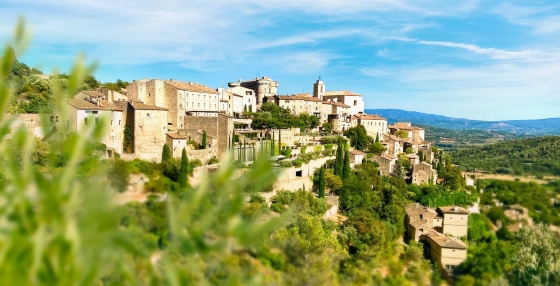
 The 10 most charming villages in France
Discover France's top 10 beautiful villages. From Normandy to the Côte d'Azur, experience quaint squares and cobbled streets. Which one will you visit this summer?