
















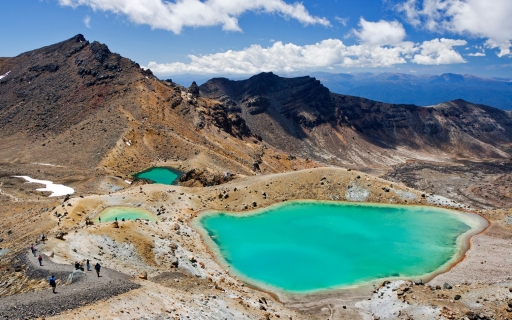
 The Tongariro Crossing in New Zealand
It is called the most beautiful walk in New Zealand, the Tongariro Crossing. The official hiking season starts late October until end of April.
This page shows both the average monthly rainfall and the number of rainy days in Hotwater Beach, Waikato, New Zealand. These values are calculated using 30 years of data (1990–2020) to ensure accuracy. Let's explore the details to provide you with a complete overview.
Hotwater Beach has a relatively rainy climate with high precipitation levels, averaging 1256 mm (49 in) of rainfall annually.


While rainfall varies throughout the year, each season offers its own charm. July brings wetter days averaging 139 mm (5.5 in) of precipitation, spread over 17 rainy days.
In contrast, January experiences a drier climate, with about 74 mm (2.9 in) of rainfall spread across 10 rainy days.
July, the wettest month, has a maximum daytime temperature of 15°C (59°F). During the driest month January you can expect a temperature of 22°C (72°F). For more detailed insights into the city's temperatures, visit our Hotwater Beach Temperature page.
The map below shows the annual precipitation across New Zealand. You can also select the different months in case you are interested in a specific month.
Hotwater Beach's average annual precipitation is 1256 mm (49 in). Let's compare this to some popular worldwide tourist destinations:
The city of Rome, Italy, has an average annual precipitation of 832 mm (33 in), spread fairly evenly throughout the year.
In Seoul, South Korea, the average annual precipitation is 1237 mm (49 in), with most rain falling during the summer monsoon season.
Perth, Australia, receives 565 mm (22 in) of rainfall annually, mostly during the winter months.
Kuala Lumpur, Malaysia, receives 2529 mm (100 in) of annual rainfall, characteristic of its equatorial tropical rainforest climate, with consistent rainfall throughout the year and peak months during March and November.
Precipitation amounts are measured using specific gauges installed at weather stations, collecting both rain and snow and any other type of precipitation. Rainfall is measured directly in millimeters, while that from snow and ice is obtained by melting it. Automated systems often incorporate heaters to make this easier.
Information from these stations is transmitted via Wi-Fi, satellite, GPS, or telephone connections to central monitoring networks. This information is immediately updated and integrated into weather models and forecasts.
Climate change is affecting precipitation patterns worldwide, including Hotwater Beach:
For more detailed information about Hotwater Beach's weather, including sunshine hours, humidity levels, and temperature data, visit our Hotwater Beach Climate page.
Pick a month to see the average temperature, rainfall and sunshine in Hotwater Beach - and find the best time to visit.
Temperature Rainfall
See the full Hotwater Beach climate overview or explore weather in New Zealand.
Where to go in November - average daytime high across popular destinations.
Need travel inspiration? Check out our bucket list articles and be inspired.
The Tongariro Crossing in New Zealand
It is called the most beautiful walk in New Zealand, the Tongariro Crossing. The official hiking season starts late October until end of April.
 White-water sledge and raft in Rotorua
We recommend to white-water sledge and raft in Rotorua in summer (January, February) when the Glacier melt fills the rivers. This is the best time.
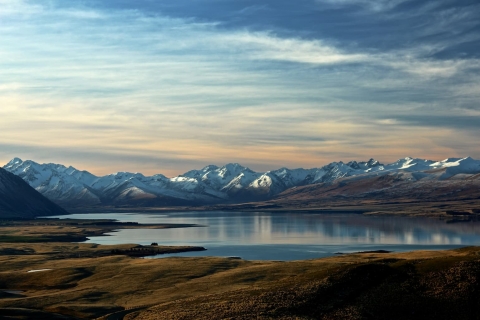 New Zealand in February: North Island or South Island?
Compare New Zealand weather in February for Auckland, Rotorua, Taupo, Christchurch and Queenstown to see which island has the best conditions.

 An alternative way to discover Sydney
We have made an overview of the sights in Sydney that you must see if you want to visit Sydney in an alternative way.