














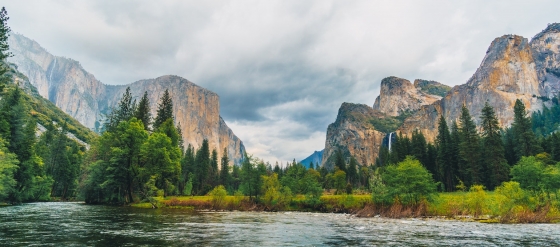
 Yosemite National Park is definitely worth a visit
Vast forests, blue lakes, towering sequoias, and majestic waterfalls hint at the beauty of Yosemite National Park—a true natural masterpiece.
This page shows both the average monthly rainfall and the number of rainy days in Brandon, Florida, United States of America. The figures are based on a 30-year period (1990–2020) to provide a reliable average. Let's explore the details to provide you with a complete overview.
Brandon has a relatively rainy climate with high precipitation levels, averaging 1401 mm (55 in) of rainfall annually. Despite the high annual total, it does experience a distinct rainy season during certain months. Examine our detailed charts below to understand these seasonal patterns.


The climate in Brandon shows significant variation throughout the year. Expect 251 mm (9.9 in) of precipitation during the wettest month August, distributed over 23 rainy days.
In contrast, December offers drier and sunnier days, with around 40 mm (1.6 in) of rainfall over 6 rainy days.
August, the wettest month, has a maximum daytime temperature of 33°C (91°F). The city receives 249 hours of sunshine in this period. During the driest month December you can expect a temperature of 24°C (75°F). For more detailed insights into the city's temperatures, visit our Brandon Temperature page.
The map below shows the annual precipitation across the United States of America. You can also select the different months in case you are interested in a specific month.
Brandon's average annual precipitation is 1401 mm (55 in). Let's compare this to some popular worldwide tourist destinations:
Seville, Spain, experiences 541 mm (21 in) of rainfall annually, with wet winters and dry summers typical of southern Spain.
In Shanghai, China, the annual average precipitation is 1347 mm (53 in), with a humid subtropical climate.
Perth, Australia, receives 565 mm (22 in) of rainfall annually, mostly during the winter months.
Ho Chi Minh City, Vietnam, receives 1955 mm (77 in) of annual rainfall, with a pronounced wet season from May to November, typical of its tropical monsoon climate.
Precipitation amounts are measured using specific gauges installed at weather stations, collecting both rain and snow and any other type of precipitation. Rainfall is measured directly in millimeters, while that from snow and ice is obtained by melting it. Automated systems often incorporate heaters to make this easier.
Information from these stations is transmitted via Wi-Fi, satellite, GPS, or telephone connections to central monitoring networks. This information is immediately updated and integrated into weather models and forecasts.
Tropical Rainforests: In tropical regions, rainfall is generally abundant year-round. Areas near the equator, like the Amazon rainforest, can receive up to 3000 mm (118 in) of rain annually.
Desert Regions: Deserts such as the Sahara and Arabian deserts typically see less than 250 mm (9.8 in) of rainfall annually. Rainfall tends to be infrequent, but when it does occur, it is often intense.
Temperate Zones: In temperate regions, precipitation tends to be more evenly distributed, though areas closer to the ocean may see more rain in the winter months, and areas further inland experience drier summers.
Polar Regions: Precipitation in polar regions, like Antarctica, is extremely low, often falling as snow. Average annual precipitation in Antarctica is less than 200 mm (7.9 in), with some areas receiving as little as 50 mm (2 in) annually.
For more detailed information about Brandon (FL)'s weather, including sunshine hours, humidity levels, and temperature data, visit our Brandon (FL) Climate page.
Pick a month to see the average temperature, rainfall and sunshine in Brandon - and find the best time to visit.
Temperature Rainfall Sunshine Humidity
See the full Brandon climate overview or explore weather in the United States of America.
Where to go in November - average daytime high across popular destinations.
Miami Beach 27°C (81°F) Orlando
 25°C (77°F) Kissimmee26°C (79°F) Destin21°C (70°F) Los Angeles22°C (72°F) Big Bear Lake14°C (57°F) New York City
 13°C (55°F)
Need travel inspiration? Check out our bucket list articles and be inspired.
Yosemite National Park is definitely worth a visit
Vast forests, blue lakes, towering sequoias, and majestic waterfalls hint at the beauty of Yosemite National Park—a true natural masterpiece.
 The 10 most alternative cities in the United States
Discover the top 10 fun and alternative U.S. cities rich in art, culture, and adventure. From Portland's hippy charm to Sedona's stunning landscapes.
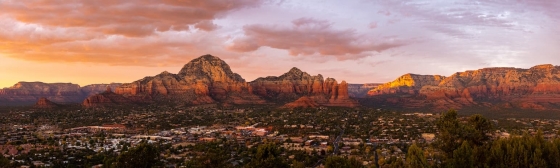 Sedona: Explore Majestic Red Rock Landscapes
A picturesque artists' town surrounded by red rocks and known for its spirituality, vortex energy, and stunning hikes like Cathedral Rock.
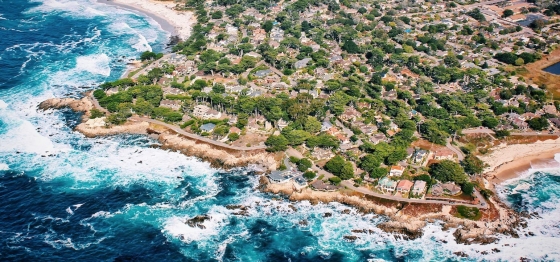 10 most idyllic villages to visit in the United States
Discover 10 idyllic villages in the USA, from California to Vermont. Explore their unique charm, rich history, stunning nature, and vibrant arts scenes.