

















 7 of the most budget-friendly destinations in Europe
Discover Europe's top budget-friendly destinations including Budapest, Kotor, Krakow, and more, perfect for affordable and exciting travel.
This page shows both the average monthly rainfall and the number of rainy days in Beja, Alentejo, Portugal. These averages rely on historical data collected over 30 years, from 1990 to 2020. Let's explore the details to provide you with a complete overview.
Beja maintains relatively dry conditions year-round, with an average annual precipitation of 477 mm (19 in). However, it does have a distinct dry season during certain months, creating distinct seasonal patterns visible in our monthly breakdown below.
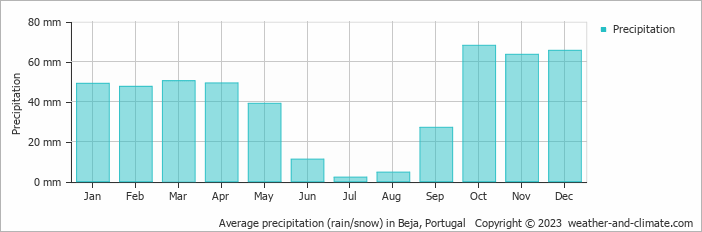
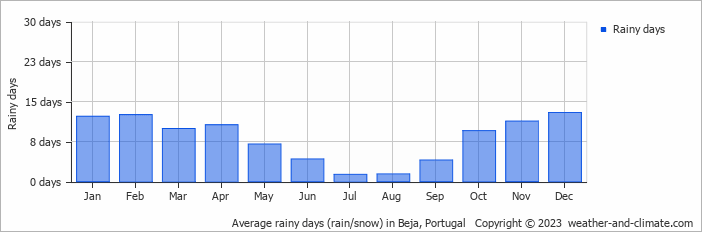
Significant seasonal changes in precipitation occur throughout the year. During the wettest month, October receives substantial rainfall, averaging 68 mm (2.7 in) of precipitation, recorded across 10 rainy days.
In contrast, the driest month, July brings less rainfall, with 2.1 mm (0.1 in) over a single rainy day.
October, the wettest month, has a maximum daytime temperature of 25°C (77°F). The city receives 206 hours of sunshine in this period. During the driest month July you can expect a temperature of 34°C (93°F). For more detailed insights into the city's temperatures, visit our Beja Temperature page.
The map below shows the annual precipitation across Portugal. You can also select the different months in case you are interested in a specific month.
Beja's average annual precipitation is 477 mm (19 in). Let's compare this to some popular worldwide tourist destinations:
In Barcelona, Spain, the average annual precipitation is 644 mm (25 in), evenly distributed across the year with no extreme wet or dry seasons.
Meanwhile, Buenos Aires, Argentina, enjoys a humid subtropical climate with 1000 mm (39 in) of annual rainfall, mostly in the summer.
Adelaide, Australia, enjoys 511 mm (20 in) of annual precipitation, with dry summers and wet winters.
Ho Chi Minh City, Vietnam, receives 1955 mm (77 in) of annual rainfall, with a pronounced wet season from May to November, typical of its tropical monsoon climate.
Precipitation amounts are measured using specific gauges installed at weather stations, collecting both rain and snow and any other type of precipitation. Rainfall is measured directly in millimeters, while that from snow and ice is obtained by melting it. Automated systems often incorporate heaters to make this easier.
Information from these stations is transmitted via Wi-Fi, satellite, GPS, or telephone connections to central monitoring networks. This information is immediately updated and integrated into weather models and forecasts.
Climate change is affecting precipitation patterns worldwide, including Beja:
For more detailed information about Beja's weather, including sunshine hours, humidity levels, and temperature data, visit our Beja Climate page.
Pick a month to see the average temperature, rainfall and sunshine in Beja - and find the best time to visit.
Temperature Rainfall Sunshine Humidity Wind Speed
See the full Beja climate overview or explore weather in Portugal.
Where to go in September - average daytime high across popular destinations.
Need travel inspiration? Check out our bucket list articles and be inspired.
7 of the most budget-friendly destinations in Europe
Discover Europe's top budget-friendly destinations including Budapest, Kotor, Krakow, and more, perfect for affordable and exciting travel.
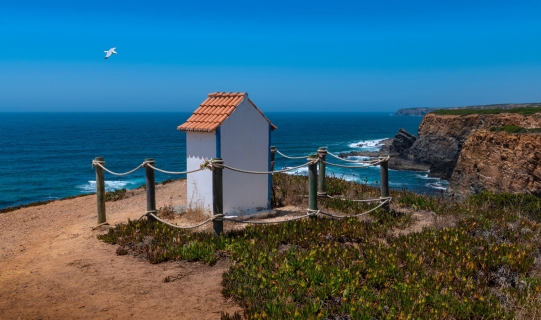
 Alentejo, where time stands still
The quiet region is known for its rolling green hills and it is a true hiking paradise. Architectural highlights can be found in the castles, ancient monasteries or when exploring the countless charming villages.
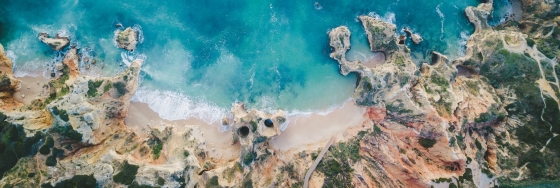 An eco-friendly guide to Lagos travel
Lagos, Portugal is a great place to visit while being careful about your environmental footprint. Here you find some tips about environmentally places to stay, where to eat and how to get around in the area.
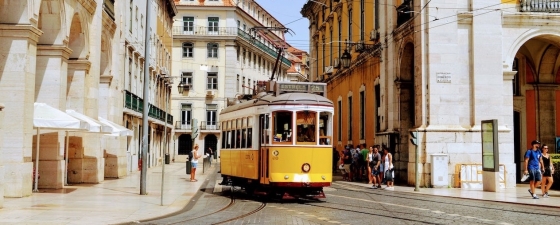 What to do in Lisbon: our tips for an unforgettable city trip
Lisbon is a bustling city with many special places. In this article you find the best sights, good restaurants and nice places to stay in Lisbon.