















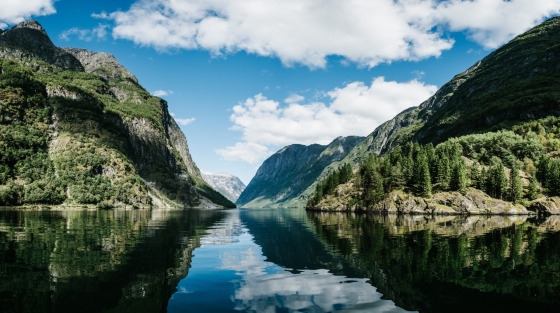
 The rugged landscape of the Norwegian fjords
This landscape is rated as the most beautiful in the world and it is something you need to experience at least once in your life.
Viksdalen in Sogn og Fjordane, Norway sees significant seasonal temperature differences, with daytime highs between 0°C (32°F) in January and 18°C (64°F) in July, averaging 8°C (46°F) annually. Explore the full monthly breakdown below.
The climate in Viksdalen is known for significant temperature differences throughout the year. At night, this contrast is just as clear, with lows ranging from 9°C (48°F) in July to -5°C (23°F) in January.
The chart below illustrates the average maximum day and minimum night temperatures in Viksdalen by month:
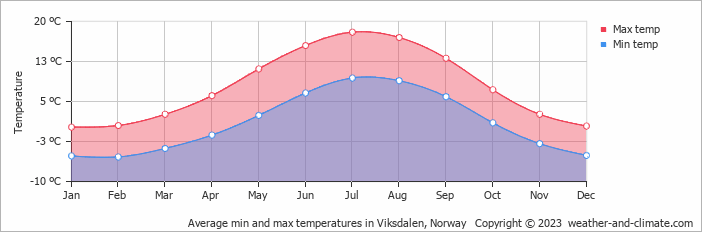
Daily lows are most common between 4 AM and 6 AM. By 3 PM temperatures reach their daily high, driven by peak solar heating.
The chart below shows the average temperature throughout the year:
The map below shows the annual temperature across Norway. You can also select individual months if you want to compare a specific time of year.
Viksdalen's average annual maximum temperature is 8°C (46°F). To put that in context, here's how it compares to a few well-known destinations:
Lisbon, Portugal averages 21°C (70°F) annually, warm summers, mild winters, and rain mainly in the cooler months.
Zermatt, Switzerland averages just 4°C (39°F) annually due to its altitude, with very cold winters and cool summers even at its warmest.
Shanghai, China averages 21°C (70°F) a year, with warm summers, mild winters, and a noticeable spring and autumn.
Melbourne, Australia averages 20°C (68°F) annually, known for unpredictable weather, with four seasons sometimes happening in one day.
Climate temperature data is typically calculated as a 30-year average. This smooths out year-to-year variability and gives a more reliable picture of what a place is actually like, rather than what happened in any single unusual year.
The readings come from a range of sources, land-based weather stations, ocean buoys, ships, and satellites. That data is collected by weather services around the world, then pooled, quality-checked, and averaged to produce the climate records you see here.
Global average temperatures have risen by around 1.2°C since the pre-industrial era, and the effects are visible across many regions. Winters are milder on average, with fewer frost days and less snow in many parts of the world. Heatwaves are more frequent and more intense, and Europe's summers of 2018, 2019, and 2020 all set records.
Summers are also getting drier in some areas, while winter rainfall has increased in others. This contributies to higher river levels and more flooding. In many countries, spring arrives earlier and autumn lasts longer. It has knock-on effects for wildlife, agriculture, and local ecosystems.
For more on Viksdalen's weather, including monthly rainfall, sunshine hours, and humidity, visit our Viksdalen climate page.
Pick a month to see the average temperature, rainfall and sunshine in Viksdalen - and find the best time to visit.
Temperature Rainfall
See the full Viksdalen climate overview or explore weather in Norway.
Where to go in October - average daytime high across popular destinations.
Kristiansand 12°C (54°F) Stavanger12°C (54°F) Bergen11°C (52°F) Reine
 9°C (48°F) Trondheim9°C (48°F) Oslo9°C (48°F) Tromsø5°C (41°F) Hemsedal
 5°C (41°F)
 Need travel inspiration? Check out our bucket list articles and be inspired.
The rugged landscape of the Norwegian fjords
This landscape is rated as the most beautiful in the world and it is something you need to experience at least once in your life.
 Discover Norway's Hidden Gem: The Littleisland Lighthouse
Explore Littleisland Lighthouse in Norway - a serene getaway offering unique stays, breathtaking views, and a journey into tranquil simplicity.
 The Majestic Geirangerfjord: Norway's Crown Jewel
Explore Norway's stunning Geirangerfjord, famous for its dramatic cliffs, waterfalls, and scenic routes. Breathtaking landscapes and outdoor adventures
 Swimming with orcas in Norway
The best travel period to travel to Norway for the orcas are the months October, November December, January and February. Swimming with orcas in Norway might be the bucket list trip of your life.