















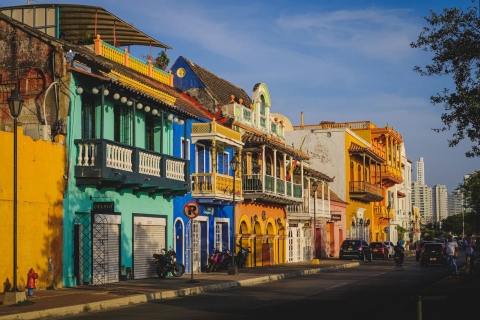
 The 10 most alternative cities in South America
Discover South America's top 10 alternative cities! From Valparaíso's vibrant streets to La Paz's high-altitude charm and Medellín's innovative spirit.
Sunshine plays a big role in understanding the climate of a city. This page shows the total number of hours of direct sunlight per month and the average hours per day in Santiago del Estero, Santiago del Estero Province, Argentina. These averages rely on historical data collected over 30 years, from 1990 to 2020.
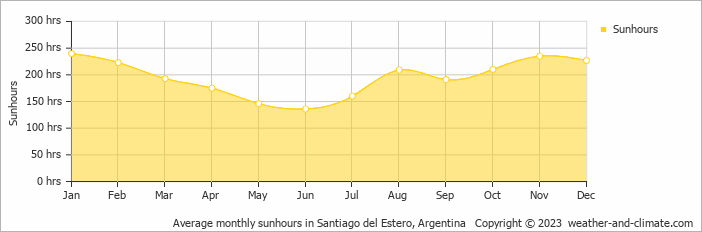
Those who love seasonal contrasts will appreciate Santiago del Estero. Expect long, bright days with 240 hours in January and darker periods with just 136 hours in June. The total annual amount of sun is 2345 hours.
Seasonal changes in sunshine hours are quite obvious in Santiago del Estero. While January receives considerable daily sunshine with up to 8.0 hours, June marks the darkest time of the year, where sunshine is scarce with only 4.5 hours of sunlight per day.
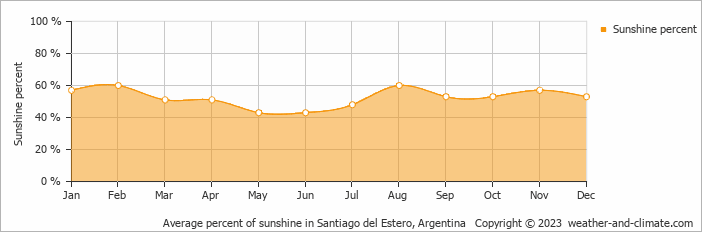
On average the sun shines 60% of the time during the day in August, the highest percentage of any month. May has the lowest percentage at 43%.
Santiago del Estero enjoys an average of 2345 hours of sunshine annually. Let’s compare this with some popular tourist destinations:
In Lisbon, Portugal, there are approximately 2801 hours of sunshine annually, highlighting its warm and sunny Mediterranean climate.
In contrast, Brussels, Belgium, receives only about 1590 hours of sunshine per year, known for its frequently overcast and rainy skies.
Toronto, Canada, sees around 2071 hours of sunshine each year, with especially long, bright summer days.
Melbourne, Australia, has 2380 hours of sunshine annually, with its famous “four seasons in a day” weather pattern.
January, Santiago del Estero’s wettest month, receives 153 mm (6 in) of rainfall and has a maximum daytime temperature of 35°C (95°F). During the driest month July you can expect a temperature of 22°C (72°F).
For more detailed insights into the city’s temperatures, check out our Temperature page. To explore more about precipitation patterns, visit our Santiago del Estero Precipitation page.
Pick a month to see the average temperature, rainfall and sunshine in Santiago del Estero - and find the best time to visit.
Temperature Rainfall Sunshine Humidity
See the full Santiago del Estero climate overview or explore weather in Argentina.
Where to go in October - average daytime high across popular destinations.
Córdoba 25°C (77°F) Mendoza
 24°C (75°F) Salta
 23°C (73°F) Villa Carlos Paz23°C (73°F) Buenos Aires23°C (73°F) Mar del Plata18°C (64°F) San Carlos de Bariloche11°C (52°F) San Martín de los Andes
 11°C (52°F)
 Need travel inspiration? Check out our bucket list articles and be inspired.
The 10 most alternative cities in South America
Discover South America's top 10 alternative cities! From Valparaíso's vibrant streets to La Paz's high-altitude charm and Medellín's innovative spirit.
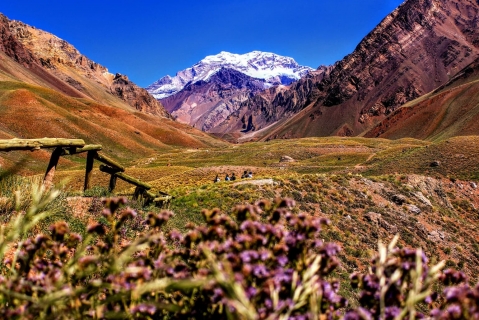 Warm Days, Cool Nights: 8 Destinations With the Perfect Day-Night Temperature
Prefer warm sunny days but cool evenings? Compare eight destinations with daytime temperatures of around 25–30°C, cooler nights, low rainfall and plenty of sunshine.
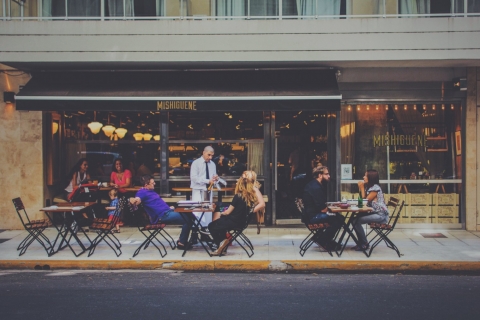 Be amazed by Buenos Aires
The city of beautiful museums, cute streets, green parks, lots of good food, interesting local neighborhoods and impressive historical buildings.
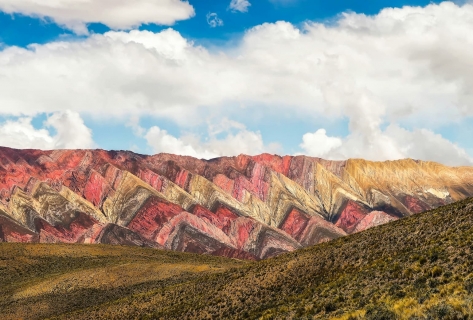 Argentina in November: Where to Go for the Best Weather
Compare November weather in Mendoza, Buenos Aires, Cafayate, Bariloche and Ushuaia to find Argentina's warmest, sunniest and driest places.