

















 Costa Rica in February: Pacific or Caribbean Coast?
Compare Costa Rica weather in February, from dry and sunny Tamarindo to wetter Puerto Viejo, plus Jacó, Arenal and San José.
Average temperatures, rainfall, sunshine and the best time to visit Sámara.
 –
–
Sámara, in Guanacaste Province, Costa Rica, maintains fairly consistent very warm temperatures throughout the year. The area experiences heavy rainfall spread across the seasons, with the wettest months bringing intense downpours. This horseshoe-shaped bay creates some of Costa Rica's calmest waters, making it perfect for families and beginner surfers seeking easy waves. The seasonal rains keep the surrounding hills nice and green, and support the howler monkey populations that wake up the town each morning with their distinctive calls.
Pick a month to see the average temperature, rainfall and sunshine in Sámara - and find the best time to visit.
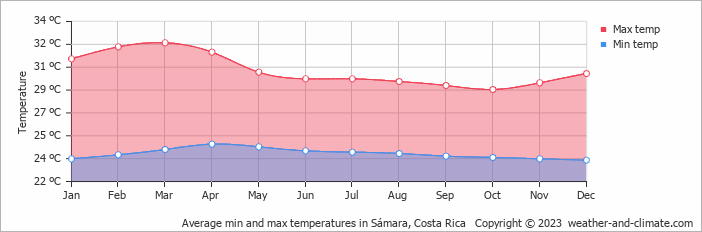
The temperature in Sámara remains steady throughout the year, providing a consistently very warm climate. Average daytime temperatures reach a very warm 32°C (90°F) in March. In October, the coolest month of the year, temperatures drop to a comfortable 29°C (84°F).
At night, temperatures range from around 25°C (77°F) in March to 24°C (75°F) in October.
Check out our detailed temperature page for more information.
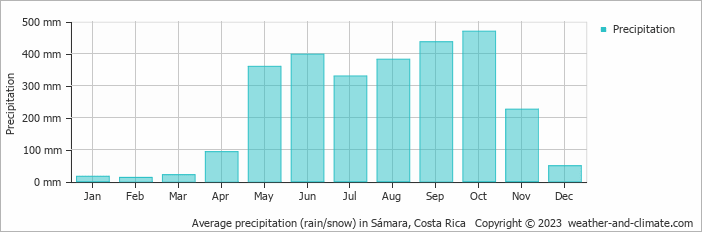
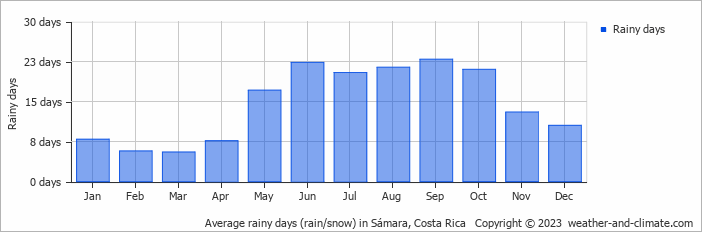
Sámara has a relatively rainy climate with high precipitation levels, averaging 2788 mm (110 in) of rainfall annually. Sámara can be quite wet during October, receiving approximately 469 mm (18 in) of precipitation over 21 rainy days.
In contrast, during the driest month (February), you will experience much drier conditions, with 12 mm (0.5 in) of precipitation spread across 6 rainy days. For more details, please visit our Sámara Precipitation page.
Monthly ratings reflect general weather comfort, based on daytime temperature and rainfall. Swimming and winter conditions are highlighted separately where relevant.
January, February and March typically offer the most optimal weather in Sámara. In contrast, May, June, July, August, September and October tend to have less optimal conditions. Sámara has distinct dry (January to March) and wet (May to November) seasons.
Daytime highs range from 29°C (84°F) in October to 32°C (90°F) in March. Nighttime lows range from 24°C (75°F) to 25°C (77°F). Temperatures stay relatively stable year-round.
Annual rainfall is around 2788 mm (110 in). October is the wettest month with 469 mm (18 in), while February is the driest with 12 mm (0.5 in).
Sámara is highlighted - select any city to see its climate.
Where to go in October - average daytime high across popular destinations.
Tamarindo 30°C (86°F) Santa Teresa28°C (82°F) Cahuita29°C (84°F) Fortuna28°C (82°F) Puerto Viejo de Talamanca29°C (84°F) Herradura28°C (82°F) Jacó28°C (82°F) San José24°C (75°F)
 Need travel inspiration? Check out our bucket list articles and be inspired.
Costa Rica in February: Pacific or Caribbean Coast?
Compare Costa Rica weather in February, from dry and sunny Tamarindo to wetter Puerto Viejo, plus Jacó, Arenal and San José.
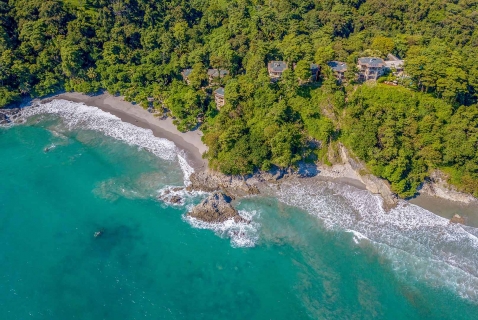 Where the rain forest meets the ocean
I promise that you will not find a better location, better views, nicer rooms or lovelier staff anywhere in Costa Rica. This place really goes above and beyond.
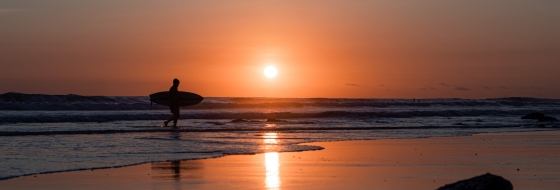 Exploring Santa Teresa, Costa Rica: A Traveler's Guide
Immerse yourself in the laid-back charm of Santa Teresa, Costa Rica. Discover stunning beaches, vibrant dining spots, unique shops, and diverse activities in our comprehensive guide
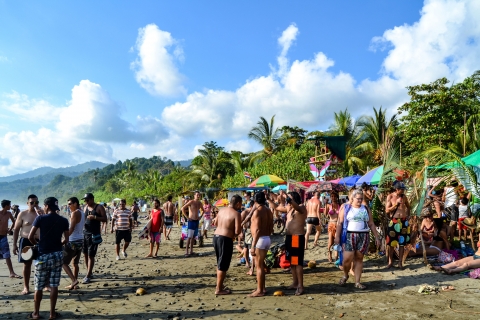 Envision Festival
This event happens once a year in Uvita de Puntarenas and attracts people from all over the world. This festival is a must add to your bucket list.