

















 Best Spring Break Destinations for Great Weather and Fewer Crowds
Skip crowded spring break resorts. Compare March weather and travel style in Puerto Escondido, San Juan del Sur, Roatán, Caye Caulker and Curaçao.
Average temperatures, rainfall, sunshine and the best time to visit Los Ángeles.
 –
–
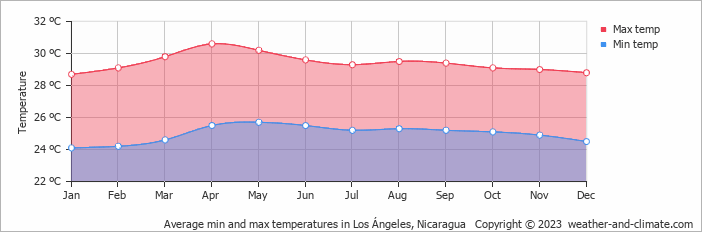
The climate in Los Ángeles, Nicaragua, is remarkably consistent, with temperatures year-round averaging 29°C (84°F). The warmest month is April at 31°C (88°F), and the coolest is January at 29°C (84°F).
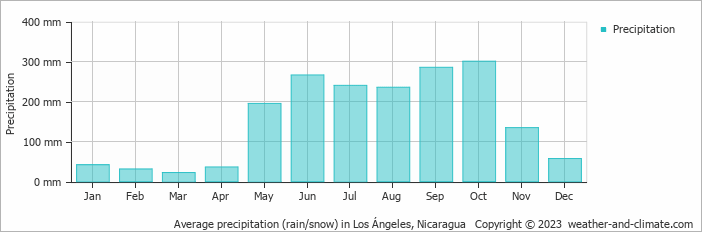
Rainfall is high, totalling around 1842 mm (73 in) per year. October is the wettest month and March the driest. The city also experiences distinct dry (February to April) and wet (May to October) seasons. March is the sunniest month, averaging 8.3 hours of sunshine per day.
Pick a month to see the average temperature, rainfall and sunshine in Los Ángeles - and find the best time to visit.
In Los Ángeles temperatures are generally consistent throughout the year. Average maximum daytime temperatures range from a very warm 31°C (88°F) in April, the warmest time of the year, to a comfortable 29°C (84°F) during cooler months like January.
At night, you can expect temperatures ranging from 26°C (79°F) in April to around 24°C (75°F) during January.
Check out our detailed temperature page for more information.
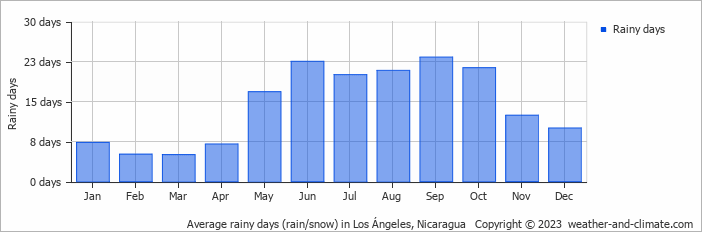
Los Ángeles experiences significant rainfall throughout the year, averaging 1842 mm (73 in) of precipitation annually. Significant seasonal changes in precipitation occur throughout the year. In the wettest month, October it receives heavy rainfall, averaging 300 mm (12 in) of precipitation, recorded across 21 rainy days. In contrast, the driest month March brings less rainfall, with 22 mm (0.9 in) over 5 rainy days. For more details, please visit our Los Ángeles Precipitation page.
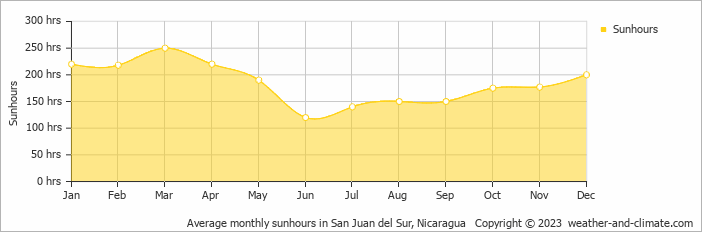
Seasonal changes in sunshine hours are quite dramatic in Los Ángeles. While March receives considerable daily sunshine with up to 8.3 hours, June marks the darkest time of the year, where sunshine is scarce with only 4.0 hours of sunlight per day.
Visit our detailed sunshine hours page for more information.
Monthly ratings reflect general weather comfort, based on daytime temperature and rainfall. Swimming and winter conditions are highlighted separately where relevant.
January, February and December typically offer the most optimal weather in Los Ángeles. In contrast, May, June, August, September and October tend to have less optimal conditions. Los Ángeles has distinct dry (February to April) and wet (May to October) seasons.
Daytime highs range from 29°C (84°F) in January to 31°C (88°F) in April. Nighttime lows range from 24°C (75°F) to 26°C (79°F). Temperatures stay relatively stable year-round.
Annual rainfall is around 1842 mm (73 in). October is the wettest month with 300 mm (12 in), while March is the driest with 22 mm (0.9 in).
Los Ángeles receives around 2,210 hours of sunshine per year. March is the sunniest month with 250 hours, while June is the cloudiest with just 120 hours. Overall, Los Ángeles enjoys abundant sunshine.
Los Ángeles is highlighted - select any city to see its climate.
Where to go in October - average daytime high across popular destinations.
 Managua
 32°C (90°F) León31°C (88°F) Granada30°C (86°F) Big Corn Island29°C (84°F) Moyogalpa29°C (84°F) San Juan del Sur29°C (84°F) Popoyo30°C (86°F) Estelí29°C (84°F)
 Need travel inspiration? Check out our bucket list articles and be inspired.
Best Spring Break Destinations for Great Weather and Fewer Crowds
Skip crowded spring break resorts. Compare March weather and travel style in Puerto Escondido, San Juan del Sur, Roatán, Caye Caulker and Curaçao.
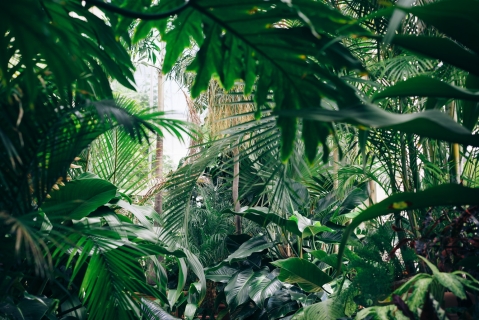 A piece of paradise in the jungle
With spectacular views of the Mombacho Volcano across the lake and nine luxury bungalows, this place took our breath away.
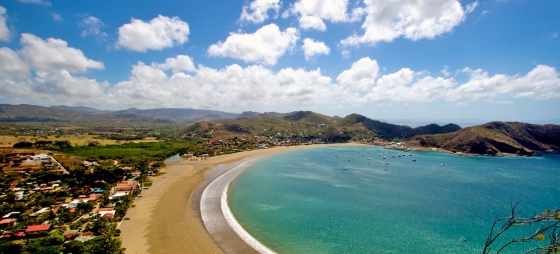 Find your peace in San Juan del Sur
A large bay with large mountains on both sides, boats that float peacefully in the water and a relaxed atmosphere. San Juan del Sur in southwest Nicaragua is known as a surfers paradise.
 The top 5 unexplored rainforests in Central America
Dive into Central America's top 5 hidden rainforests for an unparalleled journey through vibrant wildlife and diverse landscapes.