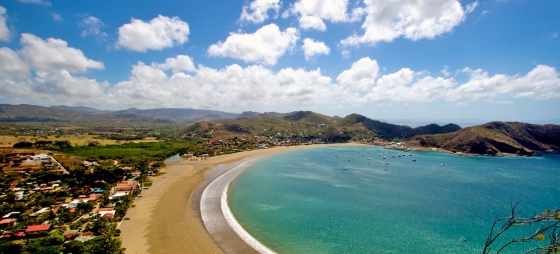
Nicaragua has a tropical climate, similar to other Central American countries. This means the weather is basically divided into two seasons: dry and wet. The dry season lasts from November to April with minimal rainfall, and vegetation may even dry up during that time. At the start of May, or in some years June, the rain in the official wet season begins, and trees and plants start growing and flourishing, casting a green color over the landscape. August and September present scattered, torrential rains of a tropical nature, which can sometimes be steady and very intense. The eastern half of the country is generally wetter than the west.
Temperature Zones
Nicaragua is divided into three temperature zones. The lowlands across both the Pacific and Atlantic coasts can range from about 22°C (72°F) at night to 30°C (86°F) during the day. Temperatures can reach as high as 38°C (100°F) in May. The central region of the country is about 5°C (41°F) cooler, while the northern mountains can be as cool as 10°C (50°F).
Best Time to Visit Nicaragua
The best time to visit Nicaragua is from December to April, which applies to the whole country, both east and west.
Hurricane Season
The eastern half of the country experiences tropical storms, depressions, and hurricanes because the region is prone to such weather events. The hurricane season runs from June to December when heavy rains, storms, and storm surges can affect the area. The probability of a hurricane impact is very low, but there are many chances for high-intensity rainfall causing flooding, mudslides, or landslides, especially if a large amount of rainfall is concentrated within a short period.
 United States of America
 Canada
 Mexico
 Costa Rica
 Dominican Republic
 Panama