














 The 10 most alternative cities in South America
Discover South America's top 10 alternative cities! From Valparaíso's vibrant streets to La Paz's high-altitude charm and Medellín's innovative spirit.
Average temperatures, rainfall, sunshine and the best time to visit Lago San Martin.
 –
10-day forecastForecast
–
10-day forecastForecast
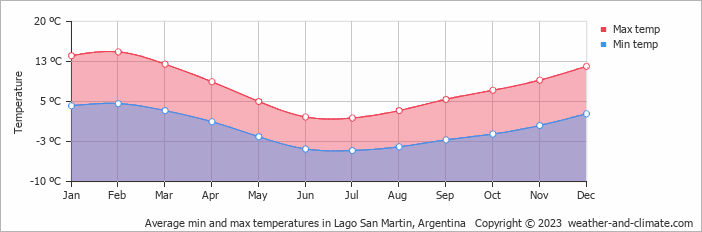
Temperatures in Lago San Martin, Santa Cruz, Argentina, vary greatly throughout the year. February is the hottest month at 14°C (57°F), while July is the coldest at 2°C (36°F).
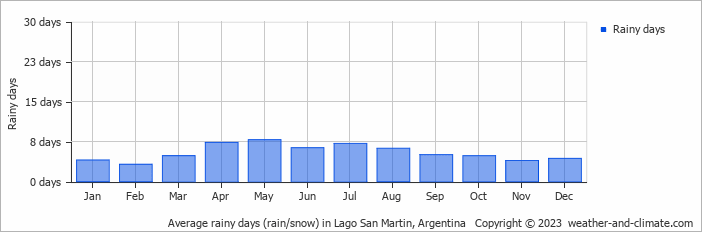
The city receives considerable rain/snowfall, with around 1362 mm (54 in) annually. April is the wettest month. It has mild summers and very cold winters. December is the sunniest month, averaging 8.7 hours of sunshine per day.
Pick a month to see the average temperature, rainfall and sunshine in Lago San Martin - and find the best time to visit.
The climate in Lago San Martin is known for significant temperature differences throughout the year, making the weather dynamic. Typically, average maximum daytime temperatures range from a moderate 14°C (57°F) in February to a very cold 2°C (36°F) in the coolest month, July.
Nights vary from 5°C (41°F) in February to around -4°C (25°F) during the colder months.
Check out our detailed temperature page for more information.
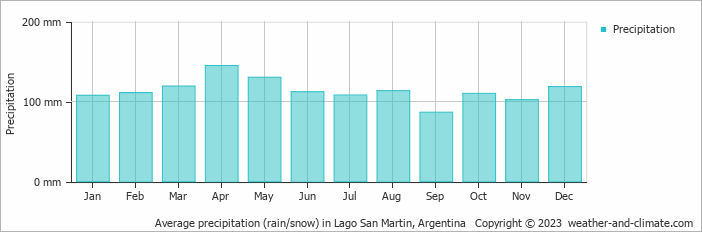
Lago San Martin has a notably wet climate with abundant precipitation, recording 1362 mm (54 in) of rain/snowfall per year. Lago San Martin offers a pleasant mix of wetter and slightly drier months. The difference in precipitation between the wettest month April (145 mm (5.7 in)) and the driest month September (86 mm (3.4 in)) is not too significant. For more details, please visit our Lago San Martin Precipitation page.
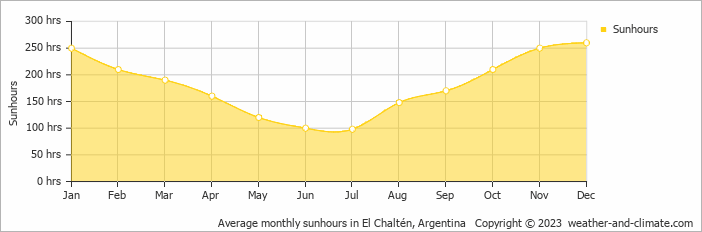
For those who appreciate different seasons, Lago San Martin serves as an ideal destination. Expect longer, more sun-filled days in December with an average of 8.7 hours of sunshine daily, and embrace the darker days in July, offering only 3.3 hours of daily sunlight.
Visit our detailed sunshine hours page for more information.
Monthly ratings reflect general weather comfort, based on daytime temperature and rainfall. Swimming and winter conditions are highlighted separately where relevant.
January and February typically offer the most optimal weather in Lago San Martin. In contrast, March, April, May, June, July, August, September, October, November and December tend to have less optimal conditions. Lago San Martin has mild summers and very cold winters.
Daytime highs range from 2°C (36°F) in July to 14°C (57°F) in February. Nighttime lows range from -4°C (25°F) to 5°C (41°F). Temperatures vary considerably through the year.
Annual rainfall is around 1362 mm (54 in). April is the wettest month with 145 mm (5.7 in), while September is the driest with 86 mm (3.4 in).
Lago San Martin receives around 2,166 hours of sunshine per year. December is the sunniest month with 260 hours, while July is the cloudiest with just 98 hours. Overall, Lago San Martin enjoys abundant sunshine.
Lago San Martin is highlighted - select any city to see its climate.
Where to go in October - average daytime high across popular destinations.
Córdoba 25°C (77°F) Mendoza
 24°C (75°F) Salta
 23°C (73°F) Villa Carlos Paz23°C (73°F) Buenos Aires23°C (73°F) Mar del Plata18°C (64°F) San Carlos de Bariloche11°C (52°F) San Martín de los Andes11°C (52°F)
 Need travel inspiration? Check out our bucket list articles and be inspired.
The 10 most alternative cities in South America
Discover South America's top 10 alternative cities! From Valparaíso's vibrant streets to La Paz's high-altitude charm and Medellín's innovative spirit.
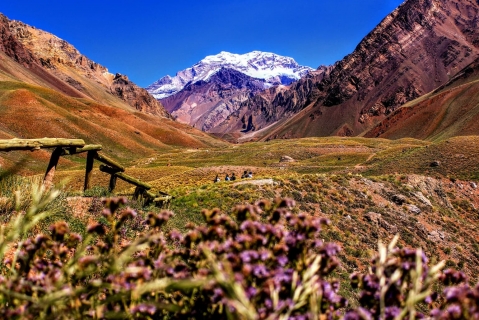 Warm Days, Cool Nights: 8 Destinations With the Perfect Day-Night Temperature
Prefer warm sunny days but cool evenings? Compare eight destinations with daytime temperatures of around 25–30°C, cooler nights, low rainfall and plenty of sunshine.
 Be amazed by Buenos Aires
The city of beautiful museums, cute streets, green parks, lots of good food, interesting local neighborhoods and impressive historical buildings.
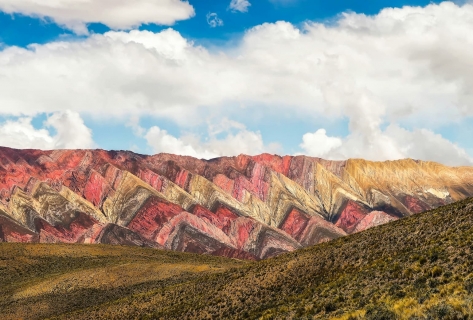 Argentina in November: Where to Go for the Best Weather
Compare November weather in Mendoza, Buenos Aires, Cafayate, Bariloche and Ushuaia to find Argentina's warmest, sunniest and driest places.