














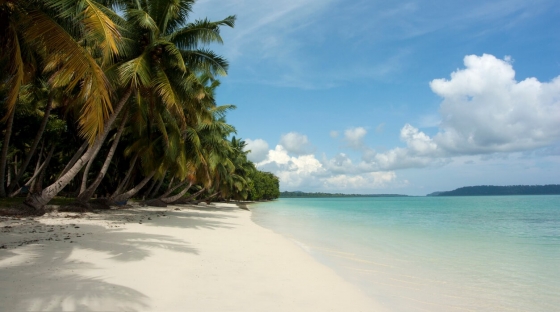
 A paradise called Andaman Islands
Though officially Indian, the Andamans are nearer Myanmar, Indonesia, and Thailand, resulting in amazing, budget-friendly white-sand beaches.
Average temperatures, rainfall, sunshine and the best time to visit Haridwār.
 –
10-day forecastForecast
–
10-day forecastForecast
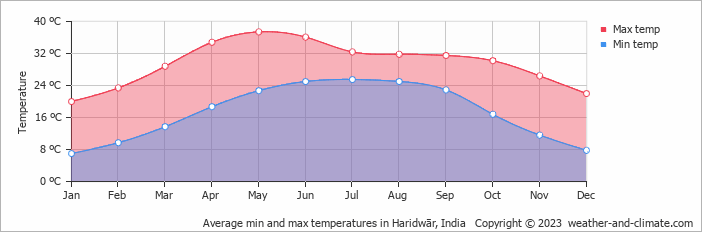
Haridwār, Uttarakhand, India, sees big temperature differences between seasons, with May peaking at 37°C (99°F) and January dropping to 20°C (68°F).
Rainfall is high, totalling around 1163 mm (46 in) per year. July is the wettest month and November the driest. The city also experiences two distinct dry seasons, April to May and October to December, with very hot summers and pleasant winters.
Pick a month to see the average temperature, rainfall and sunshine in Haridwār - and find the best time to visit.
Visitors to Haridwār can expect significant temperature changes throughout the year. Average maximum daytime temperatures range from a very hot 37°C (99°F) in May, the warmest time of the year, to a pleasant 20°C (68°F) during cooler months like January.
At night, you can expect temperatures ranging from 26°C (79°F) in May to around 7°C (45°F) during January.
Check out our detailed temperature page for more information.
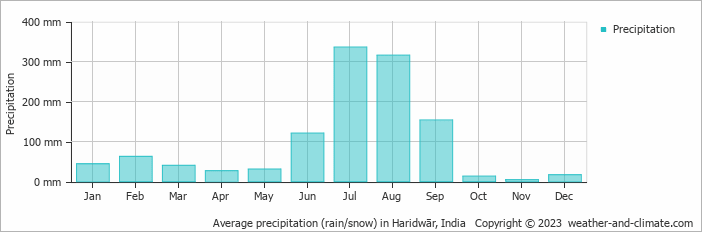
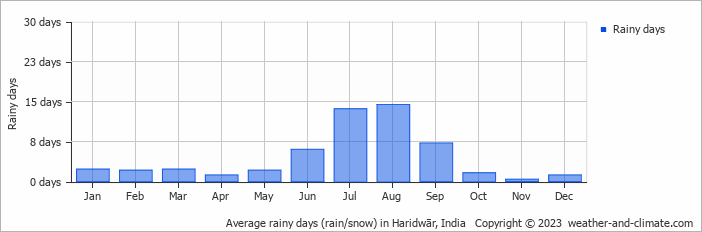
Haridwār is known for its substantial rainfall, with annual precipitation reaching 1163 mm (46 in). Significant seasonal changes in precipitation occur throughout the year. In the wettest month, July it receives heavy rainfall, averaging 336 mm (13 in) of precipitation, recorded across 14 rainy days. In contrast, the driest month November brings less rainfall, with 4.1 mm (0.2 in) over 0 rainy days. For more details, please visit our Haridwār Precipitation page.
Monthly ratings reflect general weather comfort, based on daytime temperature and rainfall. Swimming and winter conditions are highlighted separately where relevant.
January, February, March, November and December typically offer the most optimal weather in Haridwār. In contrast, April, May, June, July and August tend to have less optimal conditions. Haridwār has two distinct dry seasons, April to May and October to December, with very hot summers and pleasant winters.
Daytime highs range from 20°C (68°F) in January to 37°C (99°F) in May. Nighttime lows range from 7°C (45°F) to 26°C (79°F). Temperatures vary considerably through the year.
Annual rainfall is around 1163 mm (46 in). July is the wettest month with 336 mm (13 in), while November is the driest with 4.1 mm (0.2 in).
Haridwār is highlighted - select any city to see its climate.
Where to go in October - average daytime high across popular destinations.
New Delhi 34°C (93°F) Gurugram34°C (93°F) Jaipur35°C (95°F) Mumbai
 32°C (90°F) Hyderabad31°C (88°F) Chennai
 32°C (90°F) Bengaluru
 29°C (84°F) Kochi29°C (84°F)
 Need travel inspiration? Check out our bucket list articles and be inspired.
A paradise called Andaman Islands
Though officially Indian, the Andamans are nearer Myanmar, Indonesia, and Thailand, resulting in amazing, budget-friendly white-sand beaches.
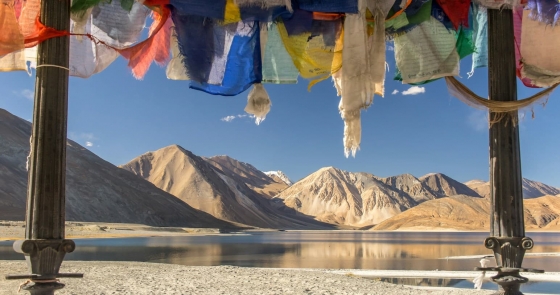 The 5 most beautiful monasteries in Ladakh
Explore Ladakh's spiritual essence through its incredible Buddhist monasteries. See architectural wonders, rich traditions, and serene landscapes in this guide.
 Sleeping under the stars and riding camels in Rajasthan
A desert safari in Jaisalmer is definitely one of the highlights during a visit to India. Spending a night in the desert is a great adventurous bucket list experience.
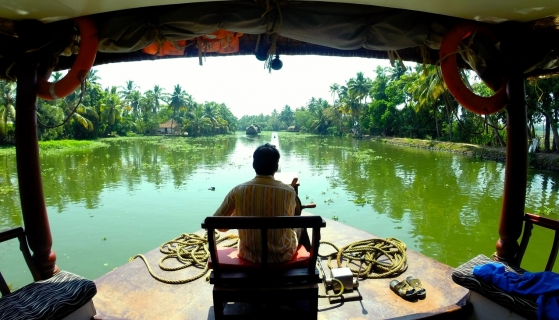 Avoid mass tourism on an eco boat in the backwaters of Kerala
We can tell you now how you can avoid being surrounded by tourists and at the same time minimize your impact on the environment.