















 Warm Sea Without Extreme Heat: 8 Beach Destinations With Comfortable Weather
Love warm seawater but not extreme heat? Compare eight beach destinations where the sea stays warm while daytime temperatures remain comfortable.
Average temperatures, rainfall, sunshine and the best time to visit Haiku.
 –
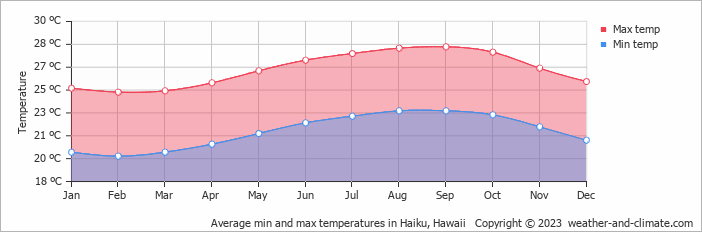
Haiku, Maui, Hawaii, has a stable climate with little temperature variation across the year. Average daytime temperatures hover around 26°C (79°F), peaking in September at 28°C (82°F) and dipping in February to 25°C (77°F).
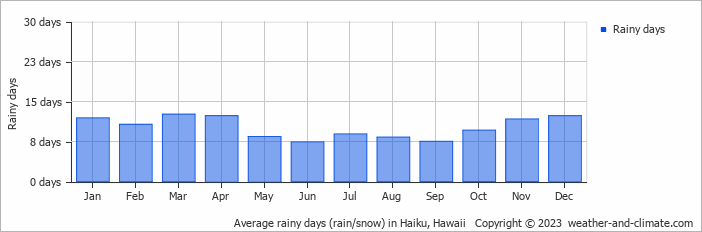
With around 916 mm (36 in) of annual rainfall, the city has moderate precipitation levels. March is the wettest month and June the driest. July is the sunniest month, averaging 9.8 hours of sunshine per day.
Pick a month to see the average temperature, rainfall and sunshine in Haiku - and find the best time to visit.
With minimal seasonal shifts, Haiku experiences a constant climate year-round. Typically, average maximum daytime temperatures range from a comfortable 28°C (82°F) in September to a comfortable 25°C (77°F) in the coolest month, February.
Nights vary from 23°C (73°F) in September to around 20°C (68°F) during the colder months.
Check out our detailed temperature page for more information.
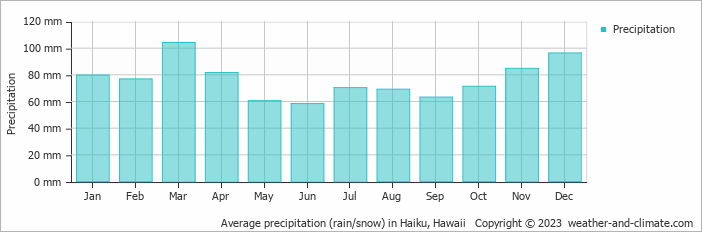
Generally, Haiku receives mid-range precipitation levels, with 916 mm (36 in) annually. Haiku offers a pleasant mix of wetter and slightly drier months. The difference in precipitation between the wettest month March (104 mm (4.1 in)) and the driest month June (58 mm (2.3 in)) is not too significant. For more details, please visit our Haiku Precipitation page.
Haiku offers a pleasant mix of sunny and slightly overcast days. The difference in sunshine hours between July (9.8 hours daily) and February (7.0 hours daily) provides a bit of variety for visitors and residents.
Visit our detailed sunshine hours page for more information.


The mean water temperature over the year ranges from 24°C (75°F) in January to 27°C (81°F) in September.

The relative humidity is high throughout the year in Haiku.
The city experiences its highest humidity in January, reaching 78%. In August, the humidity drops to its lowest level at 69%. What does this mean? Read our detailed page on humidity levels for further details.

The mean wind speed over the year ranges from 4 m/s (8 knots) in January, February, October, November and December to 6 m/s (12 knots) in June, July and August. What does this mean?

Monthly ratings reflect general weather comfort, based on daytime temperature and rainfall. Swimming and winter conditions are highlighted separately where relevant.
January, February, April, May, June, July, August, September, October, November and December typically offer the most optimal weather in Haiku. In contrast, March tends to have less optimal conditions.
Daytime highs range from 25°C (77°F) in February to 28°C (82°F) in September. Nighttime lows range from 20°C (68°F) to 23°C (73°F). Temperatures stay relatively stable year-round.
Annual rainfall is around 916 mm (36 in). March is the wettest month with 104 mm (4.1 in), while June is the driest with 58 mm (2.3 in).
Haiku receives around 2,989 hours of sunshine per year. July is the sunniest month with 294 hours, while February is the cloudiest with just 210 hours. Overall, Haiku enjoys abundant sunshine.
Haiku is highlighted - select any city to see its climate.
Where to go in October - average daytime high across popular destinations.
Need travel inspiration? Check out our bucket list articles and be inspired.
Warm Sea Without Extreme Heat: 8 Beach Destinations With Comfortable Weather
Love warm seawater but not extreme heat? Compare eight beach destinations where the sea stays warm while daytime temperatures remain comfortable.

 Maui, where the earth lovers live
Maui, also known as the heart of the world. People from all over come to discover its raw beauty. Being an island, the majority of Maui is surrounded by coral reefs. Gorgeous reefs that hold many different endemic species of fish.
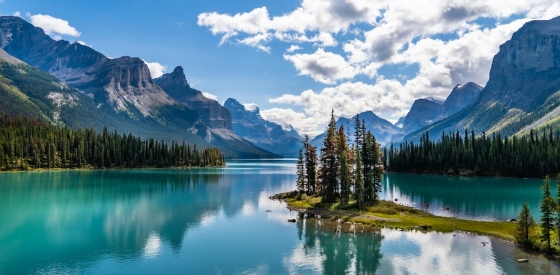
 The 5 most beautiful lakes in Canada
Explore Canada's stunning lakes: Lake Louise, Lake Superior, Maligne Lake, Emerald Lake, and Lake Okanagan, each offering unique beauty and activities.
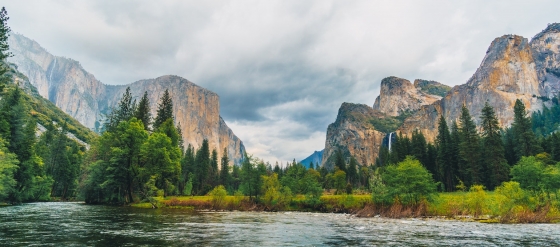 Yosemite National Park is definitely worth a visit
Vast forests, blue lakes, towering sequoias, and majestic waterfalls hint at the beauty of Yosemite National Park—a true natural masterpiece.