















 The Okavango Delta
The unique location, the peace and beauty in combination with excellent game viewing make The Okavango Delta something you need to add to your bucket list.
Average temperatures, rainfall, sunshine and the best time to visit Gaborone.
 –
–
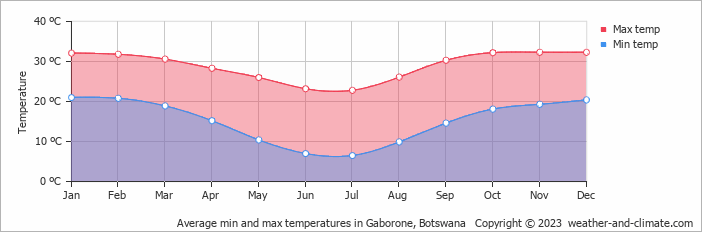
Gaborone, Botswana, experiences moderate temperature changes through the seasons. November is the warmest month with daytime highs of 32°C (90°F), while July is the coolest at 23°C (73°F).
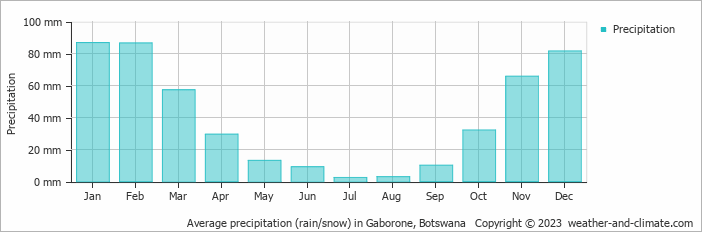
Rainfall is modest, totalling around 477 mm (19 in) annually. The city experiences a distinct dry season from April to October. January tends to be the wettest month. The most sunshine falls in August, with an average of 10.7 hours of daily sunshine.
Pick a month to see the average temperature, rainfall and sunshine in Gaborone - and find the best time to visit.
The climate in Gaborone experiences moderate temperature changes, with mild shifts between seasons. Average maximum daytime temperatures range from a very warm 32°C (90°F) in November, the warmest time of the year, to a comfortable 23°C (73°F) during cooler months like July.
At night, you can expect temperatures ranging from 21°C (70°F) in November to around 7°C (45°F) during July.
Check out our detailed temperature page for more information.
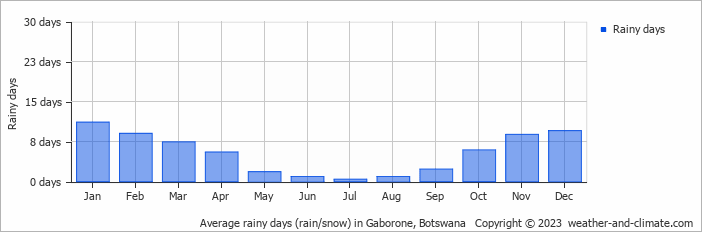
Gaborone has a relatively dry climate with low precipitation, averaging 477 mm (19 in) of rainfall annually. Significant seasonal changes in precipitation occur throughout the year. In the wettest month, January it receives moderate rainfall, averaging 87 mm (3.4 in) of precipitation, recorded across 11 rainy days. In contrast, the driest month July brings less rainfall, with 2.4 mm (0.1 in) over 0 rainy days. For more details, please visit our Gaborone Precipitation page.
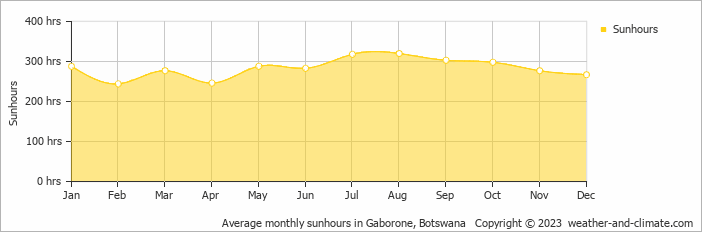
While the amount of sunshine in Gaborone varies throughout the year, all seasons offer their own charm. Enjoy up to 10.7 hours of daily sun in August, and experience slightly darker atmosphere in February, with about 8.1 hours of daily sunlight.
Visit our detailed sunshine hours page for more information.
Monthly ratings reflect general weather comfort, based on daytime temperature and rainfall. Swimming and winter conditions are highlighted separately where relevant.
April, May, June, July and August typically offer the most optimal weather in Gaborone. In contrast, January, February, March, October, November and December tend to have less optimal conditions. Gaborone has a distinct dry season from April to October.
Daytime highs range from 23°C (73°F) in July to 32°C (90°F) in November. Nighttime lows range from 7°C (45°F) to 21°C (70°F).
Annual rainfall is around 477 mm (19 in). January is the wettest month with 87 mm (3.4 in), while July is the driest with 2.4 mm (0.1 in).
Gaborone receives around 3,409 hours of sunshine per year. August is the sunniest month with 320 hours, while February is the cloudiest with just 244 hours. Overall, Gaborone enjoys abundant sunshine.
Gaborone is highlighted - select any city to see its climate.
Where to go in October - average daytime high across popular destinations.
Masarwa37°C (99°F) Chobe National Park36°C (97°F) Maun 37°C (99°F) Ghanzi35°C (95°F) Francistown33°C (91°F) Mahalapye33°C (91°F) Gaborone32°C (90°F)
 Need travel inspiration? Check out our bucket list articles and be inspired.
The Okavango Delta
The unique location, the peace and beauty in combination with excellent game viewing make The Okavango Delta something you need to add to your bucket list.
 Cycle Safari at Mashatu game reserve
An adventure of a lifetime. A safari on mountain bike through the 'Mashatu Game Reserve' in Botswana. The ultimate 'Wilderness experience' to add on your bucket list.
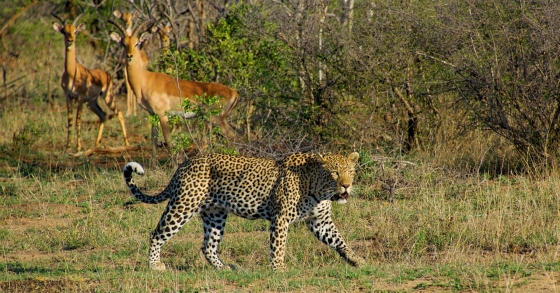
 Visit Kruger Park in South Africa
Are you going to South Africa, then you cannot skip the Kruger Park. The Kruger Park is one of the most beautiful and largest safari parks in the world.
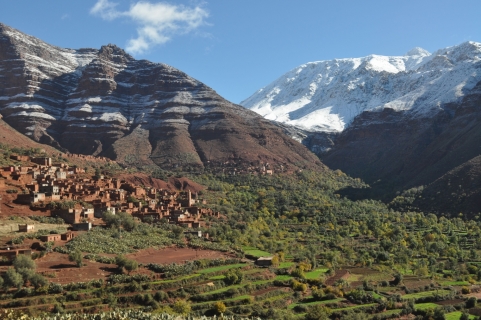
 The Atlas Mountains in Morocco
This mountain range is the second highest mountains in the world and is certainly one of the most natural and wonderful mountains you could ever visit. One for the bucket list for sure.