















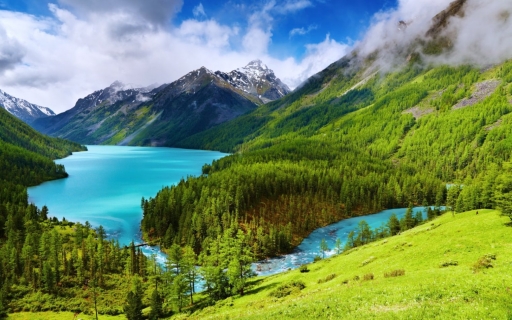
 Be amazed by the Altai mountains
The Atlai mountains are a sparsely populated area that most tourists have not yet discovered. Definitely bucket list material for the adventurous travelers among us.
Average temperatures, rainfall, sunshine and the best time to visit Balqash.
 –
Balqash, in Kazakhstan, experiences a cold desert climate with significant seasonal temperature variation. The area has very warm summers and very cold winters with the region receiving minimal precipitation throughout the year, creating typical arid continental conditions.
This industrial city attracts tourists with its location on the northern shore of Lake Balkhash, one of the largest lakes in Central Asia known for its unique half-freshwater, half-saline composition. Here you can experience authentic Kazakh steppe life while you explore desert landscapes and the vast inland sea of Lake Balkhash. Let's now guide you through the climate details for a complete overview on the best time to visit.
Pick a month to see the average temperature, rainfall and sunshine in Balqash - and find the best time to visit.
Visitors to Balqash can expect significant temperature changes throughout the year. On average, daytime temperatures range from a very warm 31°C (88°F) in July to a very cold -7°C (19°F) in January.
Nighttime temperatures range from 20°C (68°F) in July to -15°C (5°F) in January.
Check out our detailed temperature page for more information.

Balqash experiences desert-like conditions in terms of precipitation with almost no rain/snowfall, generally receiving 170 mm (6.7 in) annually. The seasons in Balqash bring significant changes in precipitation. The wettest month, November, receives low snow/rainfall, with an average of 19 mm (0.7 in) of precipitation. This snow/rainfall is distributed across 8 snowy/rainy days.
In contrast, the driest month, September, experiences much less rainfall, totaling 5.2 mm (0.2 in) over 4 rainy days. These distinct seasonal differences provide diverse experiences throughout the year. For more details, please visit our Balqash Precipitation page.


Monthly ratings reflect general weather comfort, based on daytime temperature and rainfall. Swimming and winter conditions are highlighted separately where relevant.
May, June, August and September typically offer the most optimal weather in Balqash. In contrast, January, February, March, November and December tend to have less optimal conditions. Balqash has very little rainfall year-round, with very warm summers and very cold winters.
Daytime highs range from -7°C (19°F) in January to 31°C (88°F) in July. Nighttime lows range from -15°C (5°F) to 20°C (68°F). Temperatures vary considerably through the year.
Annual rainfall is around 170 mm (6.7 in). November is the wettest month with 19 mm (0.7 in), while September is the driest with 5.2 mm (0.2 in). In the coldest months, precipitation may fall as snow/rain.
Balqash is highlighted - select any city to see its climate.
Where to go in October - average daytime high across popular destinations.
 Shymkent20°C (68°F) Kapchagay
 19°C (66°F) Atyraū
 16°C (61°F) Almaty13°C (55°F) Aktobe12°C (54°F) Ustʼ-Kamenogorsk12°C (54°F) Karaganda11°C (52°F) Nur-Sultan11°C (52°F)
Need travel inspiration? Check out our bucket list articles and be inspired.
Be amazed by the Altai mountains
The Atlai mountains are a sparsely populated area that most tourists have not yet discovered. Definitely bucket list material for the adventurous travelers among us.
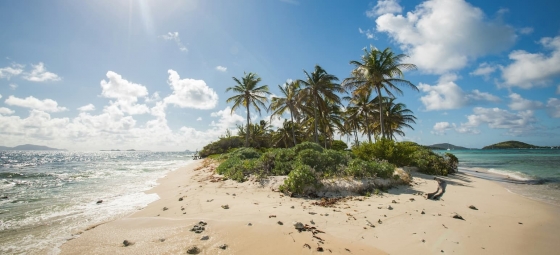
 10 Hidden gems in Asia you need to visit
Explore 10 hidden gems in Asia offering authentic experiences, from pristine beaches and remote islands to cultural treks and peaceful mountain villages.
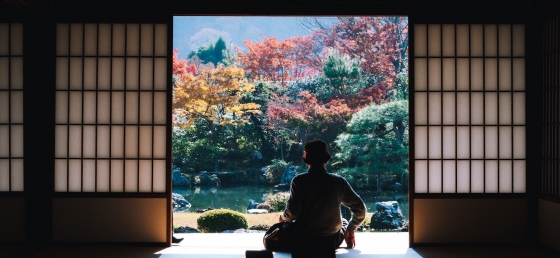
 Chase the autumn leaves in Japan
Japan is one of these cases which turns into a gold, yellow and orange fairy tale starting from September. And we can honestly say: We cannot imagine a more beautiful season to visit Japan.

 The 10 Most Exquisite Beaches in the Philippines
Explore the top 10 breathtaking beaches in the Philippines, from serene Nacpan Beach to volcanic Camiguin Island, in our detailed guide.