Arno Atoll Weather & Climate: Best Time to Visit
Average temperatures, rainfall, sunshine and the best time to visit Arno Atoll.
Climate overview of Arno Atoll
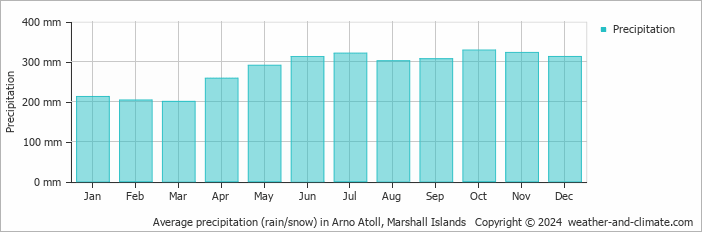
Arno Atoll, in the Marshall Islands, experiences a tropical rainforest climate with consistently warm temperatures year-round. The atoll receives substantial rainfall throughout the year, with slightly higher precipitation typically occurring from June to December.
This remote atoll attracts tourists with many lagoons and traditional Marshallese island culture. It's also known for excellent opportunities for fishing and diving in crystal-clear waters far from tourist crowds. Let's now guide you through the climate details for a complete overview on the best time to visit.
Arno Atoll Weather by Month
Pick a month to see the average temperature, rainfall and sunshine in Arno Atoll - and find the best time to visit.

Monthly Temperature in Arno Atoll
The climate in Arno Atoll remains fairly constant, offering comfortable temperatures throughout the year. Average daytime temperatures reach a comfortable 29°C (84°F) in September. In February, the coolest month of the year, temperatures drop to a comfortable 29°C (84°F).
At night, temperatures range from around 26°C (79°F) in September to 26°C (79°F) in February.
Check out our detailed temperature page for more information.
Temperature ranges by month

Rainfall in Arno Atoll
Arno Atoll is known for its substantial rainfall, with annual precipitation reaching 3366 mm (133 in). Arno Atoll experiences moderate seasonal variation in rainfall, with monthly averages ranging from 328 mm (13 in) in October, the wettest month, and 200 mm (7.9 in) in March, the driest month. For more details, please visit our Arno Atoll Precipitation page.
The mean monthly precipitation over the year, including rain, hail, and snow
The average number of days each month with precipitation

Sunshine Hours in Arno Atoll
Arno Atoll experiences moderate variation in sunshine hours across the seasons. With 8.4 hours daily sunshine in March, it dips to 6.4 hours in November, offering a balanced mix of sunny and overcast days.
Visit our detailed sunshine hours page for more information.
Monthly hours of sunshine

Daily hours of sunshine
Humidity in Arno Atoll by Month
The relative humidity is high throughout the year in Arno Atoll.
The city experiences its highest humidity in May, reaching 82%. In February, the humidity drops to its lowest level at 77%. What does this mean? Read our detailed page on humidity levels for further details.
Relative humidity over the year

Best Time to Visit Arno Atoll
Monthly ratings reflect general weather comfort, based on daytime temperature and rainfall. Swimming and winter conditions are highlighted separately where relevant.
- Best overall: January, February, March and April
- Warmest weather: all year round
- Most sunshine: March
Frequently asked questions about the climate in Arno Atoll
What is the best time to visit Arno Atoll?
January, February, March and April typically offer the most optimal weather in Arno Atoll. In contrast, May, June, July, August, September, October, November and December tend to have less optimal conditions.
What temperatures can I expect in Arno Atoll?
Daytime highs range from 29°C (84°F) in February to 29°C (84°F) in September. Nighttime lows range from 26°C (79°F) to 26°C (79°F). Temperatures stay relatively stable year-round.
How much rain does Arno Atoll get?
Annual rainfall is around 3366 mm (133 in). October is the wettest month with 328 mm (13 in), while March is the driest with 200 mm (7.9 in).
How sunny is Arno Atoll?
Arno Atoll receives around 2,611 hours of sunshine per year. March is the sunniest month with 253 hours, while November is the cloudiest with just 191 hours. Overall, Arno Atoll enjoys abundant sunshine.
Arno Atoll 3-Day Forecast
Arno Atoll on the map
Arno Atoll is highlighted - select any city to see its climate.
Popular this month
Where to go in August - average daytime high across popular destinations.