















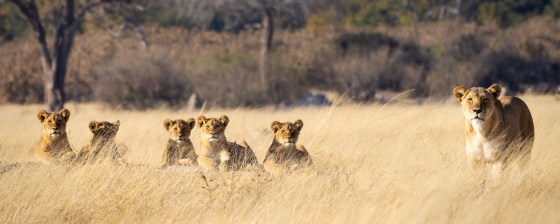
 Hwange National Park: Discover Zimbabwe's untamed wilderness
Discover Zimbabwe's iconic Hwange National Park, a vast wilderness teeming with wildlife. Unforgettable safaris, diverse landscapes, and captivating encounters await.
Average temperatures, rainfall, sunshine and the best time to visit Harare.
 –
–
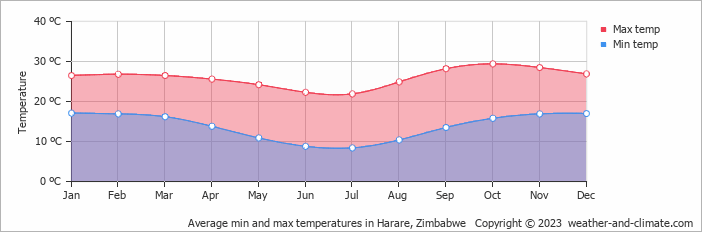
Harare, Zimbabwe, experiences moderate temperature changes through the seasons. October is the warmest month with daytime highs of 29°C (84°F), while July is the coolest at 22°C (72°F).
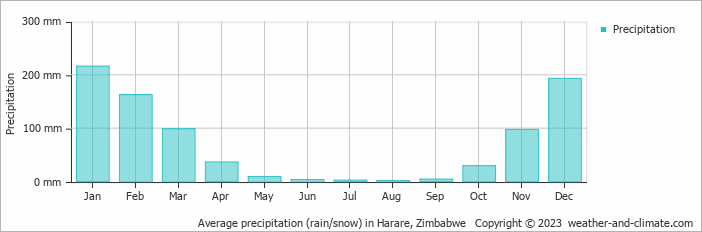
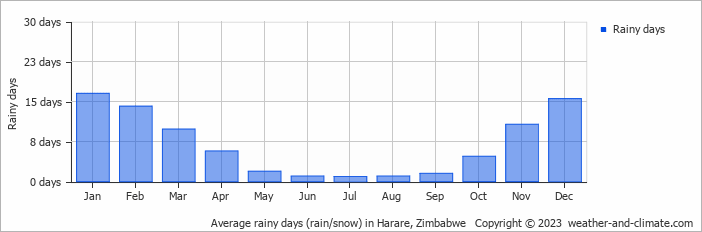
Annual rainfall is moderate at around 853 mm (34 in), with January being the wettest month. The city also has a distinct dry season from April to October. The sunniest month is August, with 9.7 hours of sunshine per day on average.
Pick a month to see the average temperature, rainfall and sunshine in Harare - and find the best time to visit.
The climate in Harare experiences moderate temperature changes, with mild shifts between seasons. Average daytime temperatures reach a comfortable 29°C (84°F) in October. In July, the coolest month of the year, temperatures drop to a pleasant 22°C (72°F).
At night, temperatures range from around 17°C (63°F) in October to 8°C (46°F) in July.
Check out our detailed temperature page for more information.
Generally, Harare has a moderate amount of precipitation, averaging 853 mm (34 in) of rainfall annually. Harare can be quite wet during January, receiving approximately 216 mm (8.5 in) of precipitation over 17 rainy days.
In contrast, during the driest month (August), you will experience much drier conditions, with 1.4 mm (0.1 in) of precipitation spread across a single rainy day. For more details, please visit our Harare Precipitation page.
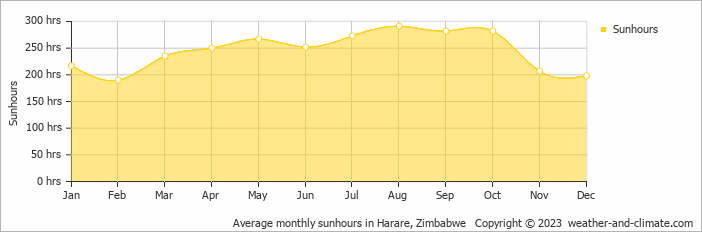
Harare experiences moderate variation in sunshine hours across the seasons. With 9.7 hours daily sunshine in August, it dips to 6.3 hours in February, offering a balanced mix of sunny and overcast days.
Visit our detailed sunshine hours page for more information.
The relative humidity is high throughout the year in Harare.
The city experiences its highest humidity in February, reaching 77%. In September, the humidity drops to its lowest level at 45%. What does this mean? Read our detailed page on humidity levels for further details.

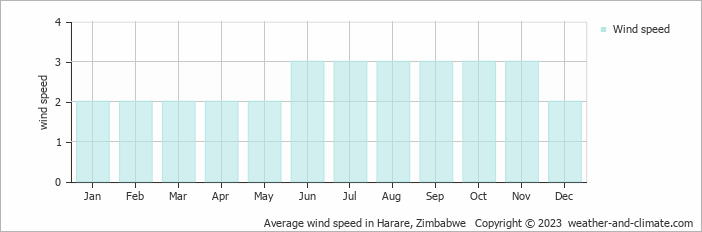
The mean wind speed over the year ranges from 2 m/s (4 knots) in January, February, March, April, May and December to 3 m/s (6 knots) in June, July, August, September, October and November. What does this mean?
Monthly ratings reflect general weather comfort, based on daytime temperature and rainfall. Swimming and winter conditions are highlighted separately where relevant.
March, April, May, June, July, August, September, October and November typically offer the most optimal weather in Harare. In contrast, January tends to have less optimal conditions. Harare has a distinct dry season from April to October.
Daytime highs range from 22°C (72°F) in July to 29°C (84°F) in October. Nighttime lows range from 8°C (46°F) to 17°C (63°F).
Annual rainfall is around 853 mm (34 in). January is the wettest month with 216 mm (8.5 in), while August is the driest with 1.4 mm (0.1 in).
Harare receives around 2,944 hours of sunshine per year. August is the sunniest month with 291 hours, while February is the cloudiest with just 190 hours. Overall, Harare enjoys abundant sunshine.
Harare is highlighted - select any city to see its climate.
Where to go in October - average daytime high across popular destinations.
Dete35°C (95°F) Chinhoyi32°C (90°F) Kwekwe33°C (91°F) Bulawayo 31°C (88°F) Gweru30°C (86°F) Harare29°C (84°F) Mutare28°C (82°F) Nyanga26°C (79°F)
 Need travel inspiration? Check out our bucket list articles and be inspired.
Hwange National Park: Discover Zimbabwe's untamed wilderness
Discover Zimbabwe's iconic Hwange National Park, a vast wilderness teeming with wildlife. Unforgettable safaris, diverse landscapes, and captivating encounters await.
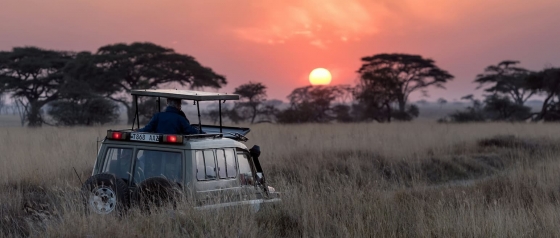
 5 Untouched Safari Destinations in Africa
Discover Africa's hidden national parks, from Zambia's Liuwa Plain to Zimbabwe's Matusadona, offering unique wildlife experiences off the beaten path.
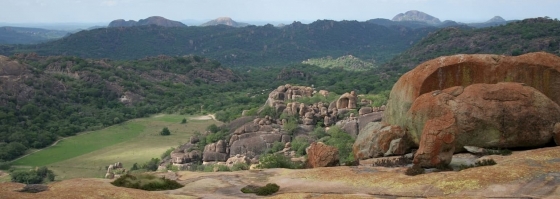 Matobo National Park: A Land of Ancient Wonders
Discover the wonders of Matobo National Park, Zimbabwe—home to stunning granite formations, rich wildlife, and ancient spiritual rock paintings.
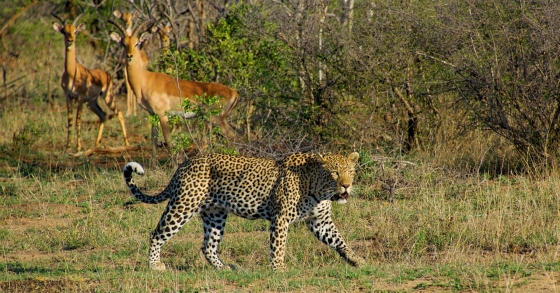
 Visit Kruger Park in South Africa
Are you going to South Africa, then you cannot skip the Kruger Park. The Kruger Park is one of the most beautiful and largest safari parks in the world.