













 5 Untouched Safari Destinations in Africa
Discover Africa's hidden national parks, from Zambia's Liuwa Plain to Zimbabwe's Matusadona, offering unique wildlife experiences off the beaten path.
On this page you find more information about the monthly relative humidity over the year in Mongo (), Chad.
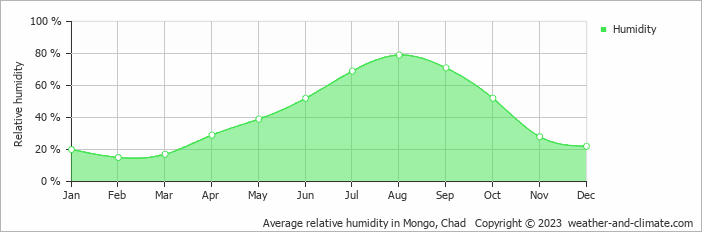
Mongo's humidity levels vary throughout the year. The highest levels occur in August, reaching 79% (high), while the lowest is recorded in February at 15%.
Throughout the year, the average humidity in Mongo is 41%.
Humidity plays an important role in how temperatures are felt. During the warmest month, April, the maximum average temperature is around 41°C (106°F). During this warm period, the low humidity levels have little impact on how the temperature is perceived.
During the coldest month, August, the maximum average temperature is around 31°C (88°F). This period has high humidity. Check out our detailed temperature page for more information.
Pick a month to see the average temperature, rainfall and sunshine in Mongo - and find the best time to visit.
Temperature Rainfall Humidity
See the full Mongo climate overview or explore weather in Chad.
Where to go in September - average daytime high across popular destinations.
 Faya-Largeau
 41°C (106°F) Ati
 36°C (97°F) Abeche35°C (95°F) NʼDjamena
 34°C (93°F) Mongo
 33°C (91°F) Bousso
 32°C (90°F) Am Timan32°C (90°F) Moundou31°C (88°F)
 Need travel inspiration? Check out our bucket list articles and be inspired.
5 Untouched Safari Destinations in Africa
Discover Africa's hidden national parks, from Zambia's Liuwa Plain to Zimbabwe's Matusadona, offering unique wildlife experiences off the beaten path.
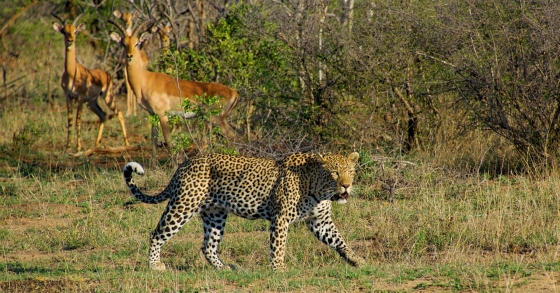
 Visit Kruger Park in South Africa
Are you going to South Africa, then you cannot skip the Kruger Park. The Kruger Park is one of the most beautiful and largest safari parks in the world.
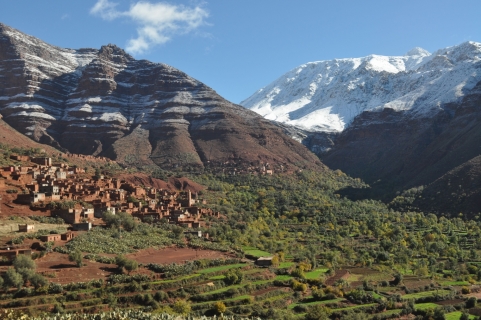
 The Atlas Mountains in Morocco
This mountain range is the second highest mountains in the world and is certainly one of the most natural and wonderful mountains you could ever visit. One for the bucket list for sure.
 One of South Africa's most spectacular private game reserves
Sabi Sand Game Reserve is one of South Africa's most spectacular private game reserves. The chance that you see the entire Big Five is high in winter (June - August).