













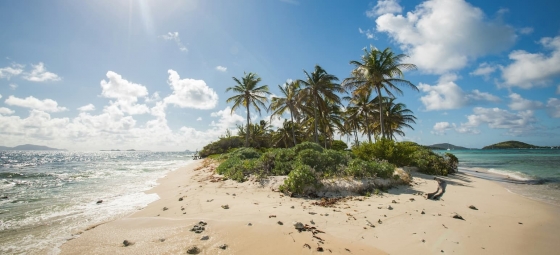
 10 Hidden gems in Asia you need to visit
Explore 10 hidden gems in Asia offering authentic experiences, from pristine beaches and remote islands to cultural treks and peaceful mountain villages.
This page shows both the average monthly rainfall and the number of rainy days in Viangxai, Laos. These averages rely on historical data collected over 30 years, from 1990 to 2020. Let's explore the details to provide you with a complete overview.
Viangxai has a relatively rainy climate with high precipitation levels, averaging 1659 mm (65 in) of rainfall annually. Despite the high annual total, it does experience a distinct dry and rainy season during certain months. Examine our detailed charts below to understand these seasonal patterns.


The climate in Viangxai shows significant variation throughout the year. Expect 310 mm (12 in) of precipitation during the wettest month August, distributed over 23 rainy days.
In contrast, February offers drier and sunnier days, with around 26 mm (1 in) of rainfall over 8 rainy days.
August, the wettest month, has a maximum daytime temperature of 29°C (84°F). During the driest month February you can expect a temperature of 24°C (75°F). For more detailed insights into the city's temperatures, visit our Viangxai Temperature page.
The map below shows the annual precipitation across Laos. You can also select the different months in case you are interested in a specific month.
Viangxai's average annual precipitation is 1659 mm (65 in). Let's compare this to some popular worldwide tourist destinations:
Athens, Greece, receives an average annual precipitation of 400 mm (16 in), making it one of the drier Mediterranean climates with rainfall mostly in winter.
Meanwhile, Buenos Aires, Argentina, enjoys a humid subtropical climate with 1000 mm (39 in) of annual rainfall, mostly in the summer.
Adelaide, Australia, enjoys 511 mm (20 in) of annual precipitation, with dry summers and wet winters.
Singapore, situated near the equator, gets 2581 mm (102 in) of rainfall annually, with no distinct dry season and consistent monthly precipitation.
Precipitation amounts are measured using specific gauges installed at weather stations, collecting both rain and snow and any other type of precipitation. Rainfall is measured directly in millimeters, while that from snow and ice is obtained by melting it. Automated systems often incorporate heaters to make this easier.
Information from these stations is transmitted via Wi-Fi, satellite, GPS, or telephone connections to central monitoring networks. This information is immediately updated and integrated into weather models and forecasts.
Climate change is affecting precipitation patterns worldwide, including Viangxai:
For more detailed information about Viangxai's weather, including sunshine hours, humidity levels, and temperature data, visit our Viangxai Climate page.
Pick a month to see the average temperature, rainfall and sunshine in Viangxai - and find the best time to visit.
Temperature Rainfall
See the full Viangxai climate overview or explore weather in Laos.
Where to go in October - average daytime high across popular destinations.
 Thakhek
 32°C (90°F) Ban Dondét
 33°C (91°F) Vientiane33°C (91°F) Savannakhet
 32°C (90°F) Pakse31°C (88°F) Vang Vieng
 30°C (86°F) Luang Prabang
 30°C (86°F) Louang Namtha29°C (84°F)
Need travel inspiration? Check out our bucket list articles and be inspired.
10 Hidden gems in Asia you need to visit
Explore 10 hidden gems in Asia offering authentic experiences, from pristine beaches and remote islands to cultural treks and peaceful mountain villages.
 Top 5 sacred sites in Laos
Explore Laos's spiritual heritage with our guide to the top 5 sacred sites, from mystic temples to Buddha-filled caves.
 Wat Phou: Ancient Khmer Temples in Southern Laos
The ancient Khmer temples of Wat Phou in Laos: stunning views, rich history, a unique journey along the Mekong River. Best time to visit: Nov–Feb.
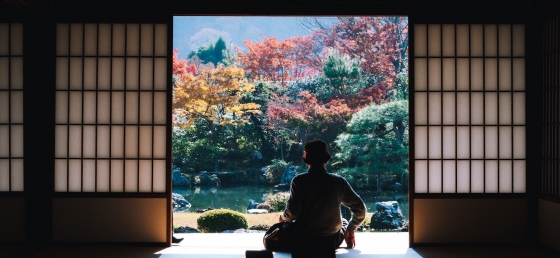
 Chase the autumn leaves in Japan
Japan is one of these cases which turns into a gold, yellow and orange fairy tale starting from September. And we can honestly say: We cannot imagine a more beautiful season to visit Japan.