

















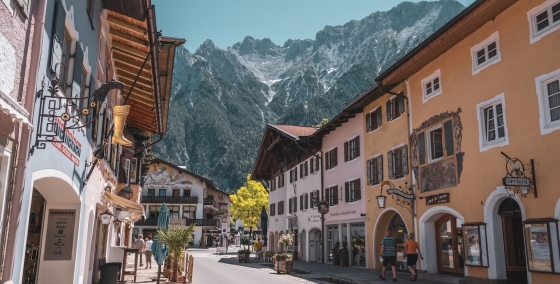
 The 10 most beautiful towns in Germany
Explore Germany's hidden gems with our guide to 10 stunning cities beyond Berlin. Discover historic towns, unique culture, and cozy atmospheres."
This page shows both the average monthly rainfall and the number of rainy days in Trostberg an der Alz, Bavaria, Germany. These values are calculated using 30 years of data (1990–2020) to ensure accuracy. Let's explore the details to provide you with a complete overview.
Trostberg an der Alz experiences significant rain/snowfall throughout the year, averaging 1242 mm (49 in) of precipitation annually.
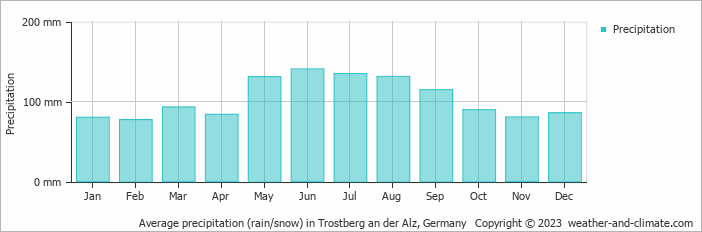
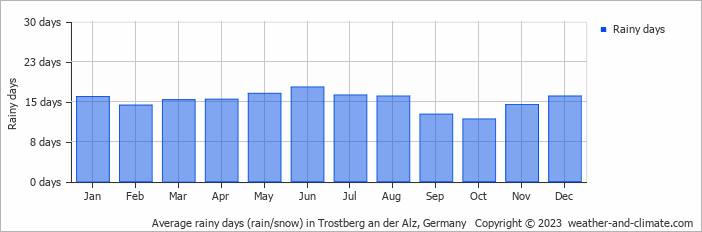
The amount of precipitation varies moderately throughout the year. The wettest month, June, sees around 141 mm (5.6 in) of rainfall, perfect for those who enjoy a bit of rain now and then. The driest month, February, still receives a respectable 77 mm (3 in) of snow/rainfall.
June, the wettest month, has a maximum daytime temperature of 23°C (73°F). The city receives 201 hours of sunshine in this period. During the driest month February you can expect a temperature of 6°C (43°F). For more detailed insights into the city's temperatures, visit our Trostberg an der Alz Temperature page.
The map below shows the annual precipitation across Germany. You can also select the different months in case you are interested in a specific month.
Trostberg an der Alz's average annual precipitation is 1242 mm (49 in). Let's compare this to some popular worldwide tourist destinations:
Chicago, USA, sees an annual precipitation of 1062 mm (42 in), with rain and snow contributing to its humid climate.
Beijing, China, receives 560 mm (22 in) of annual precipitation, concentrated in the summer months.
Adelaide, Australia, enjoys 511 mm (20 in) of annual precipitation, with dry summers and wet winters.
Ho Chi Minh City, Vietnam, receives 1955 mm (77 in) of annual rainfall, with a pronounced wet season from May to November, typical of its tropical monsoon climate.
Precipitation amounts are measured using specific gauges installed at weather stations, collecting both rain and snow and any other type of precipitation. Rainfall is measured directly in millimeters, while that from snow and ice is obtained by melting it. Automated systems often incorporate heaters to make this easier.
Information from these stations is transmitted via Wi-Fi, satellite, GPS, or telephone connections to central monitoring networks. This information is immediately updated and integrated into weather models and forecasts.
The proximity of a location to a large body of water can significantly affect its rainfall patterns:
For more detailed information about Trostberg an der Alz's weather, including sunshine hours, humidity levels, and temperature data, visit our Trostberg an der Alz Climate page.
Pick a month to see the average temperature, rainfall and sunshine in Trostberg an der Alz - and find the best time to visit.
Temperature Rainfall Sunshine Humidity
See the full Trostberg an der Alz climate overview or explore weather in Germany.
Where to go in September - average daytime high across popular destinations.
Berlin 21°C (70°F) Hanover20°C (68°F) Cologne21°C (70°F) Düsseldorf21°C (70°F) Munich
 20°C (68°F) Hamburg20°C (68°F) Binz
 18°C (64°F) Winterberg18°C (64°F)
 Need travel inspiration? Check out our bucket list articles and be inspired.
The 10 most beautiful towns in Germany
Explore Germany's hidden gems with our guide to 10 stunning cities beyond Berlin. Discover historic towns, unique culture, and cozy atmospheres."
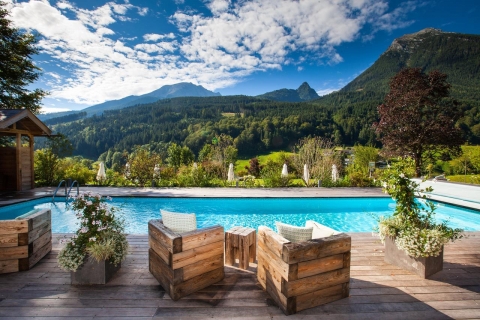 The dreamlike scenery of the German Alps
Nature in the most south-eastern part of Germany is impressive. The German Alps, with their diversity of landscapes, are an ideal destination for a wonderful holiday in nature.
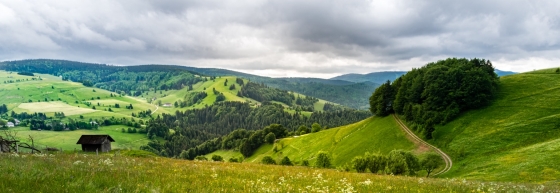 Discover Germany's Black Forest
Immerse yourself in nature and enjoy sustainable tourism practices in Germany's Black Forest. Hike, do yoga, and savor local organic cuisine and beer.
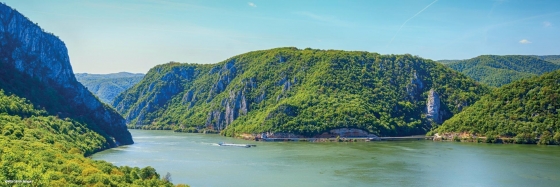
 Cycle the Danube trail
The Danube cycle route is one of the most popular cycling routes in Europe, and rightly so, because it is a varied route that is interesting both in terms of culture and nature.