















 Visit the Rainbow Mountains
The Rainbow Mountain (Vinicunca) is acolored rainbow mountain that will steal your heart forever and the view from the top will take your breath away.
This page shows both the average monthly rainfall and the number of rainy days in Llachon, Peru. These averages rely on historical data collected over 30 years, from 1990 to 2020. Let's explore the details to provide you with a complete overview.
Llachon has a notably wet climate with abundant precipitation, recording 1418 mm (56 in) of rainfall per year. It does, however, have a distinct dry and rainy season during certain months. Have a look at our detailed charts below to see how precipitation varies throughout the year.
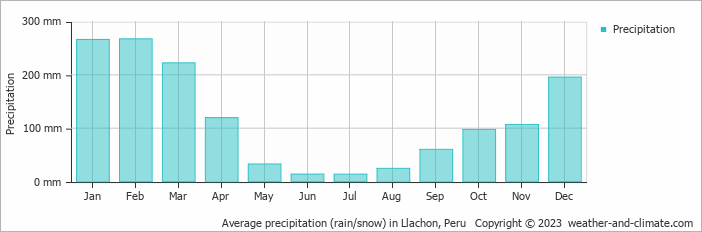
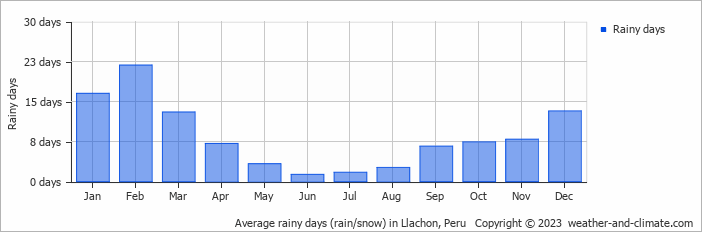
Llachon can be quite wet during February, receiving approximately 267 mm (11 in) of precipitation over 22 rainy days.
In contrast July, experiences much drier conditions, with 14 mm (0.6 in) of rainfall, spread across 2 rainy days.
February, the wettest month, has a maximum daytime temperature of 15°C (59°F). During the driest month July you can expect a temperature of 14°C (57°F). For more detailed insights into the city's temperatures, visit our Llachon Temperature page.
The map below shows the annual precipitation across Peru. You can also select the different months in case you are interested in a specific month.
Llachon's average annual precipitation is 1418 mm (56 in). Let's compare this to some popular worldwide tourist destinations:
The climate in San Francisco, USA, is influenced by coastal weather, with 469 mm (18 in) of rainfall mostly during the winter months.
Beijing, China, receives 560 mm (22 in) of annual precipitation, concentrated in the summer months.
In Brisbane, Australia, the annual precipitation is 979 mm (39 in), making it wetter than Sydney.
Ho Chi Minh City, Vietnam, receives 1955 mm (77 in) of annual rainfall, with a pronounced wet season from May to November, typical of its tropical monsoon climate.
Precipitation amounts are measured using specific gauges installed at weather stations, collecting both rain and snow and any other type of precipitation. Rainfall is measured directly in millimeters, while that from snow and ice is obtained by melting it. Automated systems often incorporate heaters to make this easier.
Information from these stations is transmitted via Wi-Fi, satellite, GPS, or telephone connections to central monitoring networks. This information is immediately updated and integrated into weather models and forecasts.
Precipitation has a very strong role in determining the local climate and ecosystem:
For more detailed information about Llachon's weather, including sunshine hours, humidity levels, and temperature data, visit our Llachon Climate page.
Pick a month to see the average temperature, rainfall and sunshine in Llachon - and find the best time to visit.
Temperature Rainfall
See the full Llachon climate overview or explore weather in Peru.
Where to go in September - average daytime high across popular destinations.
Iquitos 32°C (90°F) Trujillo
 22°C (72°F) Lima20°C (68°F) Arequipa
 20°C (68°F) Puno17°C (63°F) Cusco
 17°C (63°F) Machu Picchu15°C (59°F) Urubamba14°C (57°F)
 Need travel inspiration? Check out our bucket list articles and be inspired.
Visit the Rainbow Mountains
The Rainbow Mountain (Vinicunca) is acolored rainbow mountain that will steal your heart forever and the view from the top will take your breath away.
 "The other" Machu Picchu: the Inca City of Choquequirao
Discover Choquequirao, the hidden Inca city near Cusco. Hike through stunning landscapes and explore ancient ruins with fewer crowds than Machu Picchu.
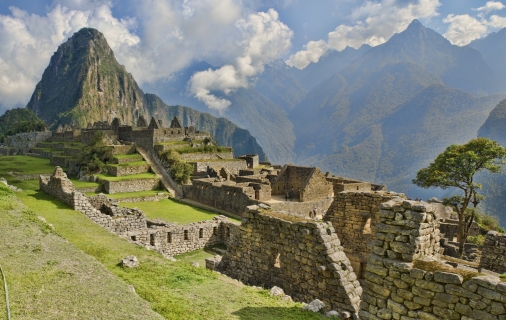 Hike the inca Trail
Few walking tours speak so much to the imagination as the Inca Trail to Machu Picchu. The tour leads through beautiful mountain landscapes and it is called the 'Royal Highway'
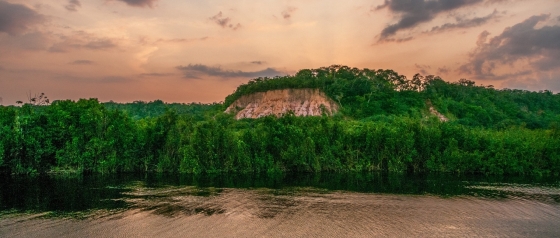 The Inkaterra Reserva Amazonica
One of your highlights during a trip in Peru might be this eco-luxury lodge in front of the Madre de Dios River, called Inkaterra Reserva Amazonica.