














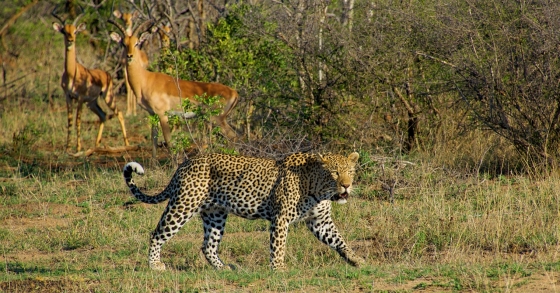
 Visit Kruger Park in South Africa
Are you going to South Africa, then you cannot skip the Kruger Park. The Kruger Park is one of the most beautiful and largest safari parks in the world.
This page shows both the average monthly rainfall and the number of rainy days in Beira, Mozambique. This average is based on long-term data collected between 1990 and 2020. Let's explore the details to provide you with a complete overview.
Beira has a relatively rainy climate with high precipitation levels, averaging 1062 mm (42 in) of rainfall annually. Despite the high annual total, it does experience a distinct dry and rainy season during certain months. Examine our detailed charts below to understand these seasonal patterns.


The climate in Beira shows significant variation throughout the year. Expect 219 mm (8.6 in) of precipitation during the wettest month January, distributed over 14 rainy days.
In contrast, August offers drier and sunnier days, with around 18 mm (0.7 in) of rainfall over 7 rainy days.
January, the wettest month, has a maximum daytime temperature of 31°C (88°F). The city receives 248 hours of sunshine in this period. During the driest month August you can expect a temperature of 27°C (81°F). For more detailed insights into the city's temperatures, visit our Beira Temperature page.
Average daily rainfall for each day of the month based on long-term records. 40-year average (1977-2025)
Browse day-by-day precipitation records for Beira spanning 51 years. Select any month and year to see actual rainfall and snowfall recorded on each day.
The map below shows the annual precipitation across Mozambique. You can also select the different months in case you are interested in a specific month.
Beira's average annual precipitation is 1062 mm (42 in). Let's compare this to some popular worldwide tourist destinations:
New York City, USA, receives 1276 mm (50 in) of rainfall annually, with precipitation evenly distributed throughout the year.
Beijing, China, receives 560 mm (22 in) of annual precipitation, concentrated in the summer months.
Melbourne, Australia, has 690 mm (27 in) of rainfall annually, spread fairly evenly throughout the year.
Singapore, situated near the equator, gets 2581 mm (102 in) of rainfall annually, with no distinct dry season and consistent monthly precipitation.
Precipitation amounts are measured using specific gauges installed at weather stations, collecting both rain and snow and any other type of precipitation. Rainfall is measured directly in millimeters, while that from snow and ice is obtained by melting it. Automated systems often incorporate heaters to make this easier.
Information from these stations is transmitted via Wi-Fi, satellite, GPS, or telephone connections to central monitoring networks. This information is immediately updated and integrated into weather models and forecasts.
Tropical Rainforests: In tropical regions, rainfall is generally abundant year-round. Areas near the equator, like the Amazon rainforest, can receive up to 3000 mm (118 in) of rain annually.
Desert Regions: Deserts such as the Sahara and Arabian deserts typically see less than 250 mm (9.8 in) of rainfall annually. Rainfall tends to be infrequent, but when it does occur, it is often intense.
Temperate Zones: In temperate regions, precipitation tends to be more evenly distributed, though areas closer to the ocean may see more rain in the winter months, and areas further inland experience drier summers.
Polar Regions: Precipitation in polar regions, like Antarctica, is extremely low, often falling as snow. Average annual precipitation in Antarctica is less than 200 mm (7.9 in), with some areas receiving as little as 50 mm (2 in) annually.
For more detailed information about Beira's weather, including sunshine hours, humidity levels, and temperature data, visit our Beira Climate page.
Pick a month to see the average temperature, rainfall and sunshine in Beira - and find the best time to visit.
Temperature Rainfall Sunshine Humidity Wind Speed Water Temp
See the full Beira climate overview or explore weather in Mozambique.
Where to go in October - average daytime high across popular destinations.
 Beira
 30°C (86°F) Pemba31°C (88°F) Ilha de Moçambique
 29°C (84°F) Vilanculos29°C (84°F) Chidenguele28°C (82°F) Maputo
 27°C (81°F) Tofo26°C (79°F) Miramar26°C (79°F)
Need travel inspiration? Check out our bucket list articles and be inspired.
Visit Kruger Park in South Africa
Are you going to South Africa, then you cannot skip the Kruger Park. The Kruger Park is one of the most beautiful and largest safari parks in the world.
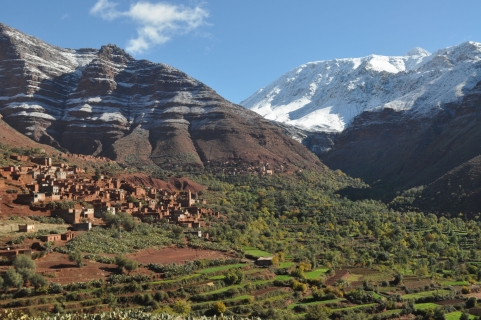
 The Atlas Mountains in Morocco
This mountain range is the second highest mountains in the world and is certainly one of the most natural and wonderful mountains you could ever visit. One for the bucket list for sure.
 One of South Africa's most spectacular private game reserves
Sabi Sand Game Reserve is one of South Africa's most spectacular private game reserves. The chance that you see the entire Big Five is high in winter (June - August).

 The 10 best wildlife viewing sites in Kenya
Explore Kenya's top 10 safari parks in this guide, featuring the Maasai Mara, Amboseli, and more, for a spectacular wildlife adventure