Ríudecañas Weather & Climate: Best Time to Visit
Average temperatures, rainfall, sunshine and the best time to visit Ríudecañas.
Climate overview of Ríudecañas
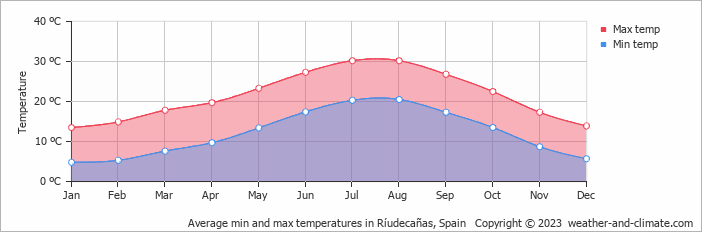
Ríudecañas, Spain, experiences significant temperature variation throughout the year. Summers bring daytime highs of 30°C (86°F) in July, while winters cool to 14°C (57°F) in January.
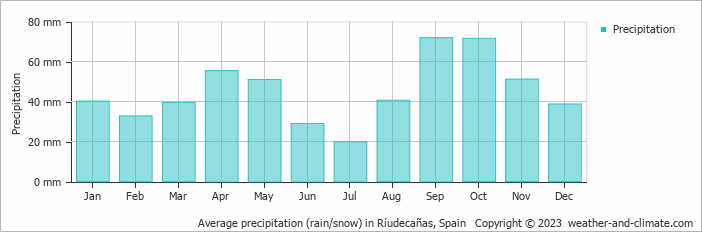
Annual rainfall is moderate at around 541 mm (21 in), with September being the wettest month. The city also has two distinct dry seasons, February to March and June to July, with very warm summers and mild winters. The most sunshine falls in July, with an average of 10.2 hours of daily sunshine.
Ríudecañas Weather by Month
Pick a month to see the average temperature, rainfall and sunshine in Ríudecañas - and find the best time to visit.



Monthly Temperature in Ríudecañas
Depending on the time of the year, temperatures range from very warm to moderate in Ríudecañas. Average daytime temperatures reach a very warm 30°C (86°F) in July. In January, the coolest month of the year, temperatures drop to a moderate 14°C (57°F).
At night, temperatures range from around 21°C (70°F) in July to 5°C (41°F) in January.
Check out our detailed temperature page for more information.
Temperature ranges by month
Rainfall in Ríudecañas
Generally, Ríudecañas has a moderate amount of precipitation, averaging 541 mm (21 in) of rainfall annually. Ríudecañas can be quite wet during September, receiving approximately 72 mm (2.8 in) of precipitation over 8 rainy days.
In contrast, during the driest month (July), you will experience much drier conditions, with 20 mm (0.8 in) of precipitation spread across 6 rainy days. For more details, please visit our Ríudecañas Precipitation page.
The mean monthly precipitation over the year, including rain, hail, and snow
The average number of days each month with precipitation

Sunshine Hours in Ríudecañas
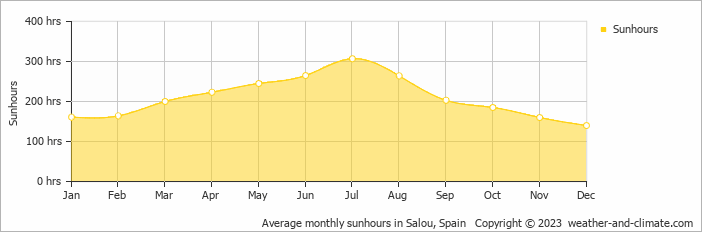
Ríudecañas can be enjoyed more throughout the sunniest month of July under a blue sky, with approximately 10.2 hours of sunshine daily. In contrast, the city experiences much darker days in December, with only 4.7 hours of sunlight per day.
Visit our detailed sunshine hours page for more information.
Monthly hours of sunshine
Daily hours of sunshine
Best Time to Visit Ríudecañas
Monthly ratings reflect general weather comfort, based on daytime temperature and rainfall. Swimming and winter conditions are highlighted separately where relevant.
- Best overall: April, May, June, September and October
- Warmest weather: July and August
- Most sunshine: July
- Fewest rainy days: July, August and September
- Seasonal pattern: Two distinct dry seasons, February to March and June to July, with very warm summers and mild winters
Frequently asked questions about the climate in Ríudecañas
What is the best time to visit Ríudecañas?
April, May, June, September and October typically offer the most optimal weather in Ríudecañas. In contrast, January, February, August, November and December tend to have less optimal conditions. Ríudecañas has two distinct dry seasons, February to March and June to July, with very warm summers and mild winters.
What temperatures can I expect in Ríudecañas?
Daytime highs range from 14°C (57°F) in January to 30°C (86°F) in July. Nighttime lows range from 5°C (41°F) to 21°C (70°F). Temperatures vary considerably through the year.
How much rain does Ríudecañas get?
Annual rainfall is around 541 mm (21 in). September is the wettest month with 72 mm (2.8 in), while July is the driest with 20 mm (0.8 in).
How sunny is Ríudecañas?
Ríudecañas receives around 2,517 hours of sunshine per year. July is the sunniest month with 307 hours, while December is the cloudiest with just 140 hours. Overall, Ríudecañas enjoys abundant sunshine.
Ríudecañas 3-Day Forecast
Ríudecañas on the map
Ríudecañas is highlighted - select any city to see its climate.
Popular this month
Where to go in September - average daytime high across popular destinations.















Bucket list
Need travel inspiration? Check out our bucket list articles and be inspired.
 El Hierro: The smallest Canary island without mass tourism
Mainly nature lovers and those seeking tranquility go to El Hierro. The island is know for its beautiful mountains and you can wonder around for days here.
Spain in October: Where Is It Warmest and Sunniest?
Discover where Spain is warmest in October, with climate comparisons for Seville, Alicante, Málaga, Tenerife, Madrid and Barcelona.
Visit national Park El Teide
This national park is truly a unique place that you should not miss. You will find landscapes that seem to come from another plane and you will feel tiny in these impressive surroundings.
Sevilla: A Blend of Tradition, Culture, and Hidden Gems
Experience Sevilla in spring with Semana Santa processions and Feria de Abril festivities, set against the city's iconic landmarks and vibrant culture.