
















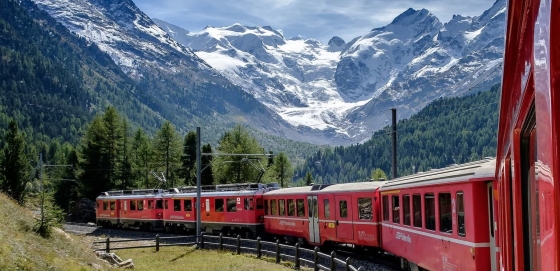
 The 5 most scenic train journeys in Switzerland
Explore Switzerland's top 5 train journeys, featuring breathtaking Alpine views and engineering marvels like the Glacier Express and Bernina Express.
Average temperatures, rainfall, sunshine and the best time to visit Fribourg.
 –
–
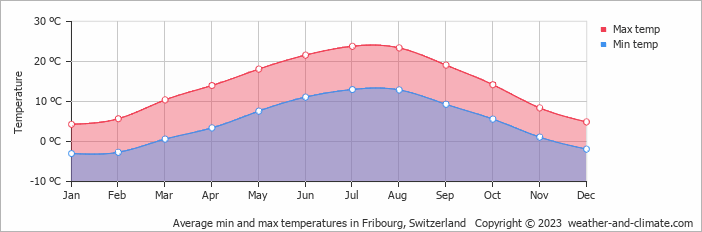
Fribourg, Canton of Fribourg, Switzerland, sees big temperature differences between seasons, with July peaking at 24°C (75°F) and January dropping to 4°C (39°F).
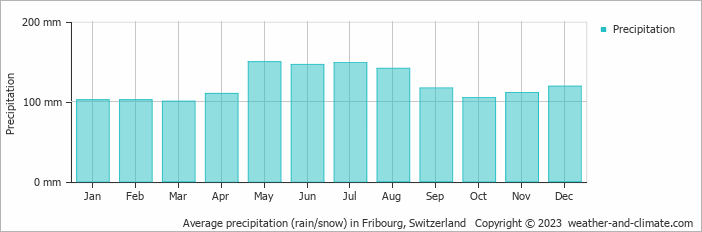
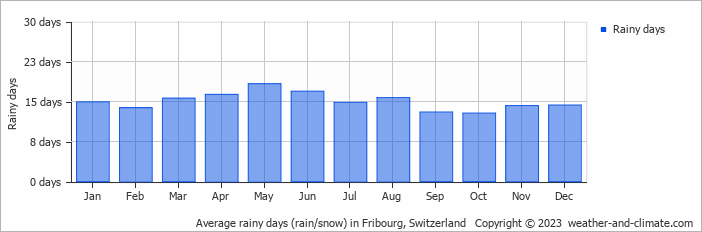
Rain/snowfall is high, totalling around 1451 mm (57 in) per year. May is the wettest month and March the driest. The city also experiences warm summers and cold winters. July is the sunniest month, averaging 8.6 hours of sunshine per day.
Pick a month to see the average temperature, rainfall and sunshine in Fribourg - and find the best time to visit.
Visitors to Fribourg can expect significant temperature changes throughout the year. Average maximum daytime temperatures range from a comfortable 24°C (75°F) in July, the warmest time of the year, to a chilly 4°C (39°F) during cooler months like January.
At night, you can expect temperatures ranging from 13°C (55°F) in July to around -3°C (27°F) during January.
Check out our detailed temperature page for more information.
Fribourg is known for its substantial rain/snowfall, with annual precipitation reaching 1451 mm (57 in). Year-round, Fribourg has a balanced climate with minimal variation in precipitation. The difference between the wettest month, May, with 150 mm (5.9 in), and the driest month, March, with 100 mm (3.9 in), is minimal. For more details, please visit our Fribourg Precipitation page.
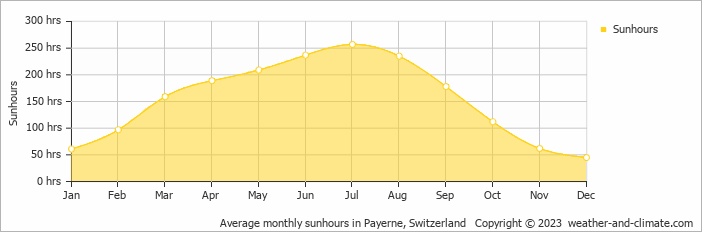
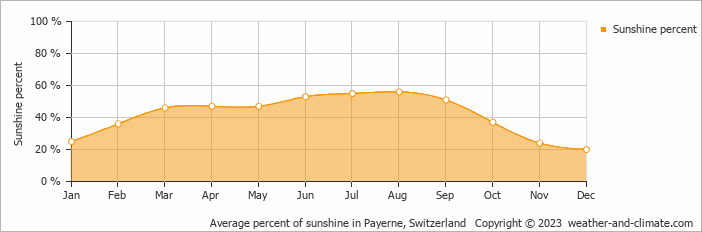
Seasonal changes in sunshine hours are quite dramatic in Fribourg. While July receives considerable daily sunshine with up to 8.6 hours, December marks the darkest time of the year, where sunshine is scarce with only 1.5 hours of sunlight per day.
Visit our detailed sunshine hours page for more information.
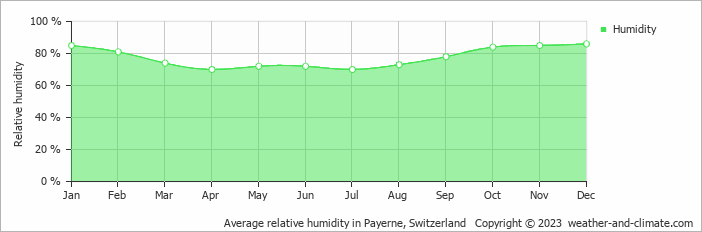
The relative humidity is high throughout the year in Fribourg.
The city experiences its highest humidity in December, reaching 86%. In April, the humidity drops to its lowest level at 70%. What does this mean? Read our detailed page on humidity levels for further details.
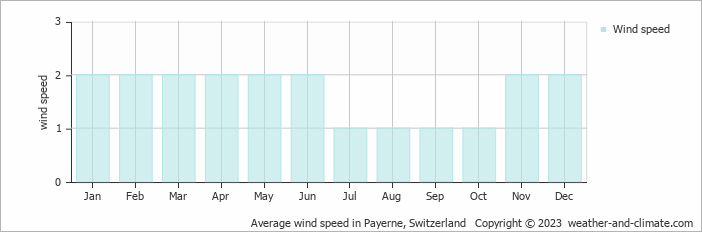
The mean wind speed over the year ranges from 1 m/s (2 knots) in July, August, September and October to 2 m/s (4 knots) in January, February, March, April, May, June, November and December. What does this mean?
Monthly ratings reflect general weather comfort, based on daytime temperature and rainfall. Swimming and winter conditions are highlighted separately where relevant.
June, July and August typically offer the most optimal weather in Fribourg. In contrast, January, February, March, November and December tend to have less optimal conditions. Fribourg has warm summers and cold winters.
Daytime highs range from 4°C (39°F) in January to 24°C (75°F) in July. Nighttime lows range from -3°C (27°F) to 13°C (55°F). Temperatures vary considerably through the year.
Annual rainfall is around 1451 mm (57 in). May is the wettest month with 150 mm (5.9 in), while March is the driest with 100 mm (3.9 in).
Fribourg receives around 1,841 hours of sunshine per year. July is the sunniest month with 257 hours, while December is the cloudiest with just 45 hours.
Fribourg is highlighted - select any city to see its climate.
Where to go in October - average daytime high across popular destinations.
Zürich 15°C (59°F) Crans-Montana10°C (50°F) Engelberg10°C (50°F) Nendaz10°C (50°F) Davos8°C (46°F) Saas-Fee
 7°C (45°F) Grindelwald8°C (46°F) Zermatt6°C (43°F)
 Need travel inspiration? Check out our bucket list articles and be inspired.
The 5 most scenic train journeys in Switzerland
Explore Switzerland's top 5 train journeys, featuring breathtaking Alpine views and engineering marvels like the Glacier Express and Bernina Express.
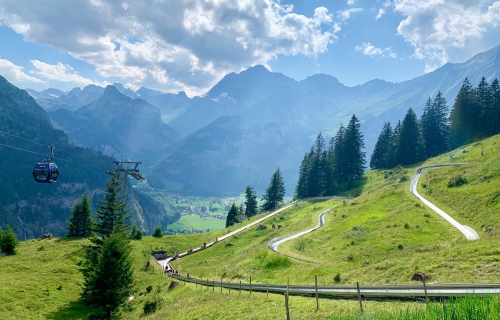 You'll love this Mountain roller coaster
Hotel Oeschinensee’s mountain coaster is a summer toboggan that you want to add to your bucket list. You'll get in your cart, sit down and fly across the track while enjoying the beautiful mountain scenery around you.
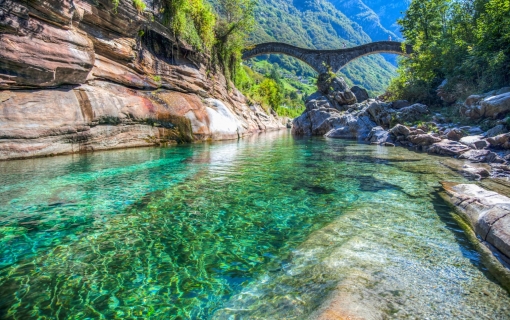 The Verzasca Valley
You can visit the Verzasca Valley in any season. It's an amazing place for swimming and it is a paradise for hikers. A must see for the bucket list.
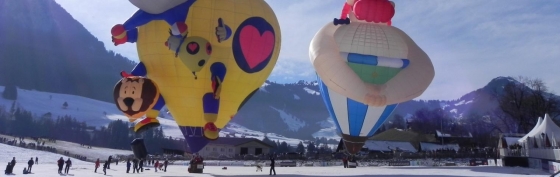 Balloon at Chateau D'oex
If you are looking for a special place to visit in Europe in January we recommend visiting the annual balloon festival in Château-d'Oex, Switzerland.