


















 7 of the most budget-friendly destinations in Europe
Discover Europe's top budget-friendly destinations including Budapest, Kotor, Krakow, and more, perfect for affordable and exciting travel.
Average temperatures, rainfall, sunshine and the best time to visit Faja Grande.
 –
10-day forecastForecast
Faja Grande, Portugal, has a moderate seasonal temperature range, with August reaching 24°C (75°F) and March cooling to 17°C (63°F).
Rainfall is high, totalling around 1103 mm (43 in) per year. December is the wettest month and July the driest. The most sunshine falls in August, with an average of 7.3 hours of daily sunshine.
Pick a month to see the average temperature, rainfall and sunshine in Faja Grande - and find the best time to visit.
The climate in Faja Grande experiences moderate temperature changes, with mild shifts between seasons. Average maximum daytime temperatures range from a comfortable 24°C (75°F) in August, the warmest time of the year, to a moderate 17°C (63°F) during cooler months like March.
At night, you can expect temperatures ranging from 22°C (72°F) in August to around 14°C (57°F) during March.
Check out our detailed temperature page for more information.

Faja Grande is known for its substantial rainfall, with annual precipitation reaching 1103 mm (43 in). Significant seasonal changes in precipitation occur throughout the year. In the wettest month, December it receives high rainfall, averaging 145 mm (5.7 in) of precipitation, recorded across 19 rainy days. In contrast, the driest month July brings less rainfall, with 38 mm (1.5 in) over 12 rainy days. For more details, please visit our Faja Grande Precipitation page.


Seasonal changes in sunshine hours are quite dramatic in Faja Grande. While August receives considerable daily sunshine with up to 7.3 hours, December marks the darkest time of the year, where sunshine is scarce with only 2.2 hours of sunlight per day.
Visit our detailed sunshine hours page for more information.


The city experiences its highest humidity in May, reaching 82%. In October, the humidity drops to its lowest level at 79%. What does this mean? Read our detailed page on humidity levels for further details.

Monthly ratings reflect general weather comfort, based on daytime temperature and rainfall. Swimming and winter conditions are highlighted separately where relevant.
June, July, August, September and November typically offer the most optimal weather in Faja Grande. In contrast, February and March tend to have less optimal conditions.
Daytime highs range from 17°C (63°F) in March to 24°C (75°F) in August. Nighttime lows range from 14°C (57°F) to 22°C (72°F).
Annual rainfall is around 1103 mm (43 in). December is the wettest month with 145 mm (5.7 in), while July is the driest with 38 mm (1.5 in).
Faja Grande receives around 1,578 hours of sunshine per year. August is the sunniest month with 218 hours, while December is the cloudiest with just 67 hours.
Faja Grande is highlighted - select any city to see its climate.
Where to go in October - average daytime high across popular destinations.
Need travel inspiration? Check out our bucket list articles and be inspired.
7 of the most budget-friendly destinations in Europe
Discover Europe's top budget-friendly destinations including Budapest, Kotor, Krakow, and more, perfect for affordable and exciting travel.

 Warm Sea Without Extreme Heat: 8 Beach Destinations With Comfortable Weather
Love warm seawater but not extreme heat? Compare eight beach destinations where the sea stays warm while daytime temperatures remain comfortable.
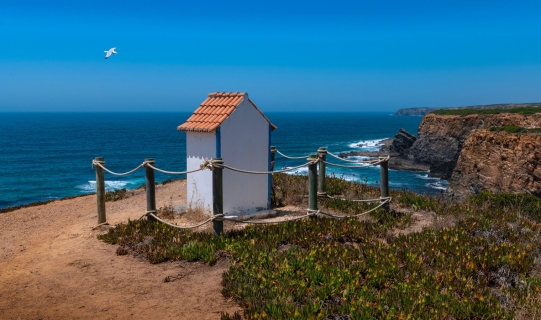
 Alentejo, where time stands still
The quiet region is known for its rolling green hills and it is a true hiking paradise. Architectural highlights can be found in the castles, ancient monasteries or when exploring the countless charming villages.
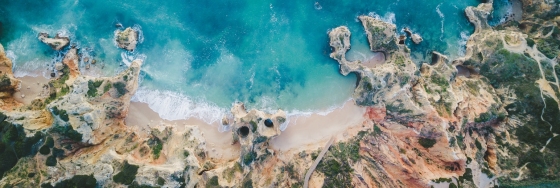 An eco-friendly guide to Lagos travel
Lagos, Portugal is a great place to visit while being careful about your environmental footprint. Here you find some tips about environmentally places to stay, where to eat and how to get around in the area.