















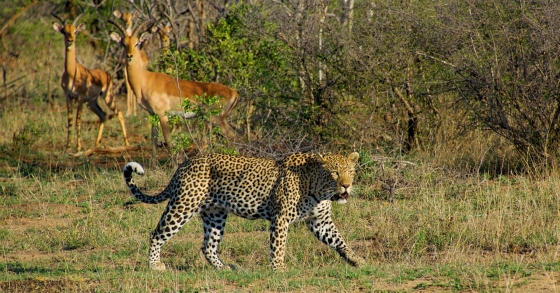
 Visit Kruger Park in South Africa
Are you going to South Africa, then you cannot skip the Kruger Park. The Kruger Park is one of the most beautiful and largest safari parks in the world.
Average temperatures, rainfall, sunshine and the best time to visit Kuruman.
 –
–
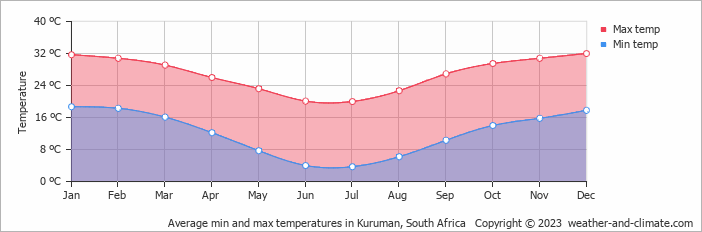
Kuruman, South Africa, sees big temperature differences between seasons, with December peaking at 32°C (90°F) and July dropping to 20°C (68°F).
With around 482 mm (19 in) of annual rainfall, Kuruman has a fairly dry climate. However, it has a distinct dry season from April to October, with very warm summers and pleasant winters. The wettest month is January, while July sees the least rain. The most sunshine falls in December, with an average of 10.3 hours of daily sunshine.
Pick a month to see the average temperature, rainfall and sunshine in Kuruman - and find the best time to visit.
Visitors to Kuruman can expect significant temperature changes throughout the year. Average daytime temperatures reach a very warm 32°C (90°F) in December. In July, the coolest month of the year, temperatures drop to a pleasant 20°C (68°F).
At night, temperatures range from around 19°C (66°F) in December to 4°C (39°F) in July.
Check out our detailed temperature page for more information.
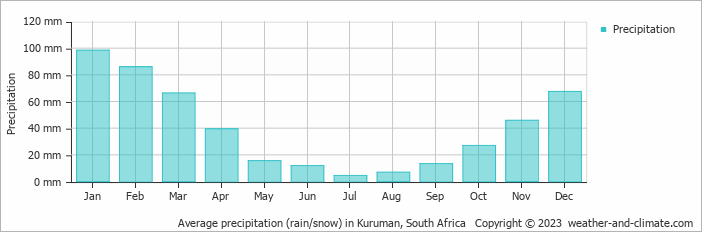
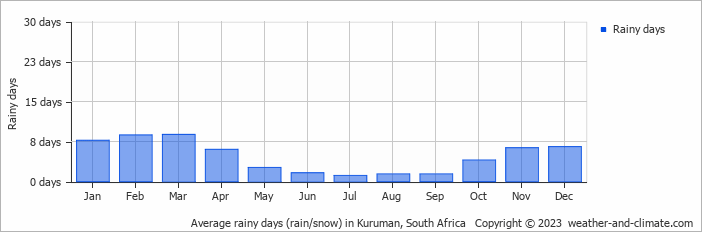
Kuruman tends toward drier weather patterns, receiving approximately 482 mm (19 in) of rain per year. Kuruman can be quite wet during January, receiving approximately 98 mm (3.9 in) of precipitation over 8 rainy days.
In contrast, during the driest month (July), you will experience much drier conditions, with 4.4 mm (0.2 in) of precipitation spread across a single rainy day. For more details, please visit our Kuruman Precipitation page.
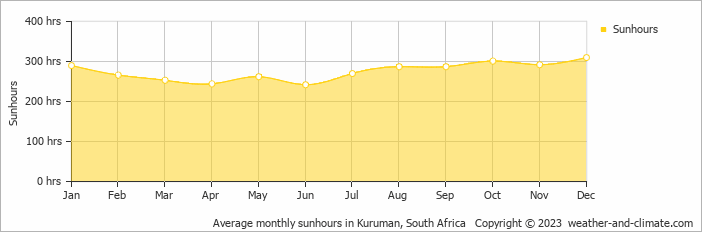
Kuruman experiences moderate variation in sunshine hours across the seasons. With 10.3 hours daily sunshine in December, it dips to 8.1 hours in June, offering a balanced mix of sunny and overcast days.
Visit our detailed sunshine hours page for more information.
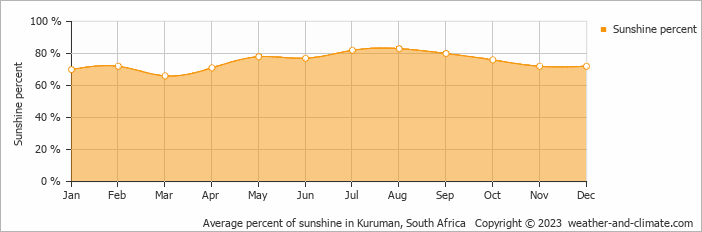
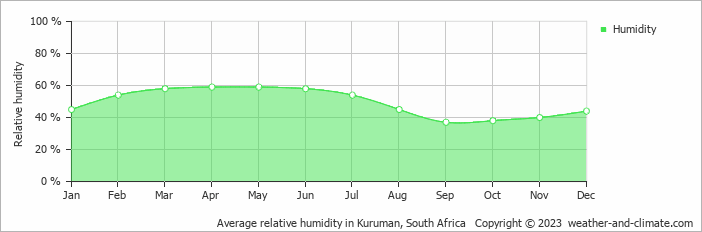
The relative humidity is moderate throughout the year in Kuruman.
The city experiences its highest humidity in April, reaching 59%. In September, the humidity drops to its lowest level at 37%. What does this mean? Read our detailed page on humidity levels for further details.
Monthly ratings reflect general weather comfort, based on daytime temperature and rainfall. Swimming and winter conditions are highlighted separately where relevant.
March, April, May, June, July, August and September typically offer the most optimal weather in Kuruman. In contrast, January, February, November and December tend to have less optimal conditions. Kuruman has a distinct dry season from April to October, with very warm summers and pleasant winters.
Daytime highs range from 20°C (68°F) in July to 32°C (90°F) in December. Nighttime lows range from 4°C (39°F) to 19°C (66°F). Temperatures vary considerably through the year.
Annual rainfall is around 482 mm (19 in). January is the wettest month with 98 mm (3.9 in), while July is the driest with 4.4 mm (0.2 in).
Kuruman receives around 3,304 hours of sunshine per year. December is the sunniest month with 310 hours, while June is the cloudiest with just 242 hours. Overall, Kuruman enjoys abundant sunshine.
Kuruman is highlighted - select any city to see its climate.
Where to go in October - average daytime high across popular destinations.
Need travel inspiration? Check out our bucket list articles and be inspired.
Visit Kruger Park in South Africa
Are you going to South Africa, then you cannot skip the Kruger Park. The Kruger Park is one of the most beautiful and largest safari parks in the world.
 One of South Africa's most spectacular private game reserves
Sabi Sand Game Reserve is one of South Africa's most spectacular private game reserves. The chance that you see the entire Big Five is high in winter (June - August).
 Warm Days, Cool Nights: 8 Destinations With the Perfect Day-Night Temperature
Prefer warm sunny days but cool evenings? Compare eight destinations with daytime temperatures of around 25–30°C, cooler nights, low rainfall and plenty of sunshine.
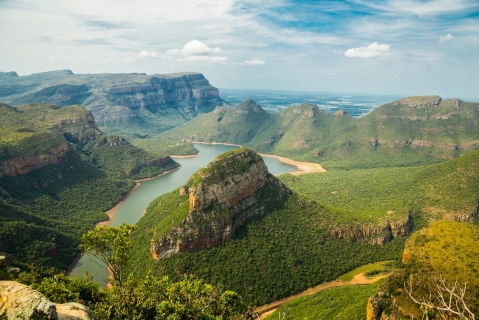 South Africa in November: Cape Town, Garden Route or East Coast?
Compare South Africa weather in November for Cape Town, Stellenbosch, Knysna, Durban and Johannesburg to find the driest and sunniest regions.