
















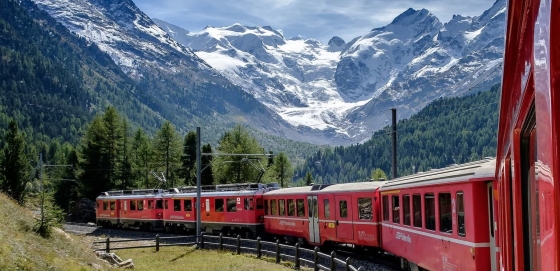
 The 5 most scenic train journeys in Switzerland
Explore Switzerland's top 5 train journeys, featuring breathtaking Alpine views and engineering marvels like the Glacier Express and Bernina Express.
This page shows both the average monthly rainfall and the number of rainy days in Wolhusen, Canton of Lucerne, Switzerland. These averages rely on historical data collected over 30 years, from 1990 to 2020. Now, let's break down all the details for a clearer picture.
Wolhusen has a relatively rain/snowy climate with high precipitation levels, averaging 1700 mm (67 in) of rain/snowfall annually. Despite the high annual total, it does experience a distinct rainy season during certain months. Examine our detailed charts below to understand these seasonal patterns.
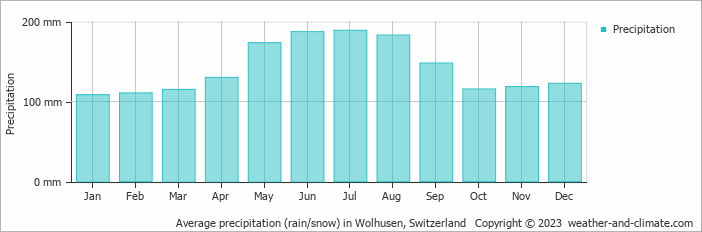
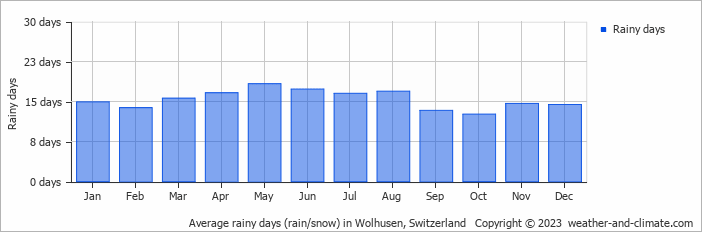
Wolhusen experiences moderate seasonal variation in rainfall, with monthly averages ranging from 189 mm (7.4 in) in July, the wettest month, and 108 mm (4.3 in) in January, the driest month.
July, the wettest month, has a maximum daytime temperature of 23°C (73°F). The city receives 219 hours of sunshine in this period. During the driest month January you can expect a temperature of 4°C (39°F). For more detailed insights into the city's temperatures, visit our Wolhusen Temperature page.
The map below shows the annual precipitation across Switzerland. You can also select the different months in case you are interested in a specific month.
Wolhusen's average annual precipitation is 1700 mm (67 in). Let's compare this to some popular worldwide tourist destinations:
In Barcelona, Spain, the average annual precipitation is 620 mm (24 in), evenly distributed across the year with no extreme wet or dry seasons.
In Shanghai, China, the annual average precipitation is 1347 mm (53 in), with a humid subtropical climate.
Melbourne, Australia, has 690 mm (27 in) of rainfall annually, spread fairly evenly throughout the year.
Singapore, situated near the equator, gets 2581 mm (102 in) of rainfall annually, with no distinct dry season and consistent monthly precipitation.
Precipitation amounts are measured using specific gauges installed at weather stations, collecting both rain and snow and any other type of precipitation. Rainfall is measured directly in millimeters, while that from snow and ice is obtained by melting it. Automated systems often incorporate heaters to make this easier.
Information from these stations is transmitted via Wi-Fi, satellite, GPS, or telephone connections to central monitoring networks. This information is immediately updated and integrated into weather models and forecasts.
For more detailed information about Wolhusen's weather, including sunshine hours, humidity levels, and temperature data, visit our Wolhusen Climate page.
Pick a month to see the average temperature, rainfall and sunshine in Wolhusen - and find the best time to visit.
Temperature Rainfall Sunshine Humidity
See the full Wolhusen climate overview or explore weather in Switzerland.
Where to go in October - average daytime high across popular destinations.
Zürich 15°C (59°F) Crans-Montana10°C (50°F) Engelberg10°C (50°F) Nendaz10°C (50°F) Davos8°C (46°F) Saas-Fee
 7°C (45°F) Grindelwald8°C (46°F) Zermatt6°C (43°F)
 Need travel inspiration? Check out our bucket list articles and be inspired.
The 5 most scenic train journeys in Switzerland
Explore Switzerland's top 5 train journeys, featuring breathtaking Alpine views and engineering marvels like the Glacier Express and Bernina Express.
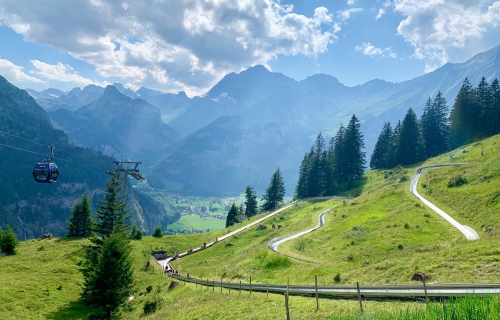 You'll love this Mountain roller coaster
Hotel Oeschinensee’s mountain coaster is a summer toboggan that you want to add to your bucket list. You'll get in your cart, sit down and fly across the track while enjoying the beautiful mountain scenery around you.
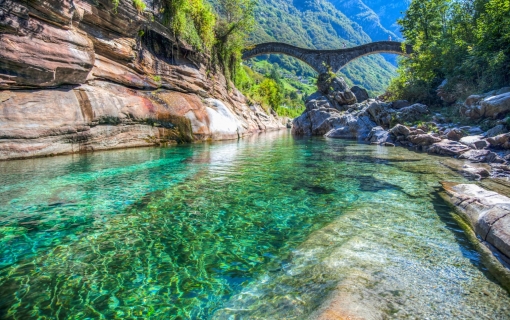 The Verzasca Valley
You can visit the Verzasca Valley in any season. It's an amazing place for swimming and it is a paradise for hikers. A must see for the bucket list.
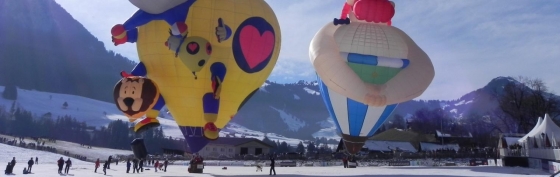 Balloon at Chateau D'oex
If you are looking for a special place to visit in Europe in January we recommend visiting the annual balloon festival in Château-d'Oex, Switzerland.