














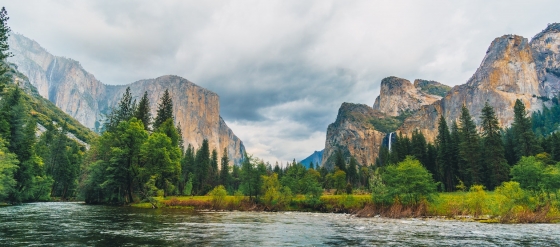
 Yosemite National Park is definitely worth a visit
Vast forests, blue lakes, towering sequoias, and majestic waterfalls hint at the beauty of Yosemite National Park—a true natural masterpiece.
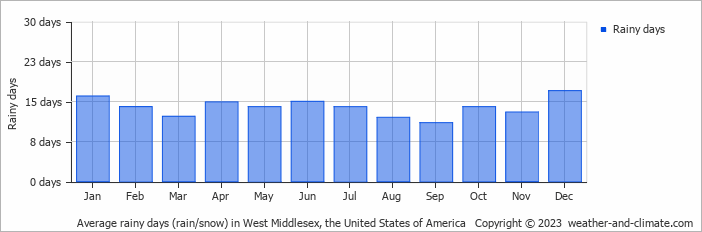
This page shows both the average monthly rainfall and the number of rainy days in West Middlesex, Pennsylvania, United States of America. These averages rely on historical data collected over 30 years, from 1990 to 2020. Now, let's break down all the details for a clearer picture.
West Middlesex experiences significant rain/snowfall throughout the year, averaging 1091 mm (43 in) of precipitation annually.
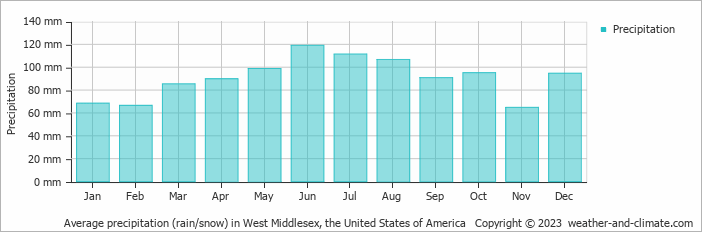
The amount of precipitation varies moderately throughout the year. The wettest month, June, sees around 119 mm (4.7 in) of rainfall, perfect for those who enjoy a bit of rain now and then. The driest month, November, still receives a respectable 65 mm (2.6 in) of rainfall.
June, the wettest month, has a maximum daytime temperature of 27°C (81°F). During the driest month November you can expect a temperature of 11°C (52°F). For more detailed insights into the city's temperatures, visit our West Middlesex Temperature page.
The map below shows the annual precipitation across the United States of America. You can also select the different months in case you are interested in a specific month.
West Middlesex's average annual precipitation is 1091 mm (43 in). Let's compare this to some popular worldwide tourist destinations:
Chicago, USA, sees an annual precipitation of 1062 mm (42 in), with rain and snow contributing to its humid climate.
In Seoul, South Korea, the average annual precipitation is 1237 mm (49 in), with most rain falling during the summer monsoon season.
In Brisbane, Australia, the annual precipitation is 979 mm (39 in), making it wetter than Sydney.
Kuala Lumpur, Malaysia, receives 2529 mm (100 in) of annual rainfall, characteristic of its equatorial tropical rainforest climate, with consistent rainfall throughout the year and peak months during March and November.
Precipitation amounts are measured using specific gauges installed at weather stations, collecting both rain and snow and any other type of precipitation. Rainfall is measured directly in millimeters, while that from snow and ice is obtained by melting it. Automated systems often incorporate heaters to make this easier.
Information from these stations is transmitted via Wi-Fi, satellite, GPS, or telephone connections to central monitoring networks. This information is immediately updated and integrated into weather models and forecasts.
Precipitation has a very strong role in determining the local climate and ecosystem:
For more detailed information about West Middlesex (PA)'s weather, including sunshine hours, humidity levels, and temperature data, visit our West Middlesex (PA) Climate page.
Pick a month to see the average temperature, rainfall and sunshine in West Middlesex - and find the best time to visit.
Temperature Rainfall
See the full West Middlesex climate overview or explore weather in the United States of America.
Where to go in October - average daytime high across popular destinations.
Miami Beach 29°C (84°F) Orlando
 29°C (84°F) Kissimmee
 29°C (84°F) Destin26°C (79°F) Los Angeles24°C (75°F) New York City19°C (66°F) Big Bear Lake19°C (66°F)
 Need travel inspiration? Check out our bucket list articles and be inspired.
Yosemite National Park is definitely worth a visit
Vast forests, blue lakes, towering sequoias, and majestic waterfalls hint at the beauty of Yosemite National Park—a true natural masterpiece.
 The 10 most alternative cities in the United States
Discover the top 10 fun and alternative U.S. cities rich in art, culture, and adventure. From Portland's hippy charm to Sedona's stunning landscapes.
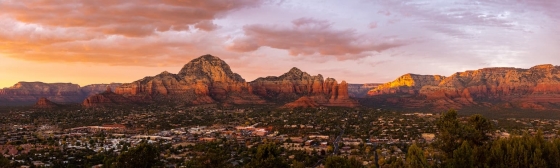 Sedona: Explore Majestic Red Rock Landscapes
A picturesque artists' town surrounded by red rocks and known for its spirituality, vortex energy, and stunning hikes like Cathedral Rock.
 10 most idyllic villages to visit in the United States
Discover 10 idyllic villages in the USA, from California to Vermont. Explore their unique charm, rich history, stunning nature, and vibrant arts scenes.