














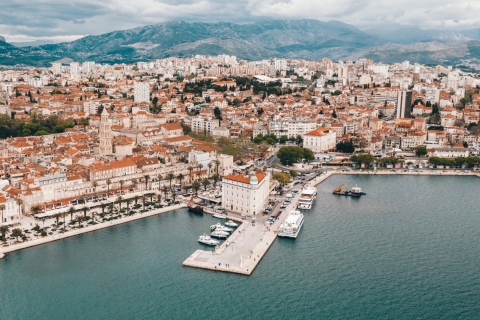
 Magical Split
The best travel time to Split in Croatia is from May til October and the best months are May, June and September.
This page shows both the average monthly rainfall and the number of rainy days in Makarska, Split-Dalmatia County, Croatia. The figures are based on a 30-year period (1990–2020) to provide a reliable average. Let's explore the details to provide you with a complete overview.
Makarska has a relatively rainy climate with high precipitation levels, averaging 1482 mm (58 in) of rainfall annually.
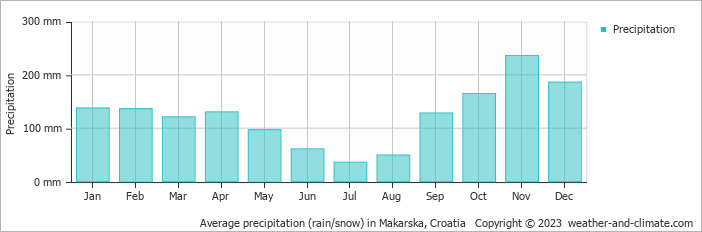
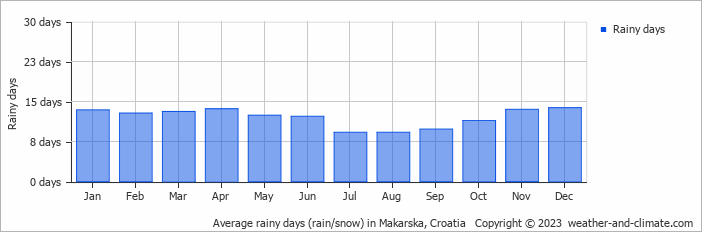
The climate in Makarska shows significant variation throughout the year. Expect 236 mm (9.3 in) of precipitation during the wettest month November, distributed over 14 rainy days.
In contrast, July offers drier and sunnier days, with around 36 mm (1.4 in) of rainfall over 9 rainy days.
November, the wettest month, has a maximum daytime temperature of 15°C (59°F). The city receives 195 hours of sunshine in this period. During the driest month July you can expect a temperature of 28°C (82°F). For more detailed insights into the city's temperatures, visit our Makarska Temperature page.
Average daily rainfall for each day of the month based on long-term records. 49-year average (1976-2025)
Browse day-by-day precipitation records for Makarska spanning 51 years. Select any month and year to see actual rainfall and snowfall recorded on each day.
The map below shows the annual precipitation across Croatia. You can also select the different months in case you are interested in a specific month.
Makarska's average annual precipitation is 1482 mm (58 in). Let's compare this to some popular worldwide tourist destinations:
Athens, Greece, receives an average annual precipitation of 400 mm (16 in), making it one of the drier Mediterranean climates with rainfall mostly in winter.
In Shanghai, China, the annual average precipitation is 1347 mm (53 in), with a humid subtropical climate.
Adelaide, Australia, enjoys 511 mm (20 in) of annual precipitation, with dry summers and wet winters.
Mumbai, India, experiences a tropical monsoon climate with 1860 mm (73 in) of annual rainfall, with the majority of precipitation happening during the monsoon season from June to September.
Precipitation amounts are measured using specific gauges installed at weather stations, collecting both rain and snow and any other type of precipitation. Rainfall is measured directly in millimeters, while that from snow and ice is obtained by melting it. Automated systems often incorporate heaters to make this easier.
Information from these stations is transmitted via Wi-Fi, satellite, GPS, or telephone connections to central monitoring networks. This information is immediately updated and integrated into weather models and forecasts.
Precipitation has a very strong role in determining the local climate and ecosystem:
For more detailed information about Makarska's weather, including sunshine hours, humidity levels, and temperature data, visit our Makarska Climate page.
Pick a month to see the average temperature, rainfall and sunshine in Makarska - and find the best time to visit.
Temperature Rainfall Sunshine
See the full Makarska climate overview or explore weather in Croatia.
Where to go in October - average daytime high across popular destinations.
Trogir 20°C (68°F) Zadar
 21°C (70°F) Makarska
 20°C (68°F) Poreč19°C (66°F) Rovinj19°C (66°F) Pula19°C (66°F) Split20°C (68°F) Dubrovnik20°C (68°F)
Need travel inspiration? Check out our bucket list articles and be inspired.
Magical Split
The best travel time to Split in Croatia is from May til October and the best months are May, June and September.
 Sail the crystal-clear waters of Croatia and enjoy its stunning coastline
Croatia is an idyllic sailing destination, boasting 1,777 miles (2,860 km) of beautiful beaches and pristine waters. With over 1,000 Islands dotting the Adriatic Sea, there's a perfect spot for everyone.
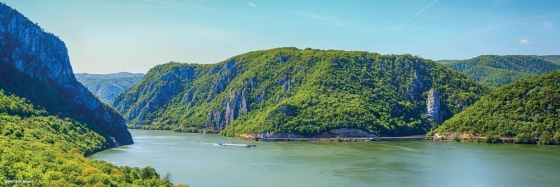
 Cycle the Danube trail
The Danube cycle route is one of the most popular cycling routes in Europe, and rightly so, because it is a varied route that is interesting both in terms of culture and nature.
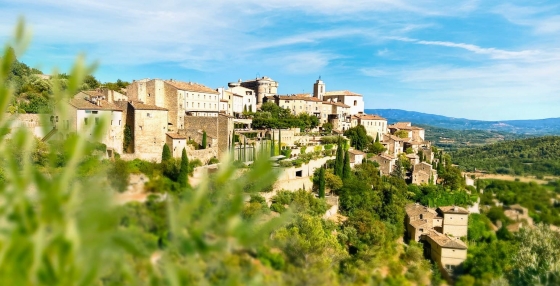
 The 10 most charming villages in France
Discover France's top 10 beautiful villages. From Normandy to the Côte d'Azur, experience quaint squares and cobbled streets. Which one will you visit this summer?