














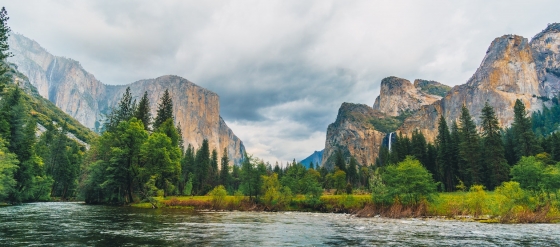
 Yosemite National Park is definitely worth a visit
Vast forests, blue lakes, towering sequoias, and majestic waterfalls hint at the beauty of Yosemite National Park—a true natural masterpiece.
Summer Haven in United States of America sees significant seasonal temperature differences, with daytime highs between 19°C (66°F) in January and 32°C (90°F) in July, averaging 26°C (79°F) annually. Explore the full monthly breakdown below.
In Summer Haven, temperatures can shift dramatically between very warm in summer and pleasant in winter. Nights follow the same pattern, with lows ranging from 23°C (73°F) in July to 8°C (46°F) in January.
The chart below illustrates the average maximum day and minimum night temperatures in Summer Haven by month:
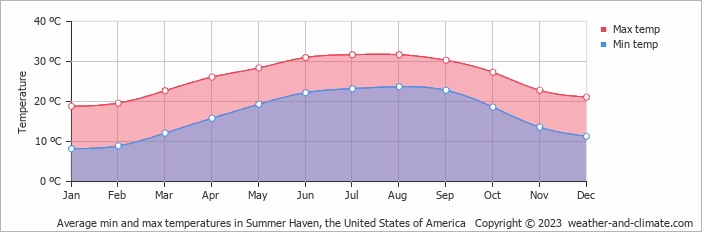
From around 4 AM to 6 AM temperatures are at their lowest; by 3 PM they've climbed to their daily peak.
The chart below shows the average temperature throughout the year:
The map below shows the annual temperature across the United States of America. You can also select individual months if you want to compare a specific time of year.
Summer Haven's average annual maximum temperature is 26°C (79°F). To put that in context, here's how it compares to a few well-known destinations:
Seville, Spain averages 23°C (73°F) a year, one of the warmer cities in Western Europe, with long hot summers.
Toronto, Canada averages 13°C (55°F) annually, with cold snowy winters balanced by genuinely warm summers.
Shanghai, China averages 21°C (70°F) a year, with warm summers, mild winters, and a noticeable spring and autumn.
Adelaide, Australia averages 21°C (70°F) a year, with warm summers, mild winters, and relatively low rainfall year-round.
Climate temperature data is typically calculated as a 30-year average. This smooths out year-to-year variability and gives a more reliable picture of what a place is actually like, rather than what happened in any single unusual year.
The readings come from a range of sources, land-based weather stations, ocean buoys, ships, and satellites. That data is collected by weather services around the world, then pooled, quality-checked, and averaged to produce the climate records you see here.
Whether a city sits on the coast or deep inland makes a significant difference to its climate. Coastal areas tend to have more stable temperatures year-round, large bodies of water absorb heat slowly in summer and release it gradually in winter, keeping extremes in check. Cities far from the sea don't benefit from that buffer, which is why continental climates tend to have hotter summers and colder winters than their coastal counterparts at the same latitude.
For more on Summer Haven's weather, including monthly rainfall, sunshine hours, and humidity, visit our Summer Haven climate page.
Pick a month to see the average temperature, rainfall and sunshine in Summer Haven - and find the best time to visit.
Temperature Rainfall
See the full Summer Haven climate overview or explore weather in the United States of America.
Where to go in October - average daytime high across popular destinations.
Miami Beach 29°C (84°F) Orlando
 29°C (84°F) Kissimmee
 29°C (84°F) Destin26°C (79°F) Los Angeles24°C (75°F) New York City19°C (66°F) Big Bear Lake19°C (66°F)
 Need travel inspiration? Check out our bucket list articles and be inspired.
Yosemite National Park is definitely worth a visit
Vast forests, blue lakes, towering sequoias, and majestic waterfalls hint at the beauty of Yosemite National Park—a true natural masterpiece.
 The 10 most alternative cities in the United States
Discover the top 10 fun and alternative U.S. cities rich in art, culture, and adventure. From Portland's hippy charm to Sedona's stunning landscapes.
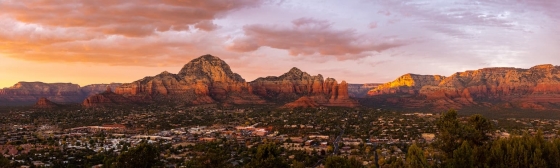 Sedona: Explore Majestic Red Rock Landscapes
A picturesque artists' town surrounded by red rocks and known for its spirituality, vortex energy, and stunning hikes like Cathedral Rock.
 10 most idyllic villages to visit in the United States
Discover 10 idyllic villages in the USA, from California to Vermont. Explore their unique charm, rich history, stunning nature, and vibrant arts scenes.