














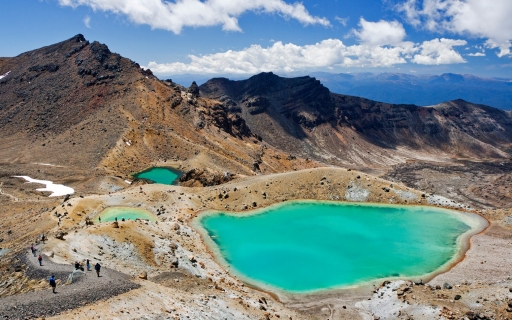
 The Tongariro Crossing in New Zealand
It is called the most beautiful walk in New Zealand, the Tongariro Crossing. The official hiking season starts late October until end of April.
The average annual maximum temperature in Ranfurly, Otago, New Zealand is 13°C (55°F), with daytime highs ranging from 6°C (43°F) in July to 19°C (66°F) in February. This page covers monthly averages, day-night differences, and how Ranfurly compares to cities worldwide.
Visitors to Ranfurly can expect significant temperature changes throughout the year. Nighttime temperatures also vary widely, ranging from 8°C (46°F) in February to -3°C (27°F) in July.
The chart below illustrates the average maximum day and minimum night temperatures in Ranfurly by month:
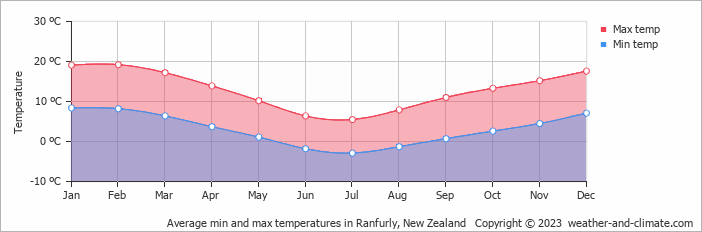
Temperatures tend to bottom out between 4 AM and 6 AM, then climb to their daily peak around 3 PM.
The chart below shows the average temperature throughout the year:
The map below shows the annual temperature across New Zealand. You can also select individual months if you want to compare a specific time of year.
Ranfurly's average annual maximum temperature is 13°C (55°F). To put that in context, here's how it compares to a few well-known destinations:
Athens, Greece sits at 23°C (73°F) on average, with hot dry summers and mild winters characteristic of the Mediterranean.
Zermatt, Switzerland averages just 4°C (39°F) annually due to its altitude, with very cold winters and cool summers even at its warmest.
Chicago, USA averages 15°C (59°F) annually, known for extreme seasonal swings, from bitterly cold winters to warm summers.
Adelaide, Australia averages 21°C (70°F) a year, with warm summers, mild winters, and relatively low rainfall year-round.
Climate temperature data is typically calculated as a 30-year average. This smooths out year-to-year variability and gives a more reliable picture of what a place is actually like, rather than what happened in any single unusual year.
The readings come from a range of sources, land-based weather stations, ocean buoys, ships, and satellites. That data is collected by weather services around the world, then pooled, quality-checked, and averaged to produce the climate records you see here.
For cities and regions with significant elevation, altitude is one of the biggest factors shaping local temperatures. As a rule of thumb, temperatures fall by around 6°C for every 1,000 metres gained, so a city at 2,000 metres will typically be around 12°C cooler than a city at sea level in the same region. Higher ground also tends to see more dramatic day-to-night temperature swings, since thinner air loses heat faster after sunset.
For more on Ranfurly's weather, including monthly rainfall, sunshine hours, and humidity, visit our Ranfurly climate page.
Pick a month to see the average temperature, rainfall and sunshine in Ranfurly - and find the best time to visit.
Temperature Rainfall
See the full Ranfurly climate overview or explore weather in New Zealand.
Where to go in October - average daytime high across popular destinations.
Paihia 18°C (64°F) Auckland
 18°C (64°F) Rotorua
 17°C (63°F) Christchurch17°C (63°F) Nelson
 16°C (61°F) Taupo16°C (61°F) Wellington15°C (59°F) Queenstown
 9°C (48°F)
 Need travel inspiration? Check out our bucket list articles and be inspired.
The Tongariro Crossing in New Zealand
It is called the most beautiful walk in New Zealand, the Tongariro Crossing. The official hiking season starts late October until end of April.
 White-water sledge and raft in Rotorua
We recommend to white-water sledge and raft in Rotorua in summer (January, February) when the Glacier melt fills the rivers. This is the best time.
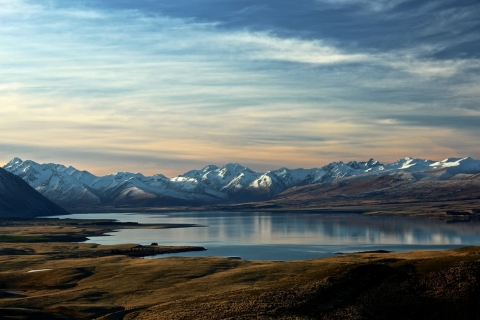 New Zealand in February: North Island or South Island?
Compare New Zealand weather in February for Auckland, Rotorua, Taupo, Christchurch and Queenstown to see which island has the best conditions.

 An alternative way to discover Sydney
We have made an overview of the sights in Sydney that you must see if you want to visit Sydney in an alternative way.