Lower Zambezi National Park Weather & Climate: Best Time to Visit
Average temperatures, rainfall, sunshine and the best time to visit Lower Zambezi National Park.
Climate overview of Lower Zambezi National Park
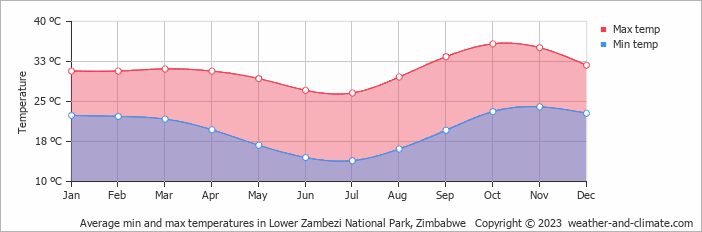
Temperatures in Lower Zambezi National Park, Zimbabwe, shift moderately through the seasons. The warmest month is October at 36°C (97°F), and the coolest is July at 27°C (81°F).
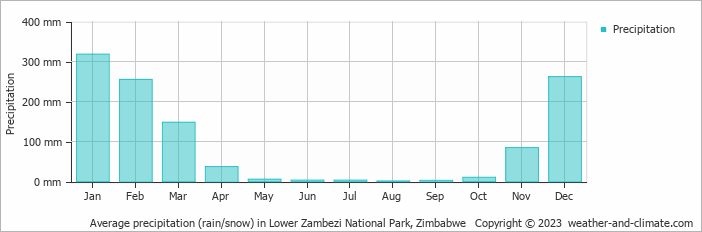
The city receives considerable rainfall, with around 1128 mm (44 in) annually. January is the wettest month. It has distinct dry (April to October) and wet (December to February) seasons.
Lower Zambezi National Park Weather by Month
Pick a month to see the average temperature, rainfall and sunshine in Lower Zambezi National Park - and find the best time to visit.


Monthly Temperature in Lower Zambezi National Park
In Lower Zambezi National Park, seasonal changes bring about a moderate variation in temperatures. Typically, average maximum daytime temperatures range from a very hot 36°C (97°F) in October to a comfortable 27°C (81°F) in the coolest month, July.
Nights vary from 24°C (75°F) in October to around 14°C (57°F) during the colder months.
Check out our detailed temperature page for more information.
Temperature ranges by month
Rainfall in Lower Zambezi National Park
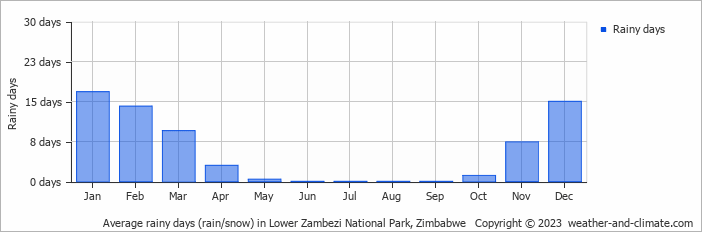
Lower Zambezi National Park has a notably wet climate with abundant precipitation, recording 1128 mm (44 in) of rainfall per year. The climate in Lower Zambezi National Park shows significant variation throughout the year. Expect heavy rainfall in January, the wettest month, with an average of 318 mm (13 in) of precipitation over 17 rainy days.
In contrast, the driest month August offers drier and sunnier days, with around 1.1 mm (0.04 in) of rainfall over 0 rainy days. For more details, please visit our Lower Zambezi National Park Precipitation page.
The mean monthly precipitation over the year, including rain, hail, and snow
The average number of days each month with precipitation
Best Time to Visit Lower Zambezi National Park
Monthly ratings reflect general weather comfort, based on daytime temperature and rainfall. Swimming and winter conditions are highlighted separately where relevant.
- Best overall: May, June and July
- Warmest weather: October and November
- Wettest months: January, February, March and December, when rainfall is highest.
- Seasonal pattern: Distinct dry (April to October) and wet (December to February) seasons
Frequently asked questions about the climate in Lower Zambezi National Park
What is the best time to visit Lower Zambezi National Park?
May, June and July typically offer the most optimal weather in Lower Zambezi National Park. In contrast, January, February, October, November and December tend to have less optimal conditions. Lower Zambezi National Park has distinct dry (April to October) and wet (December to February) seasons.
What temperatures can I expect in Lower Zambezi National Park?
Daytime highs range from 27°C (81°F) in July to 36°C (97°F) in October. Nighttime lows range from 14°C (57°F) to 24°C (75°F).
How much rain does Lower Zambezi National Park get?
Annual rainfall is around 1128 mm (44 in). January is the wettest month with 318 mm (13 in), while August is the driest with 1.1 mm (0.04 in).
Lower Zambezi National Park 3-Day Forecast
Lower Zambezi National Park on the map
Lower Zambezi National Park is highlighted - select any city to see its climate.
Popular this month
Where to go in July - average daytime high across popular destinations.
 Dete
Dete 26°C (79°F) Chinhoyi24°C (75°F) Kwekwe24°C (75°F) Bulawayo
 23°C (73°F) Harare22°C (72°F) Gweru22°C (72°F) Mutare22°C (72°F) Nyanga20°C (68°F)















Bucket list
Need travel inspiration? Check out our bucket list articles and be inspired.
Hwange National Park: Discover Zimbabwe's untamed wilderness
Discover Zimbabwe's iconic Hwange National Park, a vast wilderness teeming with wildlife. Unforgettable safaris, diverse landscapes, and captivating encounters await.
 5 Untouched Safari Destinations in Africa
Discover Africa's hidden national parks, from Zambia's Liuwa Plain to Zimbabwe's Matusadona, offering unique wildlife experiences off the beaten path.
Matobo National Park: A Land of Ancient Wonders
Discover the wonders of Matobo National Park, Zimbabwe—home to stunning granite formations, rich wildlife, and ancient spiritual rock paintings.