














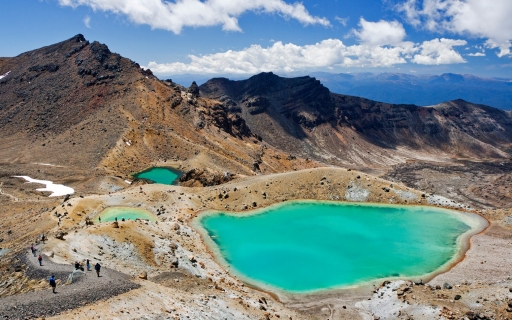
 The Tongariro Crossing in New Zealand
It is called the most beautiful walk in New Zealand, the Tongariro Crossing. The official hiking season starts late October until end of April.
Average temperatures, rainfall, sunshine and the best time to visit Otira.
 –
–
Ōtira, New Zealand, and the surrounding area are very popular with photographers. The region offers spectacular mountain scenery that attracts many photography enthusiasts. It experiences significant temperature shifts throughout the year, with weather ranging from mild to cold periods. The area also has a relatively wet climate, with high levels of rain and occasional snowfall. Now, let’s explore all the climate details to give you a complete picture.
Pick a month to see the average temperature, rainfall and sunshine in Otira - and find the best time to visit.
The climate in Otira is known for significant temperature differences throughout the year, making the weather dynamic. On average, daytime temperatures range from a moderate 18°C (64°F) in February to a chilly 6°C (43°F) in July.
Nighttime temperatures range from 8°C (46°F) in February to -1°C (30°F) in July.
Check out our detailed temperature page for more information.

Otira has a notably wet climate with abundant precipitation, recording 3081 mm (121 in) of rain/snowfall per year. The wettest period in Otira occurs in October, which receives around 329 mm (13 in) of precipitation. During the driest month, July, Otira experiences heavy snow/rainfall, totaling 206 mm (8.1 in). The consistent precipitation levels throughout the year contribute to a relatively stable climate. For more details, please visit our Otira Precipitation page.


In Otira, summer days are longer and more sunny, with daily sunshine hours peaking at 7.0 hours in January. As the darker season arrives, the brightness of the sun becomes less. June sees a soft sun for only 3.6 hours per average day.
Visit our detailed sunshine hours page for more information.

The city experiences its highest humidity in February, reaching 84%. In August, the humidity drops to its lowest level at 81%. What does this mean? Read our detailed page on humidity levels for further details.

Monthly ratings reflect general weather comfort, based on daytime temperature and rainfall. Swimming and winter conditions are highlighted separately where relevant.
Otira has mild summers and cold winters.
Daytime highs range from 6°C (43°F) in July to 18°C (64°F) in February. Nighttime lows range from -1°C (30°F) to 8°C (46°F). Temperatures vary considerably through the year.
Annual rainfall is around 3081 mm (121 in). October is the wettest month with 329 mm (13 in), while July is the driest with 206 mm (8.1 in).
Otira receives around 1,903 hours of sunshine per year. January is the sunniest month with 211 hours, while June is the cloudiest with just 107 hours.
Otira is highlighted - select any city to see its climate.
Where to go in October - average daytime high across popular destinations.
Paihia18°C (64°F) Auckland 18°C (64°F) Rotorua
 17°C (63°F) Christchurch17°C (63°F) Nelson
 16°C (61°F) Taupo16°C (61°F) Wellington15°C (59°F) Queenstown
 9°C (48°F)
 Need travel inspiration? Check out our bucket list articles and be inspired.
The Tongariro Crossing in New Zealand
It is called the most beautiful walk in New Zealand, the Tongariro Crossing. The official hiking season starts late October until end of April.
 White-water sledge and raft in Rotorua
We recommend to white-water sledge and raft in Rotorua in summer (January, February) when the Glacier melt fills the rivers. This is the best time.
 New Zealand in February: North Island or South Island?
Compare New Zealand weather in February for Auckland, Rotorua, Taupo, Christchurch and Queenstown to see which island has the best conditions.

 An alternative way to discover Sydney
We have made an overview of the sights in Sydney that you must see if you want to visit Sydney in an alternative way.