















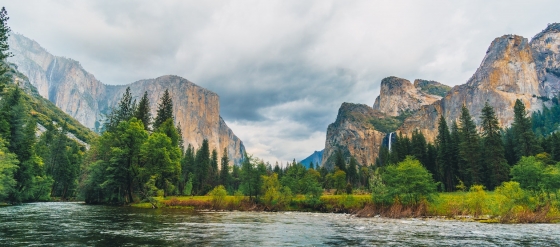
 Yosemite National Park is definitely worth a visit
Vast forests, blue lakes, towering sequoias, and majestic waterfalls hint at the beauty of Yosemite National Park—a true natural masterpiece.
Average temperatures, rainfall, sunshine and the best time to visit New Buffalo.
 –
–
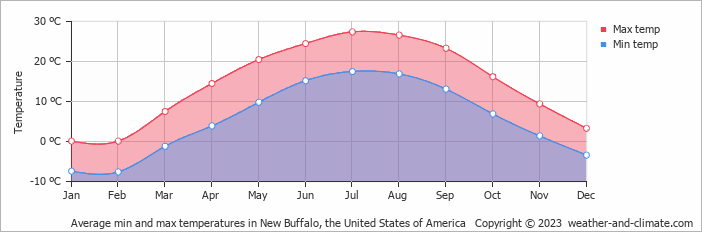
The climate in New Buffalo, Michigan, United States of America, is marked by large temperature swings across the seasons, ranging from 27°C (81°F) in July to 0°C (32°F) in January.
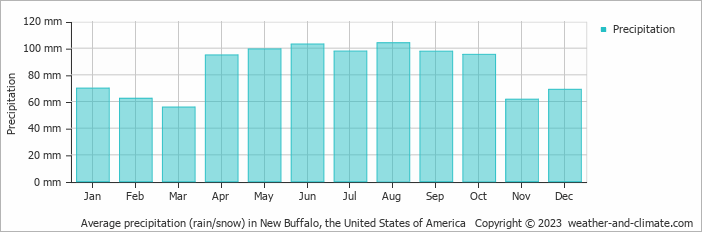
The city receives considerable rain/snowfall, with around 1010 mm (40 in) annually. August is the wettest month. It has warm summers and very cold winters. July is the sunniest month, averaging 11.0 hours of sunshine per day.
Pick a month to see the average temperature, rainfall and sunshine in New Buffalo - and find the best time to visit.
In New Buffalo, temperatures differ significantly between summer and winter months. Typically, average maximum daytime temperatures range from a comfortable 27°C (81°F) in July to a very cold 0°C (32°F) in the coolest month, January.
Nights vary from 18°C (64°F) in July to around -8°C (18°F) during the colder months.
Check out our detailed temperature page for more information.
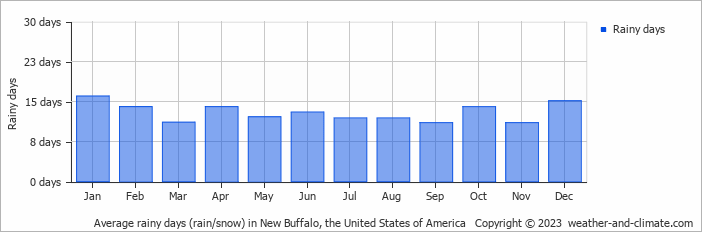
New Buffalo experiences significant rain/snowfall throughout the year, averaging 1010 mm (40 in) of precipitation annually. New Buffalo offers a pleasant mix of wetter and slightly drier months. The difference in precipitation between the wettest month August (104 mm (4.1 in)) and the driest month March (56 mm (2.2 in)) is not too significant. For more details, please visit our New Buffalo Precipitation page.
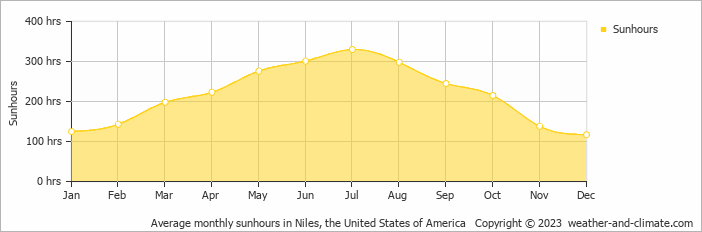
For those who appreciate different seasons, New Buffalo serves as an ideal destination. Expect longer, more sun-filled days in July with an average of 11.0 hours of sunshine daily, and embrace the darker days in December, offering only 3.9 hours of daily sunlight.
Visit our detailed sunshine hours page for more information.
Monthly ratings reflect general weather comfort, based on daytime temperature and rainfall. Swimming and winter conditions are highlighted separately where relevant.
May, July and September typically offer the most optimal weather in New Buffalo. In contrast, January, February, March, November and December tend to have less optimal conditions. New Buffalo has warm summers and very cold winters.
Daytime highs range from 0°C (32°F) in January to 27°C (81°F) in July. Nighttime lows range from -8°C (18°F) to 18°C (64°F). Temperatures vary considerably through the year.
Annual rainfall is around 1010 mm (40 in). August is the wettest month with 104 mm (4.1 in), while March is the driest with 56 mm (2.2 in).
New Buffalo receives around 2,609 hours of sunshine per year. July is the sunniest month with 330 hours, while December is the cloudiest with just 117 hours. Overall, New Buffalo enjoys abundant sunshine.
New Buffalo is highlighted - select any city to see its climate.
Where to go in October - average daytime high across popular destinations.
Miami Beach 29°C (84°F) Orlando29°C (84°F) Kissimmee
 29°C (84°F) Destin26°C (79°F) Los Angeles24°C (75°F) New York City19°C (66°F) Big Bear Lake19°C (66°F)
 Need travel inspiration? Check out our bucket list articles and be inspired.
Yosemite National Park is definitely worth a visit
Vast forests, blue lakes, towering sequoias, and majestic waterfalls hint at the beauty of Yosemite National Park—a true natural masterpiece.
 The 10 most alternative cities in the United States
Discover the top 10 fun and alternative U.S. cities rich in art, culture, and adventure. From Portland's hippy charm to Sedona's stunning landscapes.
 Sedona: Explore Majestic Red Rock Landscapes
A picturesque artists' town surrounded by red rocks and known for its spirituality, vortex energy, and stunning hikes like Cathedral Rock.
 10 most idyllic villages to visit in the United States
Discover 10 idyllic villages in the USA, from California to Vermont. Explore their unique charm, rich history, stunning nature, and vibrant arts scenes.