Noosa Heads Weather & Climate: Best Time to Visit
Noosa Heads has a humid subtropical climate which is typical of South Queensland. Summers are generally hot, but moderated compared to areas on similar latitudes elsewhere. Winters retain warm days, but have cooler nights. There is no dry season and precipitation is generally quite high.
Monthly Temperature in Noosa Heads
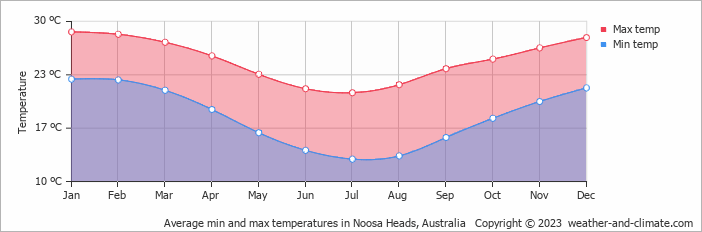
In Noosa Heads, seasonal changes bring about a moderate variation in temperatures. On average, daytime temperatures range from a comfortable 29°C (84°F) in January to a pleasant 21°C (70°F) in July.
Nighttime temperatures range from 23°C (73°F) in January to 13°C (55°F) in July.
Check out our detailed temperature page for more information.
Temperature ranges by month
Rainfall in Noosa Heads
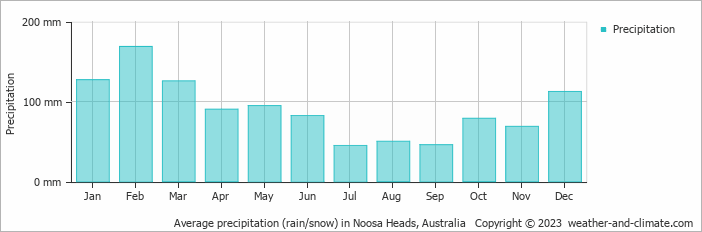
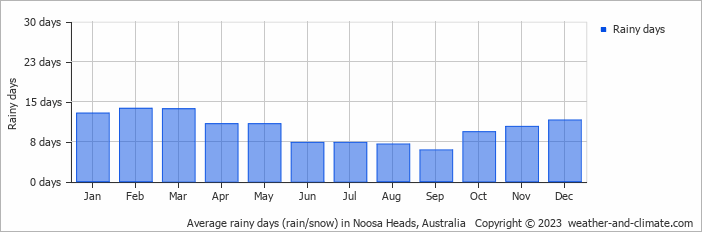
Noosa Heads is known for its substantial rainfall, with annual precipitation reaching 1089 mm (43 in). The seasons in Noosa Heads bring significant changes in precipitation. The wettest month, February, receives heavy rainfall, with an average of 169 mm (6.7 in) of precipitation. This rainfall is distributed across 14 rainy days.
In contrast, the driest month, July, experiences much less rainfall, totaling 45 mm (1.8 in) over 7 rainy days. These distinct seasonal differences provide diverse experiences throughout the year. For more details, please visit our Noosa Heads Precipitation page.
The mean monthly precipitation over the year, including rain, hail, and snow
The average number of days each month with precipitation
Noosa Heads 3-Day Forecast
Check the conditions for any month of the year.
Best Time to Visit Noosa Heads
During January, March, April, May, June, July, August, September, October, November and December, Noosa Heads experiences its most favorable weather, with temperatures between 21°C (70°F) and 29°C (84°F). These mild conditions make it an excellent time for a visit.The weather does bring rainfall during this period, between 45 mm (1.8 in) and 127 mm (5 in).
Plan accordingly for February, when conditions bring the heaviest precipitation. Looking for inspiration on where to travel this year? We have a tool that recommends destinations based on your ideal conditions. Find out where to go with our weather planner.