Seoul Weather & Climate: Best Time to Visit
The large amount of people who live and work in Seoul at only 613 kilometers help to ensure that the average temperature in the city is a few degrees higher than in the countryside which surrounds the city. This is because the buildings and streets retain the heat, an effect that is especially noticeable during the summer evenings.
Seoul has relatively cool and sometimes quite mild winters. However not every winter is the same in Seoul. Some winters there will be no days below the freezing point and other years you can experience severe frost. That same unpredictability is reflected throughout almost the entire year. In the summer months, temperatures are mainly tempered by clouds and precipitation.
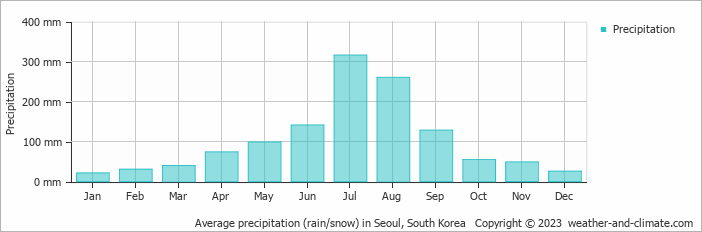
From May to September you will see the most rain, with rainfall amounts rising in July and August to 300 mm (12 in) and sometimes more than 400 mm (16 in) per month. In this period there is also the possibility that Seoul gets hit by a hurricane. The hurricane season runs from June to December in this region.
Monthly Temperature in Seoul
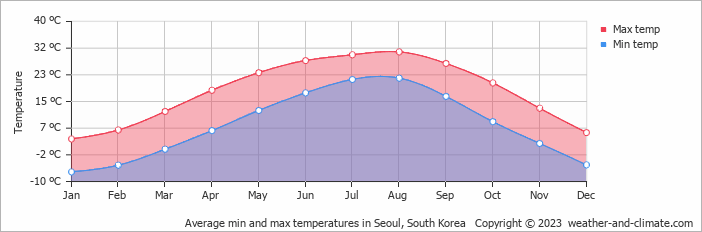
Depending on the time of the year, temperatures range from very warm to chilly in Seoul. Average maximum daytime temperatures range from a very warm 31°C (88°F) in August, the warmest time of the year, to a chilly 3°C (37°F) during cooler months like January.
At night, you can expect temperatures ranging from 22°C (72°F) in August to around -7°C (19°F) during January.
Check out our detailed temperature page for more information.
Temperature ranges by month
Rainfall in Seoul
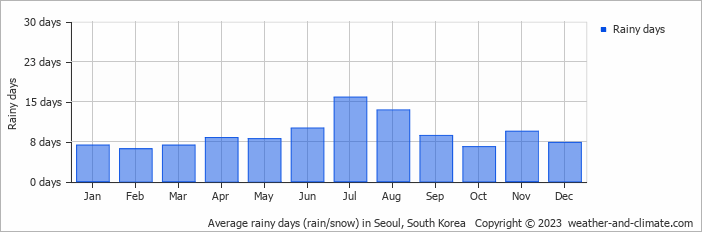
Seoul has a relatively rain/snowy climate with high precipitation levels, averaging 1236 mm (49 in) of rain/snowfall annually. Significant seasonal changes in precipitation occur throughout the year. In the wettest month, July it receives heavy rainfall, averaging 316 mm (12 in) of precipitation, recorded across 16 rainy days. In contrast, the driest month January brings less snow/rainfall, with 21 mm (0.8 in) over 7 snowy/rainy days. For more details, please visit our Seoul Precipitation page.
The mean monthly precipitation over the year, including rain, hail, and snow
The average number of days each month with precipitation
Sunshine Hours in Seoul
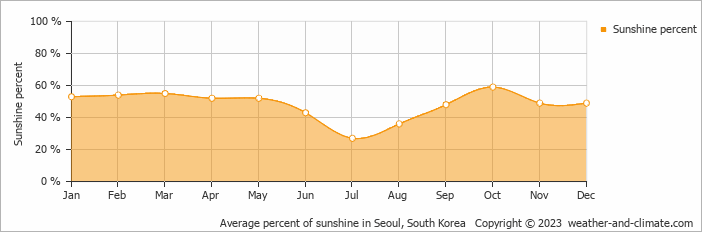
Seasonal changes in sunshine hours are quite dramatic in Seoul. While May receives considerable daily sunshine with up to 7.5 hours, July marks the darkest time of the year, where sunshine is scarce with only 4.1 hours of sunlight per day.
Visit our detailed sunshine hours page for more information.
Monthly hours of sunshine
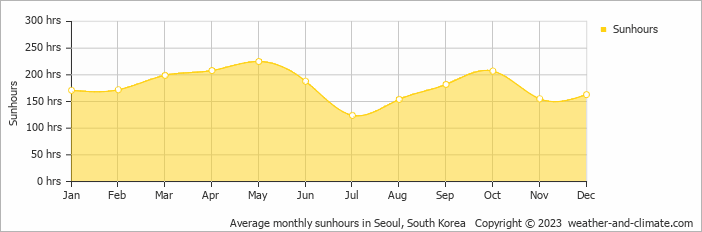
Daily hours of sunshine
Daily percentage of sunshine
Humidity in Seoul by Month
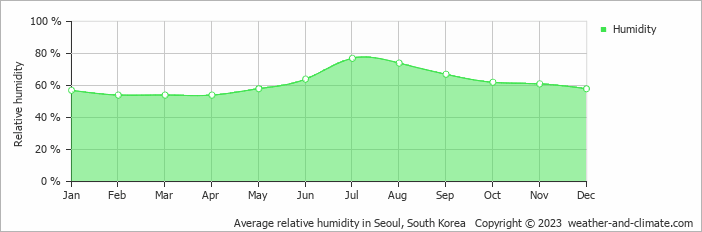
The relative humidity is high throughout the year in Seoul.
The city experiences its highest humidity in July, reaching 77%. In February, the humidity drops to its lowest level at 54%. What does this mean? Read our detailed page on humidity levels for further details.
Relative humidity over the year
Wind Speed in Seoul
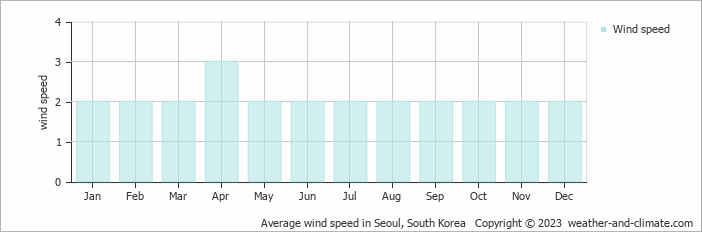
The mean wind speed varies between 2 m/s (4 knots) and 3 m/s (6 knots) throughout the year. It is lowest in January, February, March, May, June, July, August, September, October, November and December and highest during April. What does this mean?
The mean monthly wind speed over the year (meters per second)
Seoul 3-Day Forecast
Check the conditions for any month of the year.
Best Time to Visit Seoul
During the months of April, May, June, September and October, Seoul enjoys pleasant weather with average temperatures ranging from 19°C (65°F) to 28°C (82°F). These months are perfect for sightseeing and exploring.Rainfall during this time ranges from 55 mm (2.2 in) in October to 141 mm (5.6 in) in June. This means you can expect a mix of sunny days and occasional showers.
The rainy season falls during July and August, bringing heavy precipitation. Looking for inspiration on where to travel this year? We have a tool that recommends destinations based on your ideal conditions. Find out where to go with our weather planner.