















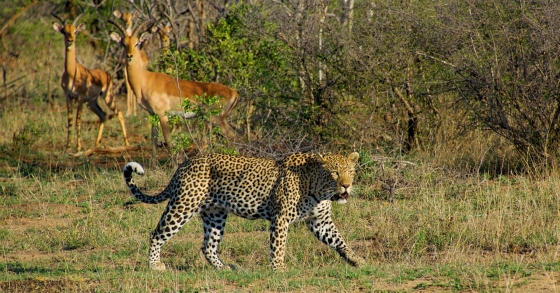
 Visit Kruger Park in South Africa
Are you going to South Africa, then you cannot skip the Kruger Park. The Kruger Park is one of the most beautiful and largest safari parks in the world.
This page shows both the average monthly rainfall and the number of rainy days in Kanombe, Rwanda. This average is based on long-term data collected between 1990 and 2020. Let's now guide you through the details for a complete overview.
Generally, Kanombe has a moderate amount of precipitation, averaging 989 mm (39 in) of rainfall annually. However, it does experience a distinct dry season during certain months. Take a look at our detailed charts below to see the seasonal variation.
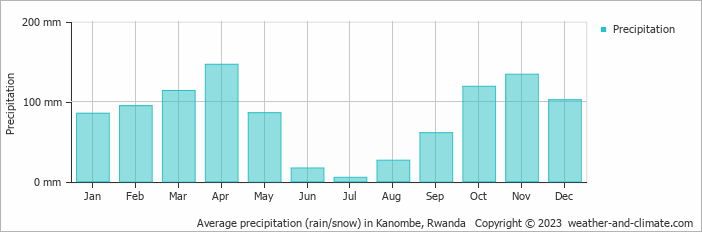
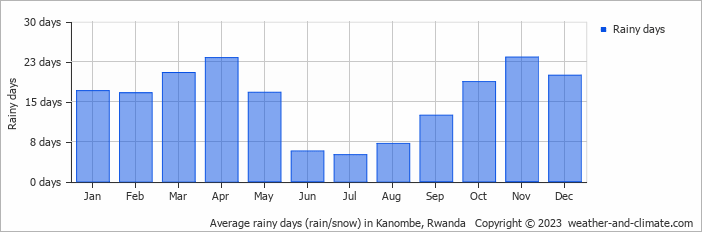
The seasons in Kanombe, bring significant changes in precipitation. The wettest month, April, receives high rainfall, with an average of 146 mm (5.7 in) of precipitation. This rainfall is distributed across 23 rainy days.
In contrast, the driest month, July, experiences much less rainfall, totaling 5 mm (0.2 in) over 5 rainy days. These distinct seasonal differences provide diverse experiences throughout the year.April, the wettest month, has a maximum daytime temperature of 26°C (79°F). The city receives 150 hours of sunshine in this period. During the driest month July you can expect a temperature of 27°C (81°F). For more detailed insights into the city's temperatures, visit our Kanombe Temperature page.
Average daily rainfall for each day of the month based on long-term records. 36-year average (1984-2025)
Browse day-by-day precipitation records for Kanombe spanning 51 years. Select any month and year to see actual rainfall and snowfall recorded on each day.
The map below shows the annual precipitation across Rwanda. You can also select the different months in case you are interested in a specific month.
Kanombe's average annual precipitation is 989 mm (39 in). Let's compare this to some popular worldwide tourist destinations:
Athens, Greece, receives an average annual precipitation of 400 mm (16 in), making it one of the drier Mediterranean climates with rainfall mostly in winter.
Beijing, China, receives 560 mm (22 in) of annual precipitation, concentrated in the summer months.
In Brisbane, Australia, the annual precipitation is 979 mm (39 in), making it wetter than Sydney.
Singapore, situated near the equator, gets 2581 mm (102 in) of rainfall annually, with no distinct dry season and consistent monthly precipitation.
Precipitation amounts are measured using specific gauges installed at weather stations, collecting both rain and snow and any other type of precipitation. Rainfall is measured directly in millimeters, while that from snow and ice is obtained by melting it. Automated systems often incorporate heaters to make this easier.
Information from these stations is transmitted via Wi-Fi, satellite, GPS, or telephone connections to central monitoring networks. This information is immediately updated and integrated into weather models and forecasts.
Precipitation has a very strong role in determining the local climate and ecosystem:
For more detailed information about Kanombe's weather, including sunshine hours, humidity levels, and temperature data, visit our Kanombe Climate page.
Pick a month to see the average temperature, rainfall and sunshine in Kanombe - and find the best time to visit.
Temperature Rainfall Sunshine
See the full Kanombe climate overview or explore weather in Rwanda.
Where to go in October - average daytime high across popular destinations.
 Rwamagana
 27°C (81°F) Kibagabaga
 27°C (81°F) Kanombe27°C (81°F) Kacyiru27°C (81°F) Kigali27°C (81°F) Ruhengeri
 22°C (72°F) Kinigi22°C (72°F) Gisenyi22°C (72°F)
 Need travel inspiration? Check out our bucket list articles and be inspired.
Visit Kruger Park in South Africa
Are you going to South Africa, then you cannot skip the Kruger Park. The Kruger Park is one of the most beautiful and largest safari parks in the world.
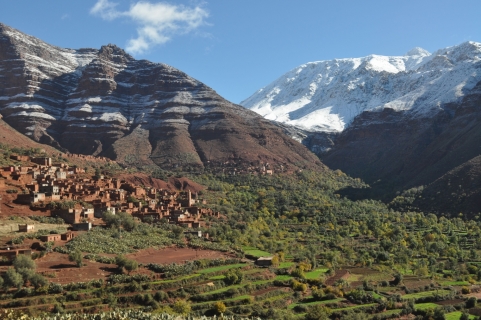
 The Atlas Mountains in Morocco
This mountain range is the second highest mountains in the world and is certainly one of the most natural and wonderful mountains you could ever visit. One for the bucket list for sure.
 One of South Africa's most spectacular private game reserves
Sabi Sand Game Reserve is one of South Africa's most spectacular private game reserves. The chance that you see the entire Big Five is high in winter (June - August).

 The 10 best wildlife viewing sites in Kenya
Explore Kenya's top 10 safari parks in this guide, featuring the Maasai Mara, Amboseli, and more, for a spectacular wildlife adventure