

















 Mud festival in South Korea
In July, the peaceful seaside town of Boryeong turned into a chaos of mud for 9 days. We recommend putting this festival on your bucket list.
Average temperatures, rainfall, sunshine and the best time to visit Gwangyang.
 –
–
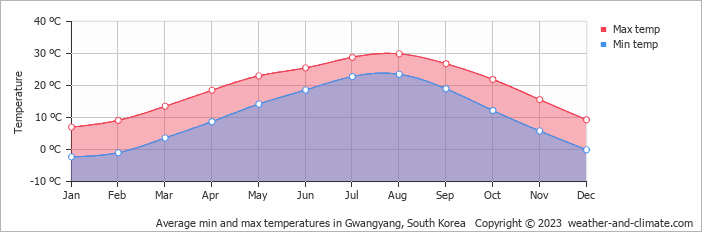
Temperatures in Gwangyang, South Korea, vary greatly throughout the year. August is the hottest month at 30°C (86°F), while January is the coldest at 7°C (45°F).
With around 1562 mm (61 in) of annual rain/snowfall, Gwangyang has a notably wet climate. However, this rain/snowfall is not evenly distributed, the city has distinct dry (December to January) and wet (June to September) seasons, with warm summers and cold winters. The wettest month is July. Sunshine peaks in May, when the city sees around 7.1 hours of sunshine per day.
Pick a month to see the average temperature, rainfall and sunshine in Gwangyang - and find the best time to visit.
The climate in Gwangyang is known for significant temperature differences throughout the year, making the weather dynamic. Average daytime temperatures reach a comfortable 30°C (86°F) in August. In January, the coolest month of the year, temperatures drop to a chilly 7°C (45°F).
At night, temperatures range from around 24°C (75°F) in August to -2°C (28°F) in January.
Check out our detailed temperature page for more information.
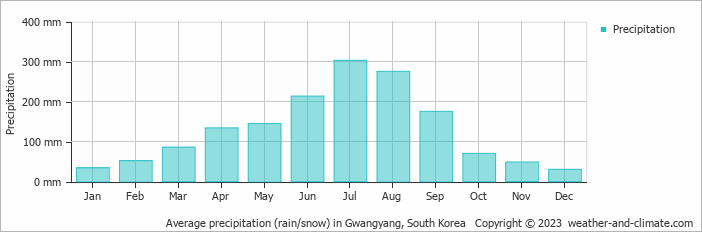
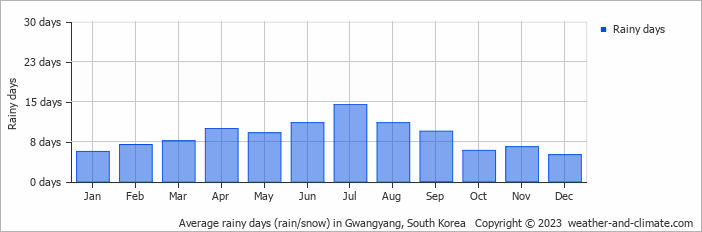
Gwangyang has a notably wet climate with abundant precipitation, recording 1562 mm (61 in) of rain/snowfall per year. Gwangyang can be quite wet during July, receiving approximately 303 mm (12 in) of precipitation over 14 rainy days.
In contrast, during the driest month (December), you will experience much drier conditions, with 30 mm (1.2 in) of precipitation spread across 5 rainy days. For more details, please visit our Gwangyang Precipitation page.
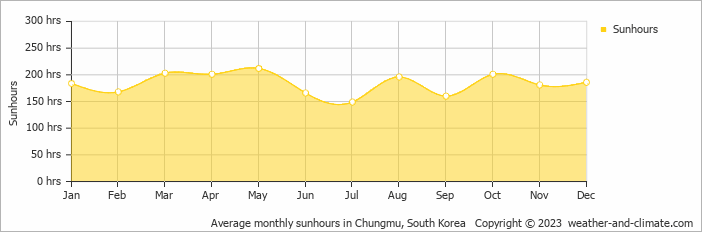
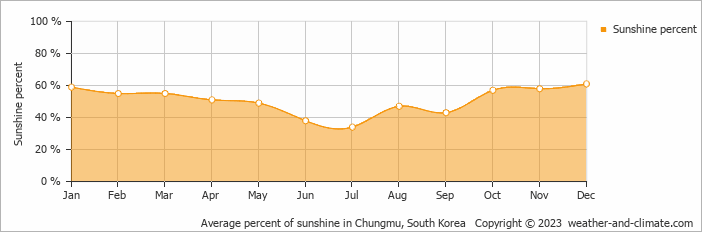
Gwangyang experiences moderate variation in sunshine hours across the seasons. With 7.1 hours daily sunshine in May, it dips to 5.0 hours in July, offering a balanced mix of sunny and overcast days.
Visit our detailed sunshine hours page for more information.
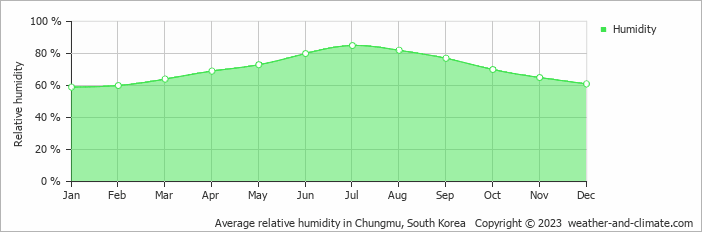
The relative humidity is high throughout the year in Gwangyang.
The city experiences its highest humidity in July, reaching 85%. In January, the humidity drops to its lowest level at 59%. What does this mean? Read our detailed page on humidity levels for further details.
Monthly ratings reflect general weather comfort, based on daytime temperature and rainfall. Swimming and winter conditions are highlighted separately where relevant.
October typically offers the most optimal weather in Gwangyang. In contrast, January, February, July and August tend to have less optimal conditions. Gwangyang has distinct dry (December to January) and wet (June to September) seasons, with warm summers and cold winters.
Daytime highs range from 7°C (45°F) in January to 30°C (86°F) in August. Nighttime lows range from -2°C (28°F) to 24°C (75°F). Temperatures vary considerably through the year.
Annual rainfall is around 1562 mm (61 in). July is the wettest month with 303 mm (12 in), while December is the driest with 30 mm (1.2 in).
Gwangyang receives around 2,207 hours of sunshine per year. May is the sunniest month with 212 hours, while July is the cloudiest with just 149 hours. Overall, Gwangyang enjoys abundant sunshine.
Gwangyang is highlighted - select any city to see its climate.
Where to go in October - average daytime high across popular destinations.
Need travel inspiration? Check out our bucket list articles and be inspired.
Mud festival in South Korea
In July, the peaceful seaside town of Boryeong turned into a chaos of mud for 9 days. We recommend putting this festival on your bucket list.
 10 Hidden gems in Asia you need to visit
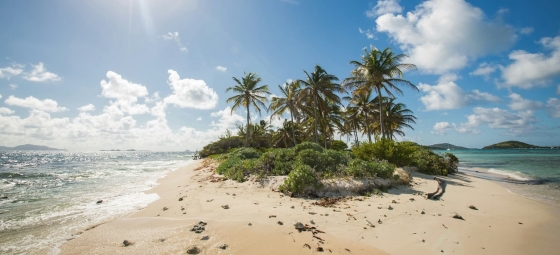
Explore 10 hidden gems in Asia offering authentic experiences, from pristine beaches and remote islands to cultural treks and peaceful mountain villages.
 Chase the autumn leaves in Japan
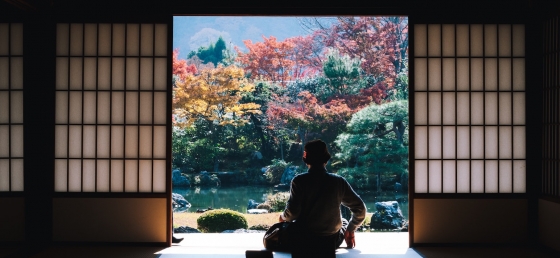
Japan is one of these cases which turns into a gold, yellow and orange fairy tale starting from September. And we can honestly say: We cannot imagine a more beautiful season to visit Japan.

 The 10 Most Exquisite Beaches in the Philippines
Explore the top 10 breathtaking beaches in the Philippines, from serene Nacpan Beach to volcanic Camiguin Island, in our detailed guide.