
















 A rain forest hotel in the clouds
This is not "just a lodge". It is a sanctuary of peace and nature for those who like to stay in the heart of nature with minimal environmental impact.
Average temperatures, rainfall, sunshine and the best time to visit Quito.
 –
–
Pick a month to see the average temperature, rainfall and sunshine in Quito - and find the best time to visit.
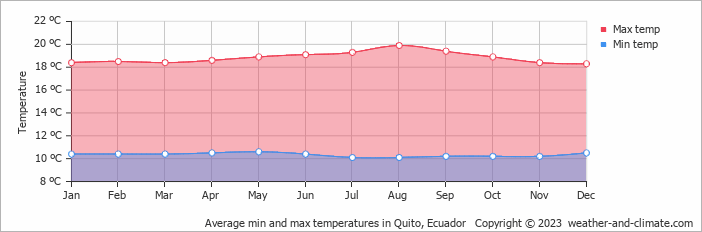
The climate in Quito remains fairly constant, offering pleasant temperatures throughout the year. Average maximum daytime temperatures range from a pleasant 20°C (68°F) in August, the warmest time of the year, to a pleasant 18°C (64°F) during cooler months like December.
At night, you can expect temperatures ranging from 11°C (52°F) in August to around 10°C (50°F) during December.
Check out our detailed temperature page for more information.
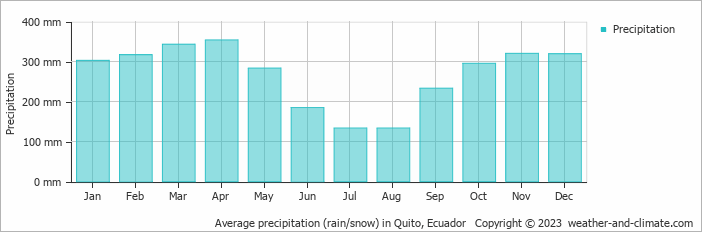
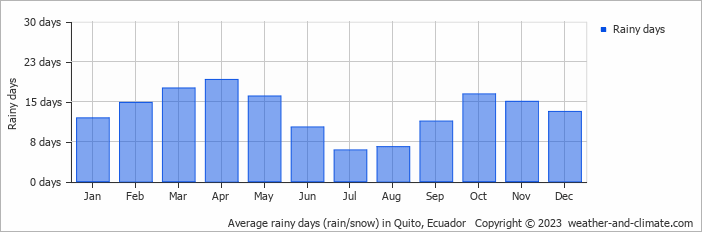
Quito is known for its substantial rainfall, with annual precipitation reaching 3216 mm (127 in). Significant seasonal changes in precipitation occur throughout the year. In the wettest month, April it receives heavy rainfall, averaging 354 mm (14 in) of precipitation, recorded across 19 rainy days. In contrast, the driest month July brings less rainfall, with 133 mm (5.2 in) over 6 rainy days. For more details, please visit our Quito Precipitation page.
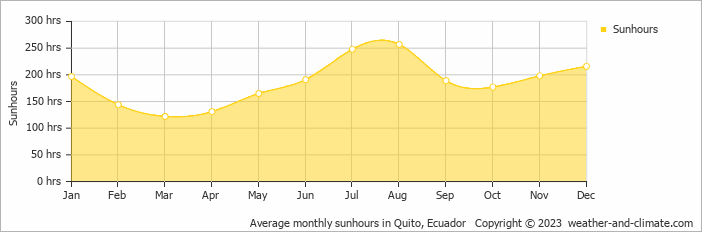
Seasonal changes in sunshine hours are quite dramatic in Quito. While August receives considerable daily sunshine with up to 8.6 hours, March marks the darkest time of the year, where sunshine is scarce with only 4.1 hours of sunlight per day.
Visit our detailed sunshine hours page for more information.
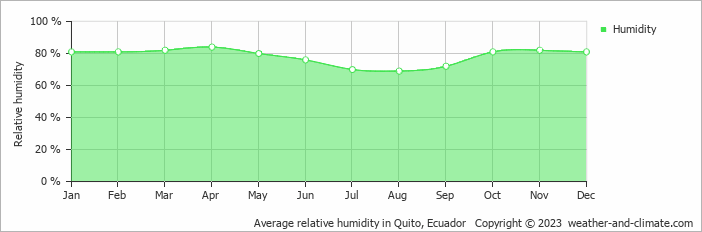
The relative humidity is high throughout the year in Quito.
The city experiences its highest humidity in April, reaching 84%. In August, the humidity drops to its lowest level at 69%. What does this mean? Read our detailed page on humidity levels for further details.
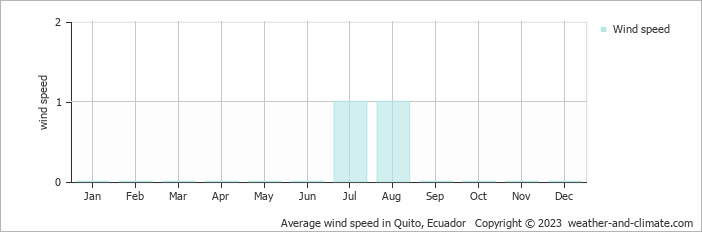
The average wind speed over the year ranges from () to 1 m/s (2 knots). It is lower in January, February, March, April, May, June, September, October, November and December and higher in July and August. What does this mean?
Monthly ratings reflect general weather comfort, based on daytime temperature and rainfall. Swimming and winter conditions are highlighted separately where relevant.
August typically offers the most optimal weather in Quito. In contrast, January, February, March, April, May, September, October, November and December tend to have less optimal conditions.
Daytime highs range from 18°C (64°F) in December to 20°C (68°F) in August. Nighttime lows range from 10°C (50°F) to 11°C (52°F). Temperatures stay relatively stable year-round.
Annual rainfall is around 3216 mm (127 in). April is the wettest month with 354 mm (14 in), while July is the driest with 133 mm (5.2 in).
Quito receives around 2,235 hours of sunshine per year. August is the sunniest month with 257 hours, while March is the cloudiest with just 122 hours. Overall, Quito enjoys abundant sunshine.
Quito is highlighted - select any city to see its climate.
Where to go in September - average daytime high across popular destinations.
Guayaquil 29°C (84°F) Montañita25°C (77°F) Puerto Ayora26°C (79°F) Salinas23°C (73°F) Puerto Baquerizo Moreno
 23°C (73°F) Quito
 19°C (66°F) Baños17°C (63°F) Cuenca15°C (59°F)
 Need travel inspiration? Check out our bucket list articles and be inspired.
A rain forest hotel in the clouds
This is not "just a lodge". It is a sanctuary of peace and nature for those who like to stay in the heart of nature with minimal environmental impact.
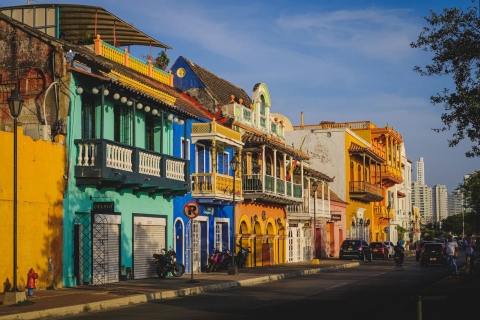
 The 10 most alternative cities in South America
Discover South America's top 10 alternative cities! From Valparaíso's vibrant streets to La Paz's high-altitude charm and Medellín's innovative spirit.
 The Galapagos Islands
The Galapagos Islands is one of the most beautiful places on earth. If you want to see the origins of our planet with your own eyes, you should travel here.

 Visit the Rainbow Mountains
The Rainbow Mountain (Vinicunca) is acolored rainbow mountain that will steal your heart forever and the view from the top will take your breath away.