














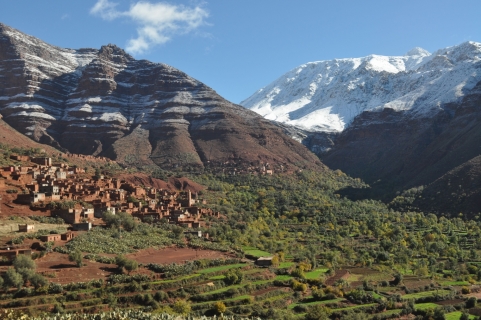
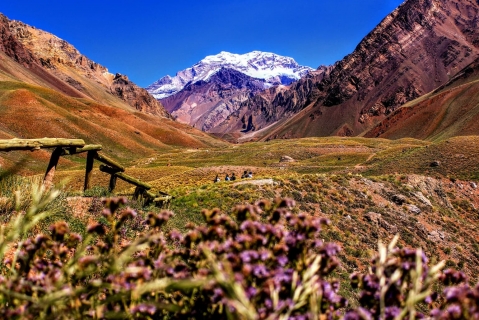
 The Atlas Mountains in Morocco
This mountain range is the second highest mountains in the world and is certainly one of the most natural and wonderful mountains you could ever visit. One for the bucket list for sure.
Sunshine plays a big role in understanding the climate of a city. This page shows the total number of hours of direct sunlight per month and the average hours per day in Ech Chaïbat, Marrakesh-Safi, Morocco. Long-term data from 1990 to 2020 was used to calculate these averages.
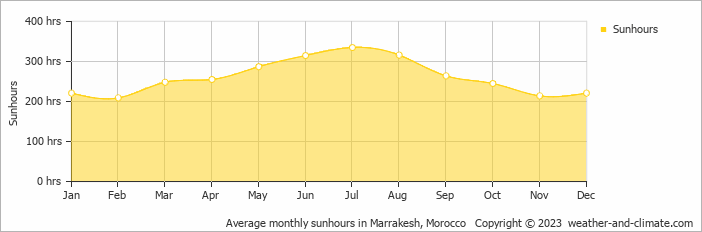
While the amount of sunshine in Ech Chaïbat changes moderately throughout the year, the annual total remains impressive at around 3130 hours. Expect slightly brighter days in July and a subtle dip in February.
This means you can enjoy sunny spells year-round. July sees up to 11.2 hours of daily sunshine, perfect for a sunny trip. February, the least sunny month, still offers a generous 7.0 hours of sun despite this cloudier / rainier time of the year.

On average the sun shines 78% of the time during the day in August, the highest percentage of any month. November has the lowest percentage at 65%.
Ech Chaïbat enjoys an average of 3130 hours of sunshine annually. Let’s compare this with some popular tourist destinations:
In Lisbon, Portugal, there are approximately 2801 hours of sunshine annually, highlighting its warm and sunny Mediterranean climate.
In contrast, Juneau, Alaska, receives only about 1523 hours of sunshine per year and is known for its very short days in winter and frequently overcast conditions.
Meanwhile, Buenos Aires, Argentina, enjoys a humid subtropical climate with 2520 hours of sunshine annually.
Melbourne, Australia, has 2380 hours of sunshine annually, with its famous “four seasons in a day” weather pattern.
March, Ech Chaïbat’s wettest month, receives 7.3 mm (0.3 in) of rainfall and has a maximum daytime temperature of 22°C (72°F). During the driest month July you can expect a temperature of 35°C (95°F).
For more detailed insights into the city’s temperatures, check out our Temperature page. To explore more about precipitation patterns, visit our Ech Chaïbat Precipitation page.
Pick a month to see the average temperature, rainfall and sunshine in Ech Chaïbat - and find the best time to visit.
Temperature Rainfall Sunshine Humidity Wind Speed
See the full Ech Chaïbat climate overview or explore weather in Morocco.
Where to go in October - average daytime high across popular destinations.
Merzouga 30°C (86°F) Marrakech
 28°C (82°F) Fez27°C (81°F) Agadir26°C (79°F) Rabat25°C (77°F) Casablanca25°C (77°F) Essaouira24°C (75°F) Tangier24°C (75°F)
 Need travel inspiration? Check out our bucket list articles and be inspired.
The Atlas Mountains in Morocco
This mountain range is the second highest mountains in the world and is certainly one of the most natural and wonderful mountains you could ever visit. One for the bucket list for sure.
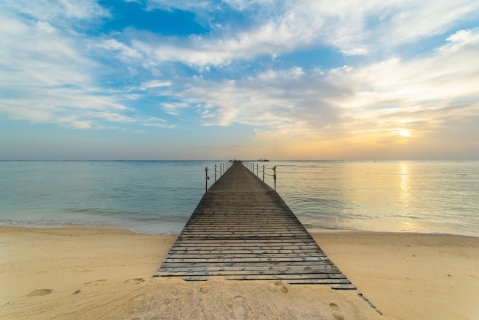
 Where to Go for Christmas: Sun, Value and Fewer Crowds
Where can you find warm Christmas weather without peak-season prices and huge crowds? Compare Marsa Alam, The Gambia, Vietnam, Agadir and Cap Skirring.
 Warm Days, Cool Nights: 8 Destinations With the Perfect Day-Night Temperature
Prefer warm sunny days but cool evenings? Compare eight destinations with daytime temperatures of around 25–30°C, cooler nights, low rainfall and plenty of sunshine.
 Morocco in October: Where Is the Best Weather?
Compare Morocco weather in October for Marrakesh, Agadir, Essaouira, Fez and Merzouga to find the warmest, driest and sunniest places.