


















 The 10 most alternative cities in South America
Discover South America's top 10 alternative cities! From Valparaíso's vibrant streets to La Paz's high-altitude charm and Medellín's innovative spirit.
Sunshine plays a big role in understanding the climate of a city. This page shows the total number of hours of direct sunlight per month and the average hours per day in Tijuca National Park, Rio de Janeiro State, Brazil. The numbers reflect climate data gathered over a 30-year period, from 1990 to 2020.
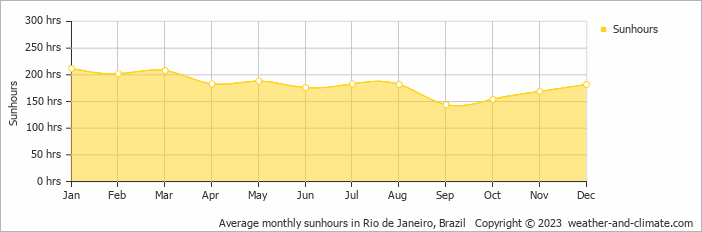
Tijuca National Park experiences sunny spells throughout the year. The sunniest month, January, sees up to 212 hours of sunshine, while September, the least sunny month, still provides a respectable 144 hours. The total annual sunshine amounts to 2183 hours.
This means you can enjoy sunny spells year-round. January sees up to 7.1 hours of daily sunshine, perfect for a sunny trip. September, the least sunny month, still offers a generous 4.8 hours of sun despite this cloudier / rainier time of the year.
Tijuca National Park enjoys an average of 2183 hours of sunshine annually. Let’s compare this with some popular tourist destinations:
In Lisbon, Portugal, there are approximately 2801 hours of sunshine annually, highlighting its warm and sunny Mediterranean climate.
In contrast, Juneau, Alaska, receives only about 1523 hours of sunshine per year and is known for its very short days in winter and frequently overcast conditions.
Boston, USA, enjoys 2629 hours of sunshine annually, with distinct seasons and many bright, sunny days.
In Tokyo, Japan, the average annual sunshine is 1930 hours, with sunny periods between rainy seasons.
January, Tijuca National Park’s wettest month, receives 148 mm (5.8 in) of rainfall and has a maximum daytime temperature of 31°C (88°F). During the driest month August you can expect a temperature of 27°C (81°F).
For more detailed insights into the city’s temperatures, check out our Temperature page. To explore more about precipitation patterns, visit our Tijuca National Park Precipitation page.
Pick a month to see the average temperature, rainfall and sunshine in Tijuca National Park - and find the best time to visit.
Temperature Rainfall Sunshine Humidity Wind Speed Water Temp
See the full Tijuca National Park climate overview or explore weather in Brazil.
Where to go in September - average daytime high across popular destinations.
Need travel inspiration? Check out our bucket list articles and be inspired.
The 10 most alternative cities in South America
Discover South America's top 10 alternative cities! From Valparaíso's vibrant streets to La Paz's high-altitude charm and Medellín's innovative spirit.

 The 5 most tranquil retreats in the Amazon Rainforest, Brazil
Discover top sustainable lodges in the Amazon. Enjoy unique wildlife, eco-friendly stays, and immersive experiences at Anavilhanas, Cristalino, and more.
 Brazil in November: Where Is the Best Weather?
Discover where Brazil has the best weather in November, comparing Fortaleza, Salvador, Rio, São Paulo, Florianópolis, Brasília and Foz do Iguaçu.
 An alternative way to discover Rio de Janeiro
Don't feel like seeing the traditional tourist sights in Rio de Janeiro? We have made an overview of the sights in Rio de Janeiro that you must see if you want to visit Rio in an alternative way.